Manufacturing Accuracy in Bend Waveguide






2026-06-22 23:01:13
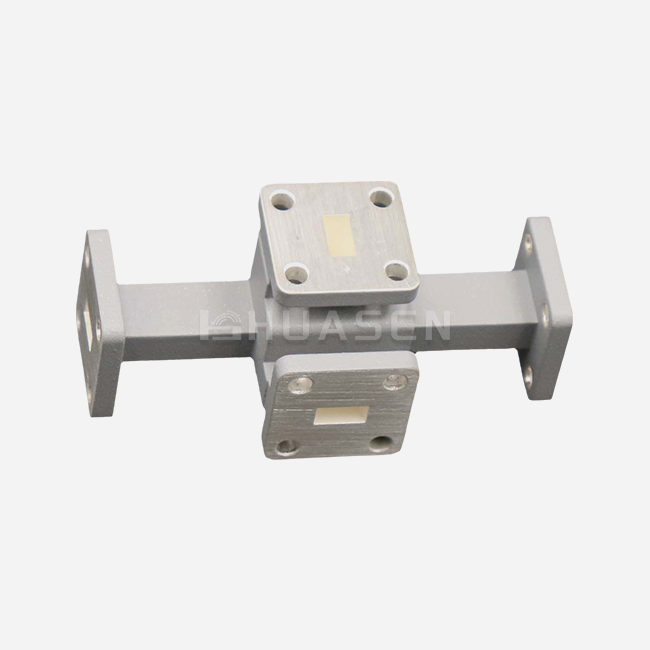
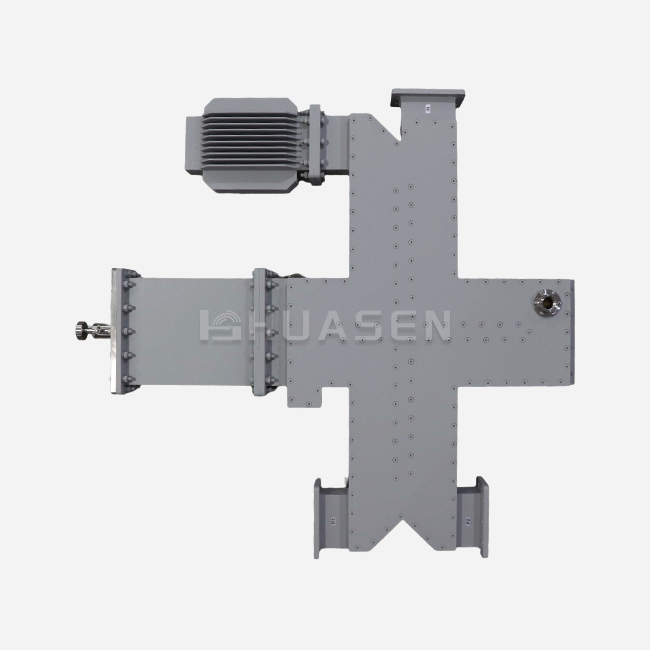
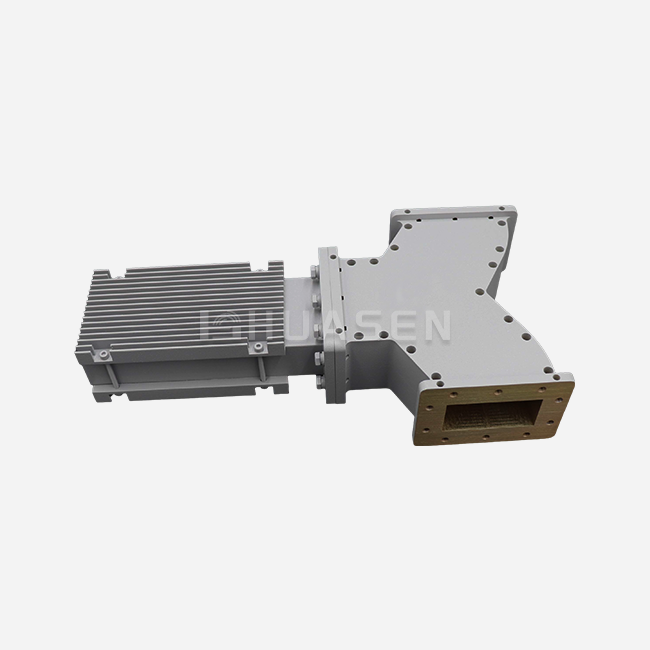
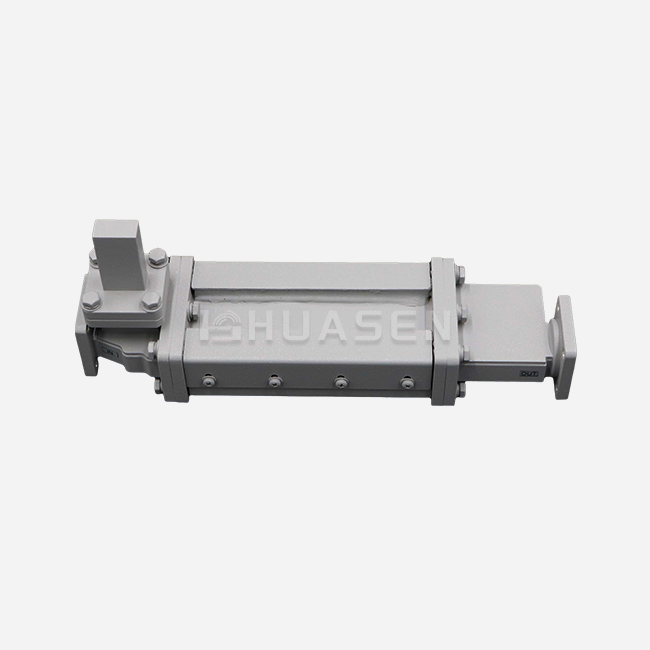
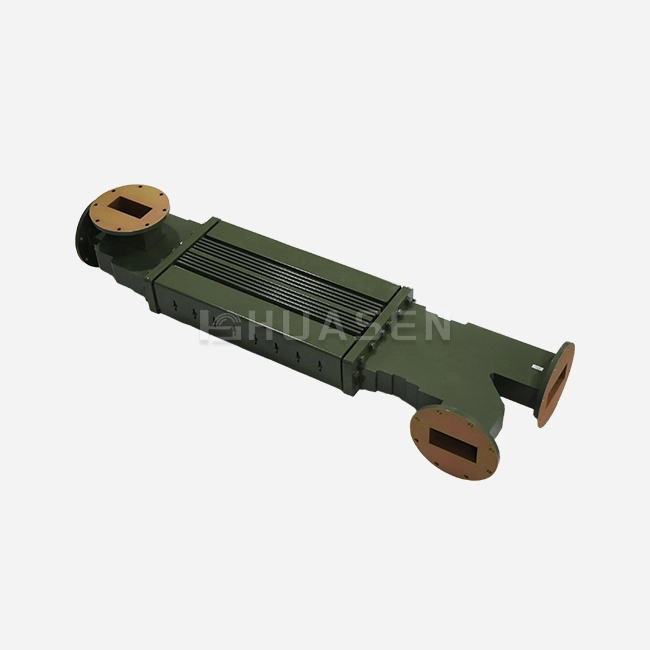
The accuracy with which Bend Waveguide components are made directly affects how well they transmit signals, how well they work, and how reliable the system is in high-frequency RF uses. It doesn't matter what kind of bend it is—an E-plane bend, an H-plane bend, a mitered corner, or a double-bend—a Bend Waveguide needs to have exact dimensions, smooth internal surfaces, and exact curve radii to keep return loss and insertion loss as low as possible. It only takes very small changes in wall thickness, corner angles, or surface roughness to cause unwanted echoes, mode conversion, or power loss, especially at millimeter-wave frequencies. Accurate production needs strict process control, advanced machining techniques, and strict testing methods to make sure that every part meets the high standards needed for 5G infrastructure, radar systems, satellite communications, and aerospace applications.
Understanding Manufacturing Challenges in Bend Waveguides
Making high-performance Bend Waveguide parts comes with its own set of technical challenges that have a direct effect on how well they work. When tight shapes, high power handling, and multi-band functions all come together in small packages, the complexity goes up.
Critical Fabrication Parameters
The most important thing is the accuracy of the bending radius. Impedance mismatches get worse when the radius goes below the suggested limits, which are usually more than one wavelength at the operating frequency. This leads to a decrease in the voltage standing wave ratio (VSWR). Resistance losses depend on how smooth the inside walls of the waveguide are. Roughness greater than a few micrometers at Ka-band or higher frequencies increases skin-effect losses, which lowers efficiency. For most uses, limits on width, height, and wall parallelism must stay within ±0.025 mm to keep the cutoff frequency stable and the mode pure.
Common Sources of Inaccuracies
Variability is caused by material differences. When heated and cooled, cutting pressures, and the electroplating process all affect aluminum alloys, brass, and steel that has been coated with copper in different ways. VSWR can go up by as little as a fraction of a degree when CNC milling or electrical discharge machining (EDM) is used. This is because of equipment calibration drift. Environmental factors, like dampness during assembly, changes in coating bath temperatures, or particle contamination, can lower the quality of the internal surface. When these factors build up, they cause scattering losses, higher-order mode excitation, and random phase changes that hurt the performance of base station front-ends or radar transceivers.
Loss Mechanisms Rooted in Manufacturing Flaws
When surface flaws redirect electromagnetic fields that are moving, scattering losses happen. Radiation losses happen at bends where curve correction isn't good enough, letting energy leak through breaks. Mode conversion happens when the main TE10 mode couples with unwanted TE20 or TM modes. This can happen because the sides aren't square or the thickness of the plating isn't regular. When procurement and engineering teams understand these loss processes, they can set quality control standards, come up with acceptance criteria, and choose suppliers who can deliver parts that keep signals intact in harsh operating circumstances.
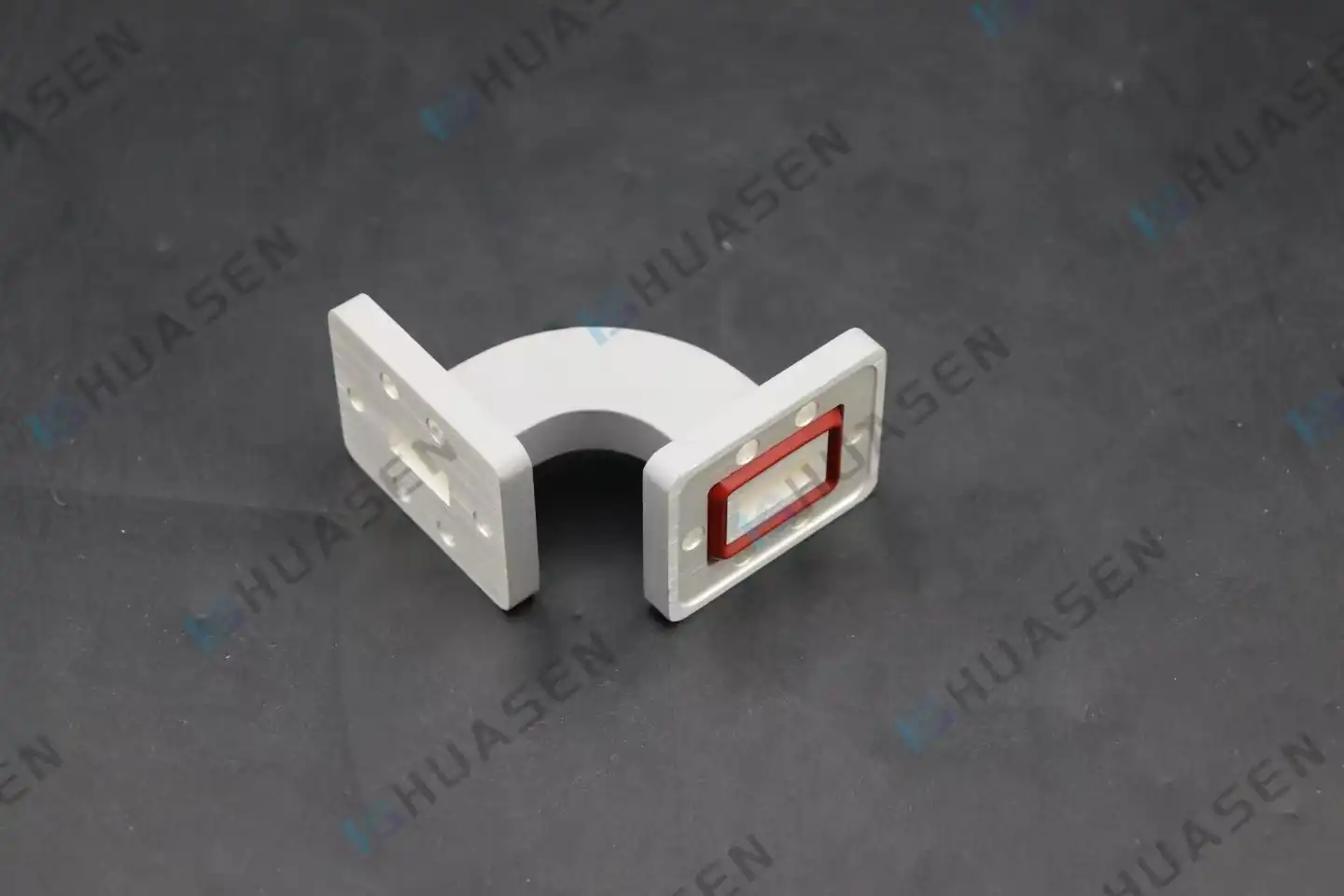
Core Principles and Techniques for Improving Bend Waveguide Manufacturing Accuracy
To improve the accuracy of manufacturing, material science, process engineering, and design optimization techniques that are tailored to the needs of each application must be brought together.
Material Selection Considerations
The choice of material affects both how well it works electrically and how easily it can be made. Copper that doesn't contain oxygen is a better conductor and has lower ohmic losses, but it needs to be handled carefully to keep it from oxidizing. Aluminum alloys are great for flying and space-based systems because they are light, but they need thicker metal layers because they are less conductive. Brass is a cheap material that can be used for testing and low-power tasks. For inflatable designs used in marine communications or mobile backhaul lines, hybrid composites like polymer-coated metals allow conformal shapes in flexible Bend Waveguide bends while keeping the pressure integrity.
Advanced Fabrication Processes
When you mix high-resolution lithography with precise etching, you can control features down to the micron level in planar waveguide structures. This is very important for making millimeter-wave integrated circuits. Five-axis computer numerical control (CNC) machining can make complicated double-bend shapes while keeping angle tolerances very tight. New methods of additive manufacturing, like direct metal laser sintering (DMLS), make it possible to quickly prototype different bend shapes without having to pay for expensive tools. This speeds up the development process for radar or satellite uses that need to be very specific. Simulation tools, such as electromagnetic modeling software like HFSS or CST Studio, check designs online by predicting insertion loss, return loss, and power handling capacity before they are made physically. This cuts down on the time needed for iterations and the waste of materials.
Design Optimization Strategies
Careful choice of bent radius strikes a balance between electrical performance and mechanical limitations. To make up for sharp corners, mitered bends have perfectly curved reflective planes at 45 degrees. This lets them make tight 90-degree turns without losing too much VSWR. Double-bend configurations send signals through orthogonal lines, which makes it easier to integrate room in RF assemblies that are crowded on drones, satellites, or military ships. It is possible to make performance goals and manufacturing realities more aligned with geometry refinement techniques like radius smoothing, corner rounding, and tapering transitions. These techniques help system designers find scalable solutions that meet both technical requirements and budget constraints.
Case Studies: Successful Manufacturing Accuracy Improvements in Bend Waveguides
Implementations in the real world show how focused process improvements lead to measurable operational gains.
Case Study: Telecom Infrastructure Upgrade
A major base station maker had ongoing VSWR problems in their 28 GHz E-plane bends, which led to signal echoes that made the backup link less stable. In order to lower corner radius variation from ±0.05 mm to ±0.015 mm and use silver plating with controlled grain structure, the seller was able to cut insertion loss by 0.4 dB per bend. This improvement raised the overall system gain, which meant that coverage could be extended without adding more amplification stages. This directly lowered the costs of rollout and increased the return on investment for telecom providers who are building out 5G networks.
Case Study: Aerospace Collaboration
An aircraft OEM needed special double-Bend Waveguides for a phased-array radar system on unmanned aerial vehicles, which had to be light and fit inside a small area. Working with a specialized maker, the team used DMLS to make things out of titanium alloy, which allowed them to make shapes that couldn't be made with standard machining. Coordinate measuring machines (CMM) and network analyzer tests showed that the VSWR was less than 1.15:1 across all X-band frequencies. The parts that were made met the standards for MIL-STD-810 vibration and thermal cycle, which made the system more reliable during long trips and met strict approval requirements.
These case studies show the real-world benefits, like fewer losses, better longevity, and stronger relationships with clients. They give procurement workers evidence-based information to use when evaluating suppliers and making decisions about partnerships.
Comparative Analysis: Manufacturing Accuracy Impact on Bend Waveguide Performance
Figuring out how manufacturing tolerances affect various waveguide designs lets you buy things in a way that fits the needs of your applications.
Bend Versus Straight Waveguide Sensitivity
Because they don't have any field errors caused by curvature, straight waveguide sections can handle larger changes in size. Bend Waveguides are more sensitive; a 0.1 mm change in the inner radius can shift resonance frequencies by several hundred megahertz at millimeter-wave bands, which can make filters or diplexers fail to reject signals that are outside of their frequency range. Because of this sensitivity, better process controls and more in-process checks are needed when making bend components than when making straight runs.
Silicon Versus Polymer Waveguides
Semiconductor-grade lithography can make silicon waveguides very accurate down to the nanoscale level, which is useful for optical integrated circuits. Their brittleness, on the other hand, makes mechanical coupling harder, and the costs of materials for large-scale operations stay high. Polymer waveguides are flexible, have lower dielectric losses at microwave frequencies, and are easier to make by injection molding or extrusion. However, they have higher thermal expansion coefficients and absorb more moisture, so they need to be sealed against the elements when they are used outside, like in wireless bridging nodes or broadcast antenna feeds.
Bending Radius Impact on Loss and Complexity
Tighter bending angles lower the size of the structure, which is very important for uses that need to save room, like satellite packages or small base station enclosures. However, radii smaller than two wavelengths make radiation losses and mode conversion much worse if they are not fixed with methods like double-mitering, impedance-matching ends, or dielectric loading. As a result, fabrication gets more complicated; tighter bends need more precise tools, more time to machine, and stricter quality control rules, which drives up unit costs. When selecting bend geometries for big orders, procurement managers have to weigh performance gains against delivery times, budgets, and the need for long-term dependability.
Procurement Considerations for High-Accuracy Bend Waveguides
To find sellers that can consistently give precisely, you need to carefully look at them from many different angles.
Key Supplier Criteria
Certifications show that you can do something. Quality management systems are certified by ISO 9001, and aerospace-grade process control is certified by AS9100. MIL-STD compliance shows that you follow the reliable standards for the defense industry. Production capacity is important. Suppliers with multiple CNC cells, redundant plating lines, and automatic inspection stations can handle high traffic without lowering quality. Customization options, like changing flange types, frequency bands, or adding pressurization fittings, let you make solutions that fit the specific system designs of radar, electronic countermeasures, or communications testing equipment.
Testing Rigor and Documentation
Manufacturers with a good reputation will give you full S-parameter files across certain frequency ranges, power handling proof under both continuous-wave and pulsed conditions, and outdoor test results that show how well the product works in conditions with high and low temperatures, vibration, and humidity. Calibration papers from a third party for network monitors and dimensional metrology tools make sure that measurements are correct. This level of paperwork helps lower risks during system integration and makes it easier for defense or aerospace programs to get government approvals.
Ordering Best Practices
Sample testing before full production only commits resources after making sure that the electrical performance and mechanical fit within current assemblies are good. Random sampling with CMM checks and electricity tests is an example of quality exams that find process drift early. When logistics planning, wait times of 8 to 12 weeks are taken into account for complex custom Bend Waveguides, and there is time built in for delays that were not planned for. Setting up long-term contracts with reliable providers guarantees priority allocation during supply chain disruptions, keeping production plans for mission-critical projects on track.
Huasen Microwave Technology has been making high-frequency microwave and millimeter-wave parts for over 30 years. The company was founded in 1993. We can make E-plane bends, H-plane bends, mitered shapes, and flexible designs. All of these are made under strict process controls that guarantee dimensions are accurate to within ±0.02 mm and surface finishes are better than 0.8 μm Ra. We offer full test data sets, allow customization across all WR-series waveguide standards, and keep our certifications up to date to meet international quality standards. When you partner with us, you can get help from application engineers, use fast prototyping services, and get production capacity that can be scaled up or down to fit your project's needs.
Conclusion
Manufacturing accuracy is still the most important thing for making Bend Waveguide components that work well and are effective in the testing, aerospace, military, and telecoms industries. Accurate control of dimensions, surface finish, and material consistency directly leads to lower losses, better VSWR, and longer operating lives. The room for mistakes in production gets smaller as the system calls for higher frequencies, wider bandwidths, and smaller form factors. Putting money into suppliers with proven process skills, strict quality control, and quick expert help lowers risk and speeds up time-to-market. Engineering teams make sure that the parts they use keep the signal strong even in the harshest operating and weather conditions by carefully choosing the materials they use, using advanced manufacturing methods, and buying things in a smart way.
FAQ
Q1: What factors most influence manufacturing accuracy in bend waveguide components?
The most important ones are the limits on the bending radius, the consistency of the wall thickness, and the accuracy of the corner angle. The resistive losses are affected by surface roughness, and the thermal stability is affected by material uniformity. It's also important that the cutting equipment is calibrated correctly and that the electroplating methods are always the same.
Q2: How does fabrication precision relate to insertion loss and VSWR?
Impedance mismatches and mode change are less likely to happen when standards are tighter. This lowers insertion loss. When the inside is smooth, scattering and ohmic losses are kept to a minimum. Precise bent circles keep the field constant, which brings VSWR closer to the ideal 1:1 ratio. This means that signals are transmitted more efficiently and reflectors are reduced.
Q3: Which material offers the best trade-off between performance and cost?
Aluminum alloys are good for most industrial uses because they are inexpensive and have good conductivity-to-weight ratios. Copper is better for electrical work, but it costs more and is heavier. Brass is a good choice for testing because it doesn't cost too much, and titanium is used in aircraft because it can handle harsh environments. Power levels, frequency bands, and operating settings all play a role in the choice.
Partner with a Trusted Bend Waveguide Manufacturer for Your Next Project
Huasen Microwave Technology has precisely designed Bend Waveguide options that can meet your high-frequency RF system needs. For 30 years, we've been providing parts for 5G infrastructure, satellite links, radar systems, and military uses. This shows that we have a lot of technical knowledge and are dedicated to quality. We can make any changes you want to the frequency range, flange configurations, power levels, and weather sealing to make sure the product fits your exact needs. Email our technical team at sales@huasenmicrowave.com to talk about the needs of your project, get specific quotes, or ask for sample parts to test. As a top provider of Bend Waveguides, we offer the precision, dependability, and support that make system integration go smoothly and ensure long-term performance. Let us work together to turn your design problems into working benefits.
References
1. Pozar, David M. Microwave Engineering, 4th Edition. Wiley, 2011.
2. Collin, Robert E. Foundations for Microwave Engineering, 2nd Edition. IEEE Press, 2001.
3. Balanis, Constantine A. Advanced Engineering Electromagnetics. Wiley, 2012.
4. Leong, Kai Fung, and Swee Ping Yeo. "Manufacturing Tolerances and Their Effects on Waveguide Component Performance." IEEE Transactions on Microwave Theory and Techniques, vol. 58, no. 7, 2010, pp. 1845-1853.
5. Smith, Alan R. Waveguide Handbook: Design and Manufacturing. Artech House, 2015.
6. Zhang, Wei, et al. "Precision Fabrication Techniques for Millimeter-Wave Waveguide Components." Journal of Microwaves and RF Engineering, vol. 42, no. 3, 2018, pp. 112-128.
Send Inquiry