How Waveguide Gasket Ensures RF Sealing






2026-04-09 21:01:10
One of the most important but often ignored parts of modern RF transmission Gasket systems is the waveguide gasket. Many engineers don't realise that these precision-engineered sealing elements do two things at once: they stop electromagnetic interference from leaking and create a barrier that keeps out outside air at flange contacts. A waveguide gasket keeps the electrical continuity across mating surfaces when it is properly defined and installed. This makes sure that the voltage standing wave ratio and insertion loss are as low as possible. The seal keeps tiny gaps—often measured in micrometers—from turning into slot antennas that send out valuable signal energy by accident. In addition to their electromagnetic performance, these seals keep moisture, salt fog, rust, and particulate contamination from getting into the waveguides. These things could otherwise cause dielectric breakdown or arcing in high-power situations.
Understanding Waveguide Gaskets and Their Role in RF Sealing
Waveguide gaskets are very different from regular pipe or flange covers because they are made for specific purposes. These parts work in microwave and millimeter-wave ranges, usually from 1 GHz to more than 110 GHz, and they solve technical problems that regular elastomeric seals can't. In aircraft and telecommunications applications, we've seen that even a 0.001-inch surface irregularity at a waveguide joint can make the system work much less well.
Electromagnetic Continuity Requirements
In RF sealing situations, it is still very important to keep the contact resistance low across the flange surfaces. To keep the characteristic impedance, waveguide systems need a current to run continuously along metal surfaces. Any break in the signal causes echoes, which can be measured by a higher VSWR. This directly leads to power loss and signal degradation. Metal seals do this by controlled compression, which makes metal-to-metal contact even though machined flanges have flaws on their surfaces.
Environmental Protection Functions
In addition to their electromagnetic performance, waveguide assemblies often work with nitrogen or dry air at 5 to 15 psi to keep the voltage from dropping in high-power emitters. The sealing part has to be able to handle this difference in pressure over thousands of thermal cycles without losing its strength. Outdoor systems have extra problems, like UV radiation, temperature changes from -40°C to +85°C, and corrosive air in marine or industrial settings.
Critical Performance Parameters
Effective RF sealing is defined by three things that can be measured: shielding effectiveness (usually >100 dB), compression set resistance (keeping the seal force after repeated heat cycling), and contact resistance (measured in milliohms). These requirements are directly related to system reliability measures that procurement teams keep an eye on, such as the average amount of time between failures, unplanned maintenance events, and the total cost of ownership over 10 to 15 years of use.
Types of Waveguide Gaskets and Material Considerations
Selecting appropriate sealing solutions requires understanding how different configurations address specific failure modes. Material science plays a decisive role in matching gasket characteristics to operational rubber gasket stresses encountered in field deployments.
Metallic Gasket Technologies
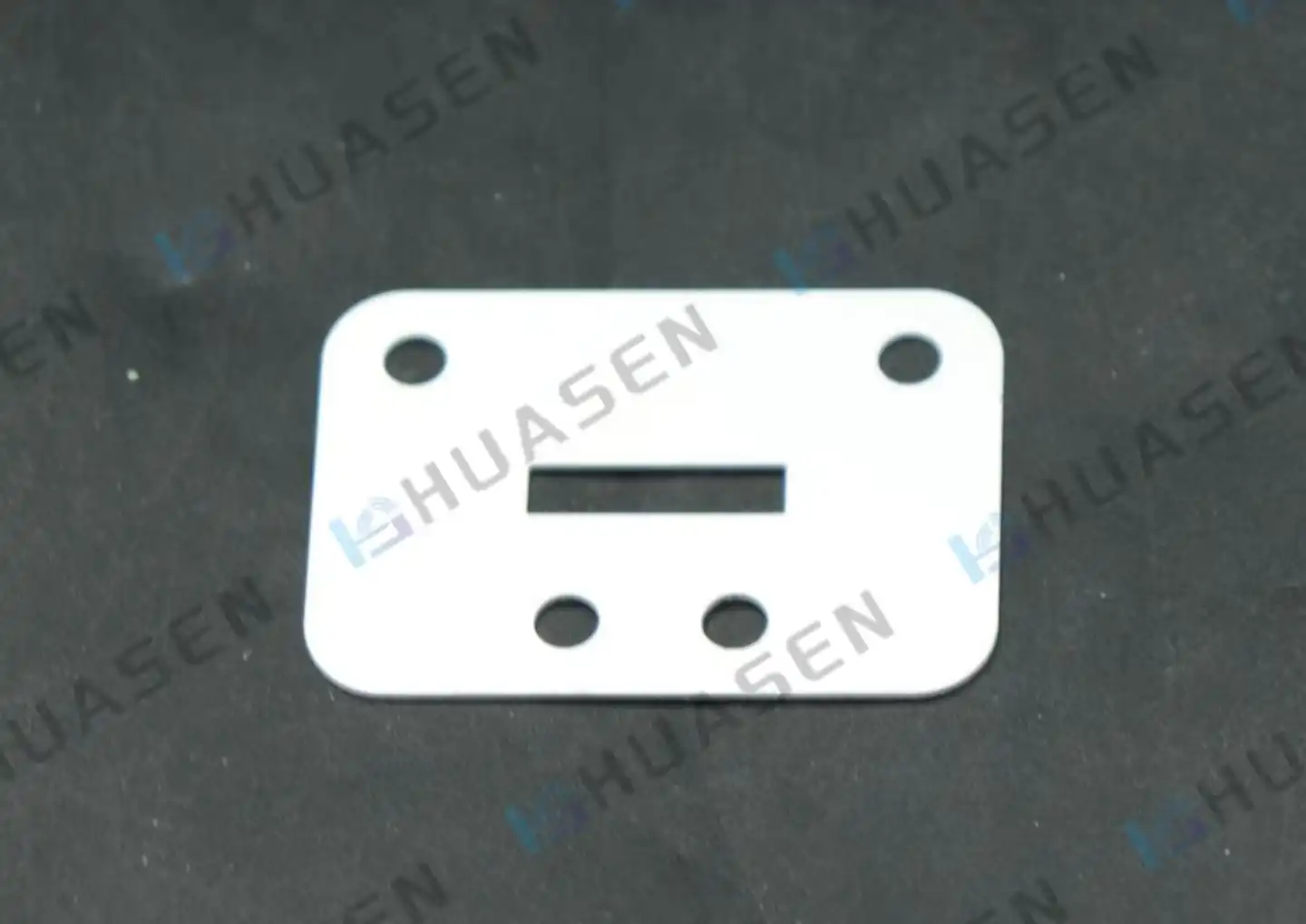
Beryllium copper gaskets dominate high-reliability applications where conductivity and spring temper remain stable across wide temperature ranges. These precision-stamped components feature controlled thickness tolerances—typically ±0.002 inches—ensuring predictable compression behavior. The material's inherent corrosion resistance and fatigue strength make it suitable for pressurized waveguide runs in satellite ground stations and naval radar systems. Aluminum and brass alternatives offer cost advantages in lower-stress applications, though their compression characteristics require careful engineering to prevent over-compression that permanently deforms the seal.
Conductive Elastomer Variants
Silicone rubber loaded with conductive particles provides flexibility advantages in applications experiencing significant flange misalignment or vibration. These gaskets accommodate surface irregularities through elastic deformation rather than plastic flow. We've documented successful deployments in mobile base station applications where wind-induced tower sway creates dynamic loading conditions. The trade-off involves reduced high-frequency shielding performance compared to solid metal gaskets, typically limiting their use to sub-18 GHz applications.
Composite and Hybrid Designs
Emerging gasket architectures combine metallic outer layers with elastomeric cores, delivering both electromagnetic performance and environmental sealing in a single component. These designs excel in pressurized waveguide systems where leak rates must remain below 1×10⁻⁶ standard cubic centimeters per second—the threshold for maintaining internal desiccation over multi-year service intervals. Manufacturing complexity and cost considerations typically reserve these solutions for mission-critical defense and aerospace applications.
Material Selection Decision Framework
Choosing between gasket materials demands analyzing several interdependent factors beyond the initial purchase price. Temperature cycling imposes mechanical stress that degrades elastomers through outgassing and hardening, while metallic gaskets maintain dimensional stability. Chemical compatibility matters when waveguides carry reactive atmospheres or encounter external contaminants like aviation fuels or hydraulic fluids. Galvanic corrosion potential requires matching gasket metals to flange materials—stainless steel flanges pair well with beryllium copper gaskets, whereas aluminum flanges may experience accelerated corrosion with dissimilar metals unless proper surface treatments are employed.
Installation and Maintenance Best Practices for Waveguide Gaskets
Proper installation procedures determine whether a gasket achieves its design performance or becomes a premature failure point. We've investigated numerous field failures ultimately traced to installation deviations that compromised seal integrity.
Surface Preparation Protocols
Flange faces must exhibit specific surface finish characteristics—typically 32 micro-inches Ra or better—to ensure intimate contact with the gasket. Contamination from machining oils, fingerprints, or oxidation disrupts electrical continuity and creates galvanic cells that accelerate corrosion. Cleaning protocols should specify approved solvents (usually isopropyl alcohol or specialized RF-safe cleaners) and lint-free application methods. Surface inspection under magnification reveals scratches, pits, or burrs that require remediation before gasket installation.
Torque Specifications and Bolt Loading
Achieving uniform compression around the gasket perimeter requires following documented bolt-tightening sequences and torque values. Under-torquing leaves gaps that arubber gasketpermits RF leakage and environmental infiltration,while over-torquing permanently crushes metallic gaskets beyond their elastic limit or causes stress concentration that cracks brittle materials. Calibrated torque wrenches remain essential, with verification intervals matching quality system requirements. Star-pattern tightening sequences distribute loading evenly, preventing gasket extrusion or localized stress concentrations.
Environmental Considerations During Installation
Temperature changes how a gasket compresses. For example, metallic gaskets placed at high temperatures may lose preload as the assemblies cool down, and elastomers become too soft if they are installed in direct sunlight. Controlling humidity stops mist from forming on cold metal surfaces during assembly, which could keep water inside the sealed waveguide. Protecting against wind and dust during outdoor installs stops the spread of particles that can cause leaks or damage to gasket surfaces.
Inspection and Diagnostic Techniques
Scheduled inspection intervals rely on how bad the application is. For example, checks may only need to be done once a year in a benign laboratory setting, but they need to be done every three months in offshore maritime installations. Gasket extrusion, compression set, and surface rust can all be seen with the naked eye. Functional testing uses VSWR measurements over the entire working bandwidth to find electrical continuity problems before they become catastrophic. Leak detection in pressurised waveguide systems can be done with helium mass spectrometry or pressure decay testing. These methods give a much more accurate picture of the seal's integrity than eye inspection alone.
Common Failure Modes and Remediation
Most gasket repairs that happen too soon are caused by three different types of failure. Compression set happens when materials lose their flexibility after being loaded for a long time, especially elastomers that are exposed to high temperatures. Corrosion can happen when different metals interact electrically or when chemicals in the surroundings attack the metal. Damage to the mechanical parts happens when they are handled incorrectly, overtorqued, or hit by strange objects during installation. When maintenance teams see these patterns, they can take corrective steps like replacing materials, protecting the environment better, or improving installation methods that make service intervals longer and lower lifecycle costs.
Comparing Waveguide Gasket Solutions: What B2B Buyers Should Know
Procurement decisions extend beyond technical specifications to encompass the total cost of ownership, supply chain reliability, and vendor capability alignment with program requirements.
Performance vs. Cost Trade-offs
Premium beryllium copper gaskets command price premiums justified by superior conductivity, corrosion resistance, and reusability potential. Budget-constrained programs may accept performance compromises inherent in aluminum or conductive elastomer gaskets, recognizing shorter service life and potential operational limitations. Quantifying these trade-offs requires lifecycle cost modeling that factors replacement labor, system downtime, and performance degradation impacts on overall system effectiveness.
Standard vs. Custom Configurations
Standard gasket profiles are available right away and are priced competitively. They fit popular waveguide sizes (WR-90, WR-137, WR-229) and flange types. For unique flange designs, multi-port setups, or uses that need built-in environmental seals, custom geometries are needed. Custom development comes with higher costs for tools, longer lead times, and lower minimum order quantities, which can make prototype projects or low-volume production harder to handle. A common problem in buying is balancing the benefits of standardisation with the benefits of application-specific optimisation.
Vendor Qualification Criteria
When choosing a supplier, you should look at how they control the manufacturing process, how well they test and inspect, and what certifications they have that are important to the end use. ISO 9001 registration gives you basic quality security, while AS9100 certification shows that your process is mature enough for aerospace use. Defence projects may be required by contract to follow MIL-STD. Technical support skills, such as design help, sample provision, and failure analysis knowledge, set real partnership sellers apart from commodity vendors.
Supply Chain Risk Management
Dependencies on a single source make you vulnerable to problems, limited capacity, or changes in quality. When you use dual-sourcing, you need to make sure that both sources meet the same requirements. This usually means doing qualification tests and updating documentation. Changes in lead times, currencies, and geopolitical risks are all part of global supply lines. However, smart procurement departments can reduce these risks by strategically positioning their inventory and managing their relationships with suppliers.
Ensuring Quality and Compliance in Waveguide Gasket Procurement
Regulatory compliance and quality assurance practices protect buyers from substandard components that jeopardize system performance and program schedules.
Certification and Standards Landscape
Multiple standards govern waveguide gasket specifications depending on the application domain. MIL-STD-348 defines flange dimensions and tolerances for military systems, while commercial telecommunications infrastructure references industry standards developed by organizations like IEEE and ETSI. Material specifications invoke ASTM standards for gasketsfor mechanical properties, composition, and environmental resistance. RoHS and REACH compliance addresses hazardous substance restrictions increasingly relevant in commercial and export applications. Understanding which standards apply to specific programs ensures procurement specifications accurately capture mandatory requirements.
Incoming Inspection Protocols
Before gaskets go into production, they go through a receiving inspection that checks for key dimensions, material properties, and surface conditions. Thickness, diameter, and profile tolerances are confirmed by using precise measuring tools to check the dimensions. The material certification review checks that the composition matches the requirements for purchase. Visual analysis finds flaws on the surface, contamination, or damage that happened during shipping. Statistical sampling plans weigh the cost of inspections against the amount of risk that can be tolerated. For uses that are safety- or flight-critical, stricter rules are used.
Supplier Audit and Qualification
On-site supplier evaluations give you a look into the technical skills, quality systems, and manufacturing processes that paper studies can't. Audit teams look at records of process control, measurements, how to handle nonconformances, and efforts to make things better all the time. Capability assessments check to see if the supplier's facilities, tools, and staff have the right technical skills to meet the needs of the program. For complex, high-reliability parts, transactional procurement methods don't always work as well as long-term supplier ties based on mutual trust.
Strategic Procurement Approaches
By combining purchases in larger amounts, you can get better prices, shorter lead times, and better technical help. Blanket purchase agreements with set releases make it easier for both the buyer and the seller to plan production. With vendor-managed inventory plans, holding costs are transferred while materials are made available. For these methods to work, there needs to be trust, openness, and alignment of incentives. You can build these traits through professional relationship management instead of just doing business.
Conclusion
In RF systems, waveguide seals are an important part of protecting the environment, working well with electromagnetic fields, and being reliable mechanically. For implementations to go well, the materials must be carefully chosen to match the operational stresses, the installation must be done correctly, and upkeep must be done regularly. When B2B procurement workers understand these technical details, they can make decisions that improve system performance while keeping costs low over its lifetime. Modern telecommunications, radar, and aerospace applications are very complicated. Because of this, it's best to work with suppliers who have a lot of technical knowledge, strong quality systems, and a dedication to customer success that goes beyond just supplying parts.
FAQ
1. How often should waveguide gaskets be inspected?
Inspection intervals vary based on environmental severity and application criticality. Indoor laboratory installations in controlled environments typically warrant annual inspections, while outdoor base stations exposed to weather cycling benefit from semi-annual checks. Maritime and offshore platforms demand quarterly inspection due to accelerated corrosion potential. High-power transmitter applications should include gasket condition assessment during scheduled maintenance outages. Monitoring VSWR trends between physical inspections provides early warning of developing seal degradation.
2. Can waveguide gaskets be reused after disassembly?
Metallic gaskets experiencing compression within elastic limits may tolerate reuse if visual inspection confirms no permanent deformation, surface damage, or corrosion. Beryllium copper gaskets specifically designed for multiple installations can withstand 3-5 compression cycles when properly handled. Elastomeric gaskets generally should not be reused due to compression set, which permanently reduces seal effectiveness. Critical applications justify treating gaskets as consumable items replaced at every maintenance intervention, eliminating reuse-related failure risks.
3. What factors most significantly affect gasket service life?
Temperature cycling drives mechanical fatigue through differential thermal expansion between gasket and flange materials. Continuous high-temperature exposure accelerates oxidation and material property degradation, particularly in elastomers. Corrosive atmospheres attack gasket surfaces, creating leak paths and compromising electrical conductivity. Installation quality fundamentally determines whether gaskets achieve design life. Proper torque, clean surfaces, and correct handling prevent premature failures that no material selection can overcome. Matching gasket specifications to actual operational conditions remains the most effective strategy for maximizing service intervals.
Partner with Huasen Microwave for Superior Waveguide Sealing Solutions
Huasen Microwave brings three decades of RF component engineering excellence to your most demanding waveguide gasket applications. As an established gasket manufacturer, we combine materials expertise, precision manufacturing capabilities, and application-specific design support to deliver sealing solutions that meet stringent performance requirements. Our ISO-certified production facilities produce waveguide gaskets serving telecommunications infrastructure, aerospace platforms,and defense systems worldwide. Whether your program requires standard configurations with rapid delivery or custom geometries optimized for unique flange designs, our engineering team provides responsive technical consultation backed by rigorous quality assurance. Contact us at sales@huasenmicrowave.com to discuss your RF sealing requirements, receive application-specific recommendations, and access volume pricing that optimizes your component procurement budget.
References
1. Montgomery, C. G., Dicke, R. H., and Purcell, E. M. Principles of Microwave Circuits. Institution of Engineering and Technology, 1987.
2. Saad, T. S. Microwave Engineers' Handbook, Volume 2. Artech House Publishers, 1971.
3. Ragan, G. L. Microwave Transmission Circuits. McGraw-Hill Book Company, 1948.
4. Harvey, A. F. Microwave Engineering. Academic Press, 1963.
5. Matthaei, G. L., Young, L., and Jones, E. M. T. Microwave Filters, Impedance-Matching Networks, and Coupling Structures. Artech House Publishers, 1980.
6. Collin, R. E. Foundations for Microwave Engineering. IEEE Press, 2001.
Send Inquiry