How to Test Coupling Accuracy of a Directional Coupler at Millimeter Wave






2026-04-23 21:55:18
To test the coupling accuracy of a directional coupler at millimeter wave frequencies, you need precise tools and a strict process. The main step is to check how well the device measures signal power at frequencies ranging from 30 GHz to 300 GHz. Engineers separate the coupled port output and compare it to the through-port signal using a vector network analyzer (VNA) set up with SOLT or TRL methods to find the real coupling factor. If the values don't match up exactly, it could be because of manufacturing tolerances or temperature drift. This measurement has a direct effect on how reliable systems are in 5G base stations, satellite uplinks, and radar in space.
Introduction
In order to check the integrity of the signals in millimeter wave systems without interfering with the main transmission path, directional couplers are essential. It is very important to know how to check coupling accuracy at these very high frequencies, whether you are setting up 5G backhaul infrastructure, calibrating radar systems, or testing satellite communication equipment. At frequencies between 30 GHz and 300 GHz, even small changes in the coupling factor can lead to measurement errors that hurt the performance of the whole system.
We've seen procurement managers have a hard time with specification sheets that say they are very specific but don't work in real-world tests. RF engineers have a hard time separating the coupler's real performance from the artifacts of the test setup. This guide takes a systematic approach to these problems, providing useful testing methods honed over many years of production at Huasen Microwave Technology Co., Ltd., where we've improved the design of millimeter wave components since 1993.
The coupling accuracy of a coupler is how well it extracts a predictable power fraction. It has a direct effect on the automatic level control loops in transmitters, the measurements of return loss in antenna systems, and the monitoring of power in high-value radar installations. This article will talk about why millimeter wave testing is fundamentally different from lower frequency validation, what kinds of equipment produce accurate data, and how to understand the results in the context of procurement.
Understanding the Fundamentals of Directional Coupler Coupling Accuracy
Coupling accuracy measures how closely a device's directional coupler coupling factor matches the value that was given for different frequencies and power ranges. Precision directional couplers are different from basic signal splitters because they have to keep the coupling flatness very close to 0 (usually within 0.5 dB to 1.0 dB across the whole waveguide bands) while achieving directivity over 35 dB at millimeter wave frequencies.
What Defines Coupling Accuracy at Millimeter Wave?
When the frequency goes above 30 GHz, the wavelength gets smaller to millimeters. This means that mechanical tolerances and surface roughness have a big effect on how electromagnetic waves behave. The coupling mechanism must keep its accuracy within micrometers, whether it's made up of branch-line structures in coaxial designs or multi-hole arrays in waveguide broadwall designs. Changes in temperature make metal expand, which moves the coupling factors, and connector interfaces add mismatch uncertainties that are much bigger than those seen at lower frequencies.
A 20 dB coupling factor in a typical Ka-band coupler working at 26.5 to 40 GHz means that the coupled port sends 1% of the power that was sent in. Power changes of 0.89% to 1.12% are what the accuracy specifications of ±0.5 dB mean. This is fine for many monitoring tasks but not so good for precise calibration standards.
Key Performance Parameters Affecting Accuracy
The coupler's ability to tell the difference between forward and reverse signals is measured by its directivity. At millimeter waves, you need very good mechanical symmetry to get 40 dB of directivity. When directivity isn't good enough, reflected signals can mess up coupled port readings. This makes measurements less clear in VSWR testing situations that are common in characterizing antennas.
Insertion loss is the amount of power that is lost in the main transmission path. Low-loss designs—often below 0.5 dB when coupled power is taken into account—keep signal strength but need to choose materials that are both conductive and easy to machine. Silver-plated oxygen-free copper works best, but over thousands of hours of use, thermal cycling can make the plating less adherent.
Where the coupling flatness requirements apply depends on the frequency range. Broadband directional couplers that cover 18 to 40 GHz make system design easier by getting rid of multiple narrow-band units. This directly meets customer needs for less inventory and easier supply chains. To get flat coupling across octave bandwidths, however, you need complex compensation methods that make manufacturing more difficult.
Temperature Stability Considerations
Temperature changes of -40°C to +85°C happen to millimeter wave systems that are installed on rooftop base stations. Mismatches in the coefficients of thermal expansion between the housing materials and the coupling structures change the coupling factors by 0.3 to 0.8 dB between these two extremes. Temperature coefficients should be clearly stated in procurement specifications, especially for outdoor telecom infrastructure and aerospace uses that can't be controlled by the environment.
Common Challenges in Testing Coupling Accuracy at Millimeter Wave
When testing a directional coupler's performance at millimeter wave frequencies, measurement errors show up that don't show up at lower frequencies. As frequencies go up, cables become less flexible, which makes test port connections mechanically sensitive. At V-band frequencies, connector repeatability—the change caused by repeated mating cycles—can be higher than 0.1 dB, which could hide real coupler performance changes.
Equipment Limitations and Calibration Complexity
Most vector network analyzers (VNA) that work above 50 GHz have frequency extension modules or built-in millimeter wave test sets. Compared to microwave-band instruments, these systems have higher noise floors and a smaller dynamic range. It is common for the dynamic range to drop from 110 dB at 10 GHz to 90 dB at 75 GHz. This makes it harder to accurately measure high-directivity couplers.
Measuring accuracy is directly affected by the quality of the calibration kit. It costs tens of thousands of dollars per frequency band to buy precise airline standards and waveguide calibration parts. Many labs cut corners by using less accurate calibration methods, which leads to repeated mistakes that procurement teams later blame on coupler problems instead of flaws in the test methodology.
Environmental and Mechanical Factors
Millimeter wave vibrations from cooling fans or nearby equipment can couple into test cables and change the amplitude of signals that are being measured. We've seen 0.2 dB measurement differences in test benches that aren't well isolated. During measurement sweeps, temperature differences across the device being tested cause changes in size, which show up as frequency-dependent coupling changes that don't mean the performance is stable.
Specifications for connector torque become very important. When interfaces aren't torqued enough, air gaps form that change coupling factors and weaken directivity. When precision connector threads are over-torqued, they become permanently less repeatable. For 2.92 mm connectors, the right torque wrenches that are calibrated to 8–12 inch-pounds stop these artifacts from happening.
Signal Leakage and Shielding Requirements
Millimeter wave energy radiates well from any break in the material. If the test fixture shielding isn't good enough, coupled power can leak into space instead of reaching the measurement port. With absorber-lined test enclosures and careful cable routing, these losses can be stopped. If they aren't, the results could be wrong and show higher insertion loss and lower coupling factors than they really are.
Step-by-Step Methodology for Testing Coupling Accuracy of Millimeter Wave Directional Couplers
A step-by-step guide for checking how well millimeter wave directional couplers work as coupling devices, including the use of a hybrid coupler, requires following a set of steps that separate the performance of the device from the effects of the test system. This method is based on practices that have been refined over thousands of validation cycles in defense, aerospace, and telecommunications applications.
Equipment Preparation and Calibration
Start with a VNA that covers the coupler's frequency range plus at least 20 dB more than the coupling factor. To accurately measure directivity with a 20 dB coupler, you need 100 dB of dynamic range. Check the phase stability of test cables by bending them while keeping an eye on the S-parameter traces. Any changes that are greater than 0.05 dB mean that the cables need to be replaced.
Calibration should be done at the test reference planes that are closest to the device being tested. When coupling factors are above 10 dB, SOLT calibration using precise mechanical standards gives enough accuracy. For tighter tolerances, TRL calibration is needed, but it needs special transmission line standards that match the coupler's characteristic impedance and frequency range. After turning on the test system, wait 45 minutes for the temperature to level off before starting the calibration process.
Measurement Sequence and Data Collection
Connect the input port of the coupler to the VNA source, the through port to Port 2, and the coupled port to Port 3 if it's available. If not, measure the coupled port separately. To get a good picture of resonances and ripples, set the frequency sweep points to at least 401 across the band. When measuring high-directivity parameters, averaging 16 to 64 sweeps lowers the noise floor impact.
Look at S21 (insertion loss), S31 (coupling factor), and S41 (isolation or directivity) over a wide range of frequencies. Find the accuracy of the coupling by comparing the measured S31 values to the specifications given in the datasheet at different frequency points. Deviations that are bigger than the stated tolerances mean that the product was made differently or could be damaged. To be able to track measurements, write down the connector torque, the temperature of the area, and the cable's serial number.
Interpreting Results and Identifying Anomalies
It should look like the coupling flatness is smooth across all frequencies, with a slow roll-off at the band edges. Sharp notches show that there are impedance mismatches at internal transitions. When certain frequencies are reached, directivity loss often shows up as mechanical imbalances in coupling structures. Check the measurements against the acceptance criteria listed in the procurement specifications. Write down any differences and make a note of whether they are within the standard deviations set by MIL-STD-3922 or a similar standard.
Stability requirements are confirmed by temperature testing. You can test the coupling factor at -40°C, +25°C, and +85°C by putting the coupler in a controlled environmental chamber. When drift is more than 0.5 dB in this range, it can be hard to design systems that use calibration tables to adjust for temperature. This information is especially useful for base station front-end modules that are exposed to temperature changes outside.
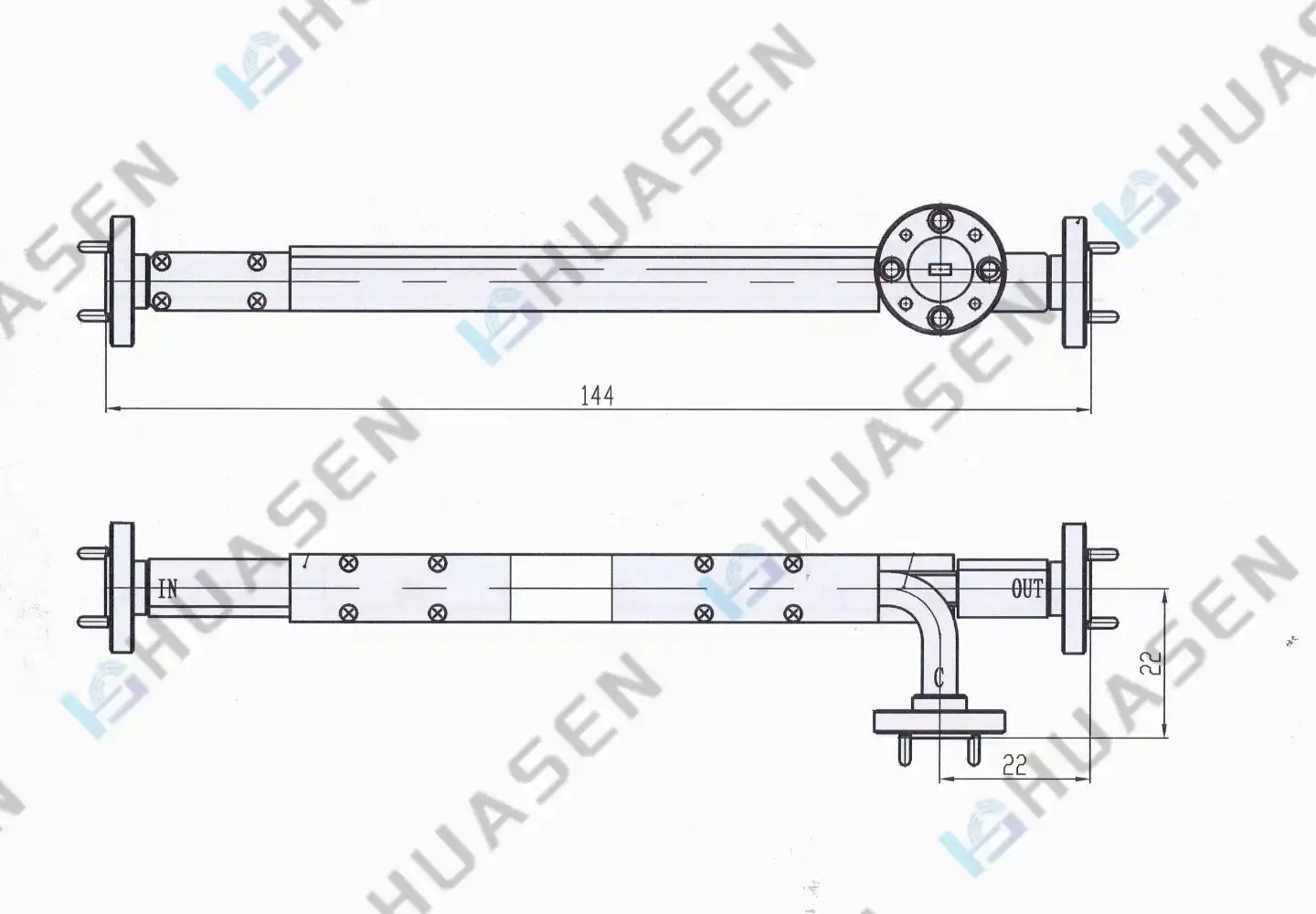
Comparing Directional Coupler Testing Approaches and Equipment
There are different directional coupler topologies and test configurations that work best for different uses and accuracy needs. Below 50 GHz, coaxial directional couplers are most common because they are easy to use and don't cost much. These gadgets use branch-line or coupled-line structures in coaxial transmission media to provide bandwidths greater than an octave with insertion loss less than 0.3 dB.
Coaxial vs. Waveguide Implementation Trade-offs
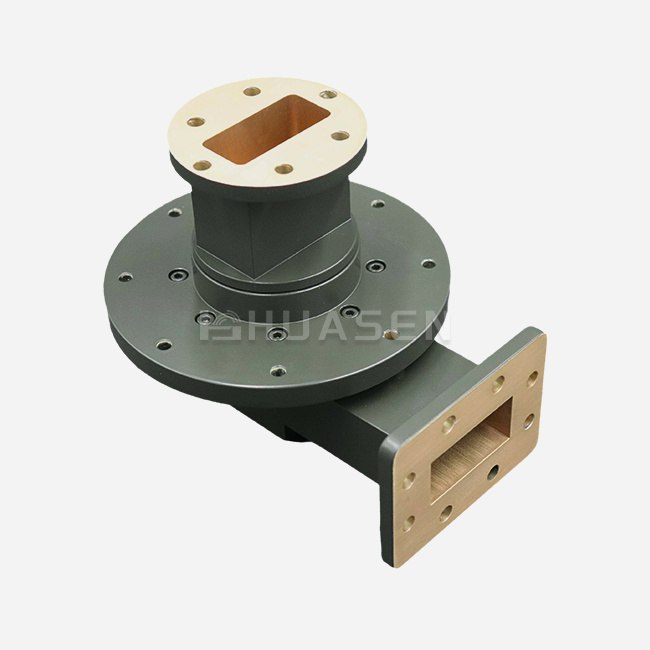
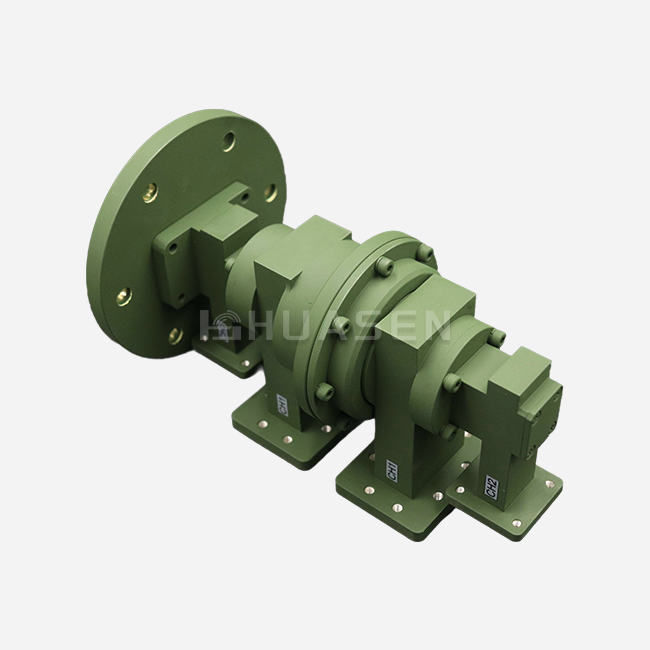
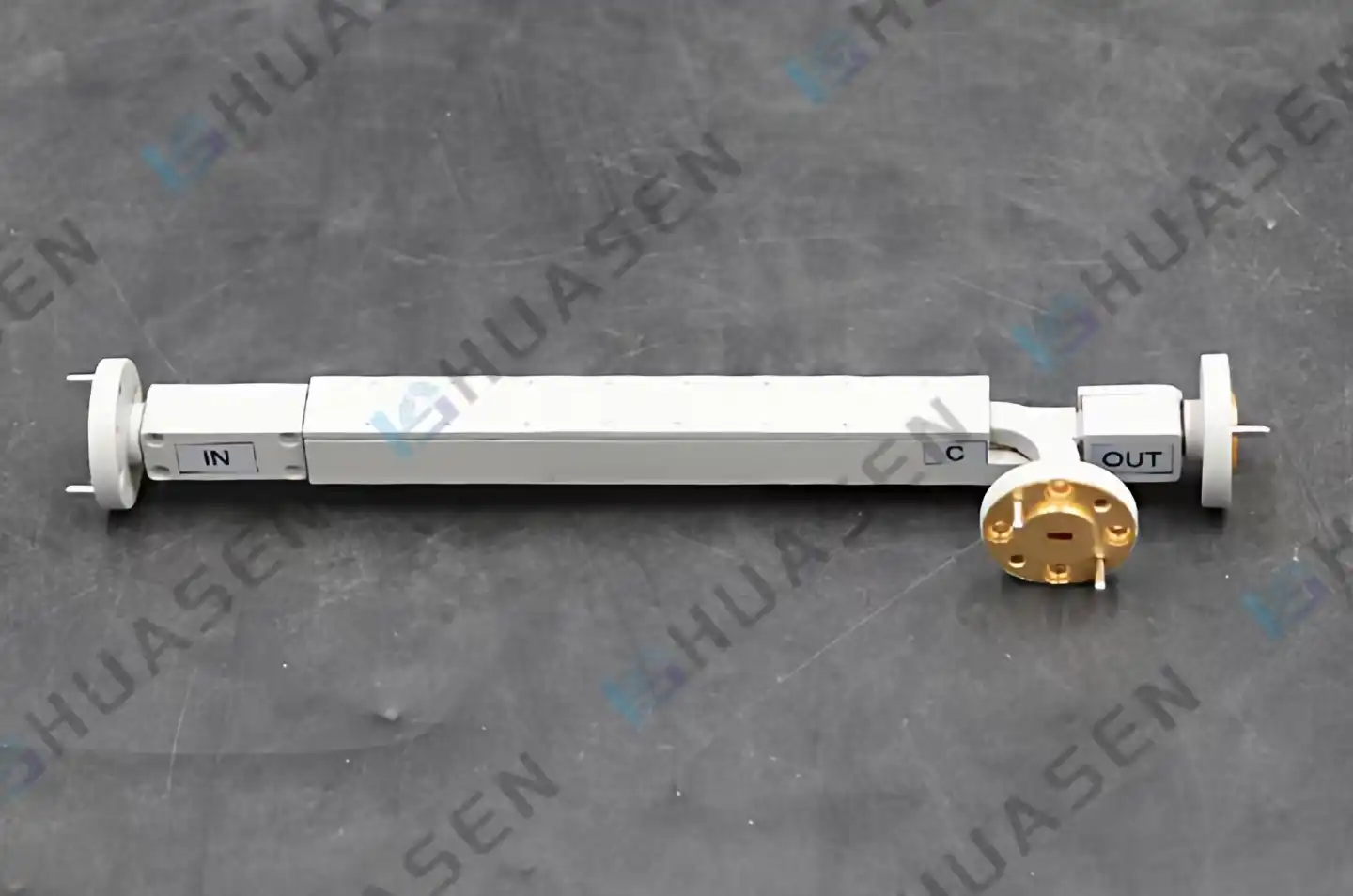
Above 40 GHz, when coaxial losses rise and connector repeatability falls, waveguide broadwall directional couplers become more useful. When milled into waveguide broadwalls, multi-hole coupling arrays get directivity levels above 40 dB and can handle up to kilowatts of power in continuous-wave operation. However, waveguide flanges need more precise alignment and torque procedures than coaxial connections, which makes field deployment more difficult.
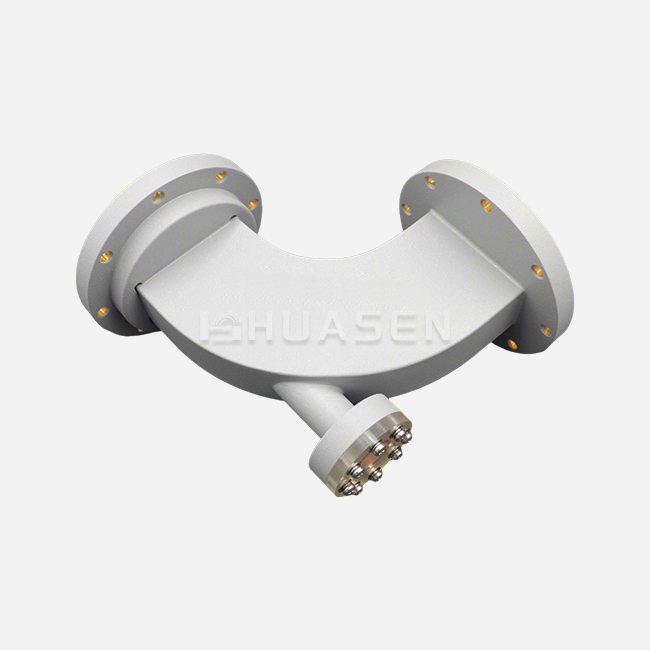
Hybrid couplers, especially the 90-degree and 180-degree types, divide power instead of sampling signals. When these are bought, they should not be mixed up with directional couplers because they do different jobs. There is an equal power split between the output ports of a hybrid coupler, but there isn't a high level of isolation between the through and coupled ports, which is needed for monitoring purposes.
Selecting Appropriate Test Equipment
Scalar network analyzers measure magnitude without knowing phase for entry-level millimeter wave testing. These systems are 40% less expensive than vector analyzers, but they can't measure directivity, so they can only be used to check the coupling factor. When procurement teams have to balance measurement needs with limited budgets, they often choose this method for incoming inspection and rely on supplier certification for full characterization.
High-end VNAs with built-in millimeter-wave converters and hybrid couplers get rid of the need for external frequency extension modules. This makes measurements more accurate by reducing the number of connector interfaces that need to be used. These systems, made by companies like Keysight and Anritsu, have dynamic ranges higher than 100 dB at W-band frequencies. This makes it possible to precisely characterize couplers with directivity requirements higher than 35 dB.
Brand Considerations and Supplier Evaluation
Reputable manufacturers keep tight controls on the production process to make sure that each lot is the same. With their low cost and wide frequency range, Mini-Circuits are the most popular choice for business uses. Anritsu and Keysight make products for the aerospace and laboratory markets that need to meet MIL-STD standards and have extended environmental ratings. Looking at supplier certifications like ISO 9001, AS9100, and RoHS compliance gives you confidence in the quality systems used in manufacturing.
Huasen Microwave Technology has been making millimeter wave parts for 30 years and can offer custom coupling factors and frequency ranges to fit different system architectures. Our manufacturing capabilities allow us to make prototypes up to large production runs. This means that we can support the whole project lifecycle, from validating the initial design to expanding the deployment. This flexibility directly fixes procurement problems related to keeping track of inventory and the risk of items going out of date.
Conclusion
To test coupling accuracy at millimeter wave frequencies, you need more than just expensive tools. You also need to know how device physics, measurement artifacts, and application requirements all work together. Validation data that is reliable can be told apart from data that isn't by using systematic calibration, controlled test environments, and a realistic interpretation of specifications. Deployment risks are kept to a minimum when procurement teams form partnerships with manufacturers that show they are open about testing and have application expertise. As more 5G infrastructure, satellite communications, and advanced radar use millimeter wave systems, coupling accuracy validation is needed to make sure that system performance matches what was predicted by the designers. The methods described here make it possible to choose components with confidence and work reliably in the field.
FAQ
1. What insertion loss should I expect from a millimeter wave directional coupler?
This is the normal range for insertion loss: 0.3 dB to 0.8 dB at Ka-band frequencies and 1.0 dB to 1.5 dB at W-band due to conductor losses and the complexity of the coupling network. This doesn't include the power that is intentionally coupled; a 20 dB coupler that takes out 1% of the input power has an extra theoretical loss of 0.04 dB from power division alone.
2. How often should directional couplers be recalibrated in production environments?
For climate-controlled lab instruments that don't have to deal with a lot of mechanical stress, once a year recalibration is enough. Field-deployed units in base stations or mobile platforms need to be checked every six months because they are exposed to temperature changes and vibrations. Set up times for recalibration based on monitoring for drift during the initial stages of deployment.
3. Can directional couplers themselves be calibrated, or only the test system?
Directional couplers are passive devices that can't be changed; they're described instead of calibrated. The calibration of the test system compares measurements to known standards, which lets you get a good idea of the coupler's fixed parameters. Some manufacturers offer certified S-parameter data files that can be used as references for validating the system.
Partner with Experienced Directional Coupler Manufacturers for Your Millimeter Wave Solutions
Good components are the first step to getting accurate coupling measurements. Precision-engineered directional couplers from DC to 300 GHz are made by Huasen Microwave Technology. They are used in defense, aerospace, and telecommunications applications and have been shown to be reliable. Our manufacturing experience, gained since 1993, guarantees coupling flatness within ±0.5 dB and directivity exceeding 40 dB in millimeter wave bands that are hard to work with. Whether you need waveguide solutions for high-power radar systems or coaxial designs for flexible integration, our engineering team can make something that fits your exact needs. You can talk to directional coupler experts at sales@huasenmicrowave.com about your needs. These experts know how to prioritize delivery times, technical support, and lower costs when buying things.
References
1. Pozar, David M. "Microwave Engineering," 4th Edition. Wiley, 2011. Chapter 7: Power Dividers and Directional Couplers.
2. Riblet, H.J. "The Application of a New Class of Equal-Ripple Functions to Some Familiar Transmission-Line Problems." IEEE Transactions on Microwave Theory and Techniques, Vol. MTT-12, 1964.
3. Milligan, Thomas A. "Modern Antenna Design," 2nd Edition. Wiley-IEEE Press, 2005. Section 12.4: Directional Coupler Design and Testing.
4. MIL-DTL-3922: "Detail Specification for Couplers, Directional, Radio Frequency, Coaxial and Waveguide." Department of Defense, 2018.
5. Keysight Technologies. "Millimeter Wave Vector Network Analyzer Calibration Techniques," Application Note 5992-1620EN, 2020.
6. European Telecommunications Standards Institute. "Electromagnetic Compatibility and Radio Spectrum Matters; Measurement Uncertainty in RF Testing," ETSI TR 100 028-1, Version 1.5.1, 2019.
Send Inquiry