How to Select Digital Phase Shifters for Phased Array Radars?






2026-03-06 21:58:43
To choose the correct digital phase shifter for phased array radar systems, you need to carefully look at the technical details, performance parameters, and factors that affect how well the system works with the shifter. The best choice relies on the frequency needs, the phase resolution needs, the power consumption limits, and the working conditions in the environment. Engineers can find parts that provide precise beam steering while keeping signal integrity and system reliability in a wide range of radar uses by understanding these important selection criteria.
Understanding Digital Phase Shifters and Their Role in Phased Array Radars
Modern phased array radar systems are built around digital phase shifters, which allow exact electronic beam steering without any mechanical movement. These complex parts change the phase of electromagnetic signals to control the direction and shape of the beam, which lets them quickly scan over many objects at once.
What Are Digital Phase Shifters?
Digital phase shifters are electronic gadgets that change the phase of RF signals that come in by taking small, digitally controlled steps. Unlike their analogue cousins, these devices have set phase states that can be quickly changed with digital control signals. The technology uses semiconductor switches, usually PIN diodes or MMIC technology, to send signals along different path lengths or reactive elements. The basic idea is to add time delays or phase changes to the signal path. When coordinated phase changes are made to multiple antenna elements in a phased array, the combined radiation pattern can be electronically steered without the antennas having to be moved. This feature completely changes how well radar systems work by letting beams be placed instantly and formed into multiple beams.
Key Technical Specifications
One of the most important specs is phase resolution, which determines how precise the beam steering is. Resolution choices of 4 bits (22.5° steps), 5 bits (11.25° steps), and 6 bits (5.625° steps) are common. Finer beam control is possible with higher bit resolution, but it makes things more complicated and costs more. Insertion loss, which can be anywhere from 3 to 8 dB based on frequency and design, lowers the sensitivity of the system as a whole and needs to be kept as low as possible for best performance. Frequency range compatibility directly affects how the system can be integrated. Modern devices work in different bands, such as L-band (1-2 GHz), S-band (2-4 GHz), C-band (4-8 GHz), and X-band (8-12 GHz). New solutions are now being developed that can work with millimeter-wave frequencies for 5G uses.
Advantages Over Traditional Phase Shifting Methods
When compared to mechanical or analogue options, digital phase shifters have a lot of advantages. The biggest benefit is speed, as change times are measured in nanoseconds instead of milliseconds, which is how long mechanical systems take. This quick reaction lets you keep track of targets that are moving quickly and use advanced radar techniques like frequency hopping and adaptive beamforming. Because there are no moving parts, the system is more reliable because it doesn't break down due to wear and tear, as mechanical systems do. Digital control interfaces make it easier to connect to current radar processors and let more complex beam management algorithms work. Additionally, the fixed nature of digital phase states makes them very repeatable and resistant to changes in the environment that can affect analogue systems.

Core Selection Criteria for Digital Phase Shifters in Phased Array Radars
Choosing appropriate phase-shifting components demands thorough evaluation of multiple technical parameters that directly impact radar system performance and operational reliability.
Phase Resolution and Accuracy Requirements
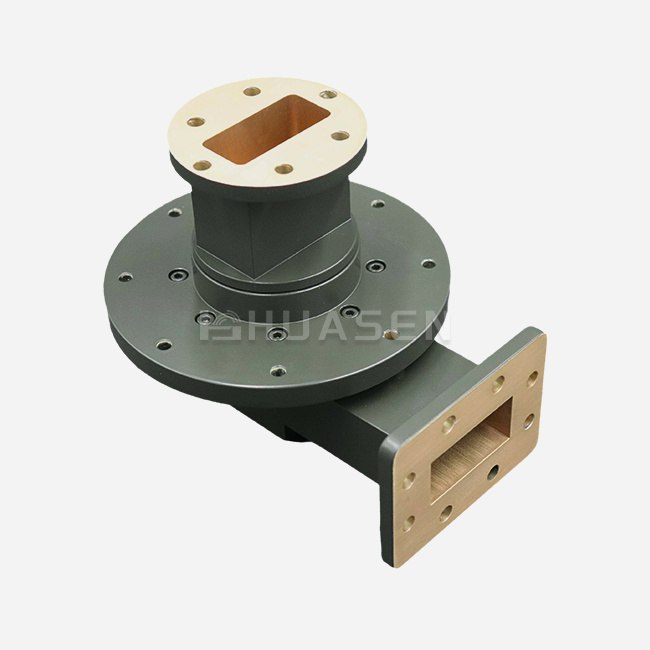
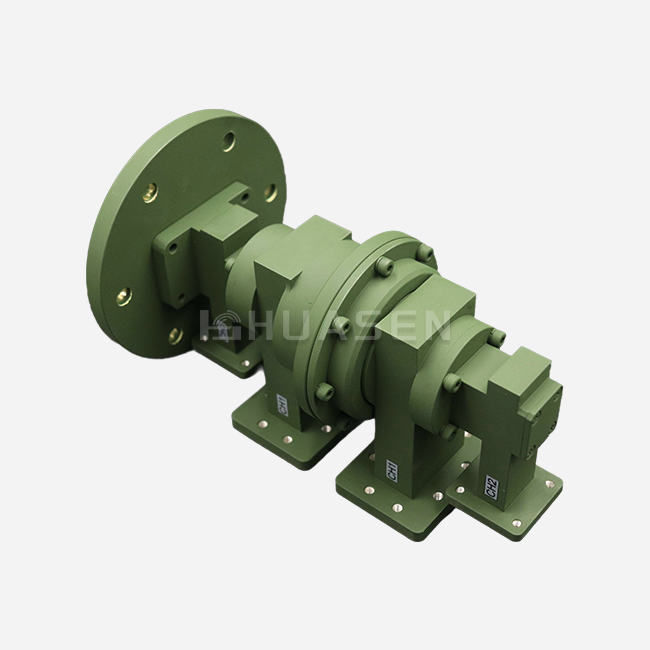
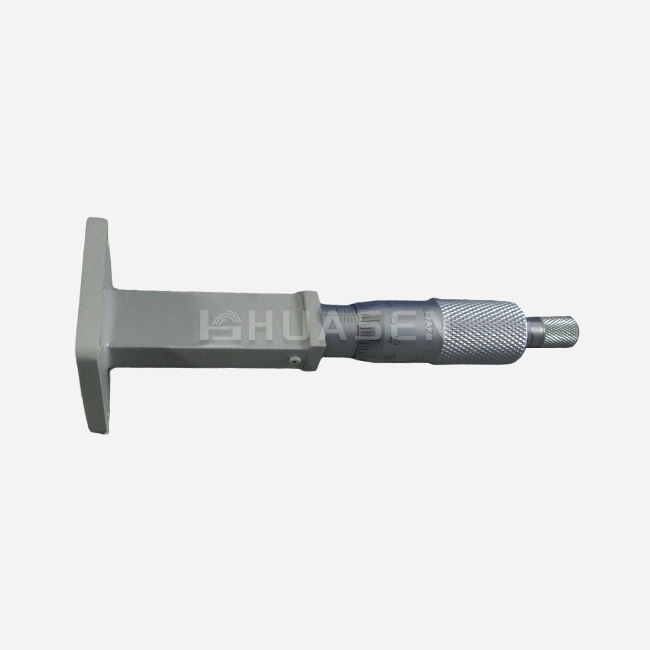
Phase resolution determines the Waveguide Phase Shifter precision of beam steering and sidelobe control in phased array systems. The relationship between phase resolution and angular beam steering accuracy follows the formula: angular resolution ≈ phase resolution × (wavelength/antenna spacing). Systems requiring precise target tracking typically benefit from 5-bit or 6-bit resolution, while surveillance applications may operate effectively with 4-bit resolution. Phase accuracy specifications define how closely actual phase shifts match commanded values. Typical accuracy requirements range from ±5° to ±10°, depending on application demands. Tighter accuracy specifications improve beam pattern quality and reduce unwanted sidelobes, but may increase component cost and complexity.
Insertion Loss and Power Consumption Trade-offs
Insertion loss directly impacts radar system sensitivity and detection range. Each decibel of insertion loss reduces effective transmitted power and received signal strength, potentially degrading overall system performance. Modern designs achieve insertion losses between 3-6 dB across operational bandwidths, with lower-loss devices commanding premium pricing. Power consumption considerations become critical in battery-powered or thermally constrained applications. Static power consumption, typically ranging from 10-50 mW per channel, affects overall system efficiency. Dynamic power consumption during switching operations influences thermal management requirements and battery life in portable systems.
Frequency Compatibility and Bandwidth Considerations
Operational frequency range must align with radar system requirements while providing adequate bandwidth for signal processing. Wide bandwidth capability supports advanced radar techniques, including chirped waveforms and frequency diversity operations. Many modern applications require octave or multi-octave bandwidth coverage to accommodate multiple radar modes within a single system. Emerging 5G radar technologies operating in millimeter-wave bands present unique challenges for phase shifter selection. These applications demand components capable of operating above 24 GHz with maintained performance across wide temperature ranges and varying environmental conditions.
Environmental Robustness and Reliability
Military and aerospace applications impose stringent environmental requirements, including temperature cycling, vibration resistance, and electromagnetic interference immunity. Operating temperature ranges typically span -40°C to +85°C for commercial applications, extending to -55°C to +125°C for military specifications. Radiation hardness becomes essential for space-based radar systems, requiring components designed to withstand cosmic radiation exposure without performance degradation. Additionally, humidity resistance and corrosion protection ensure reliable operation in maritime environments where salt air exposure presents ongoing challenges.
Comparing Leading Digital Phase Shifter Solutions on the Market
The competitive landscape features several established manufacturers offering diverse product portfolios tailored to specific application requirements and performance objectives.
Major Supplier Landscape Analysis
Analog Devices maintains a strong position in the market with comprehensive MMIC-based solutions covering multiple frequency bands. Their products typically emphasize low insertion loss and high integration density, making them suitable for space-constrained applications. Texas Instruments focuses on cost-effective solutions with robust digital control interfaces, appealing to commercial radar applications where price sensitivity is paramount.MACOM specializes in high-frequency applications, offering solutions optimized for X-band and Ku-band systems. Their products often feature superior power handling capabilities and thermal performance, making them attractive for high-power radar transmitters. Mini-Circuits provides broad frequency coverage with modular packaging options that simplify system integration and prototype development. Qorvo concentrates on advanced GaN-based technologies that combine phase shifting with amplification functions, reducing overall system complexity. These integrated solutions appeal to next-generation radar architectures where size, weight, and power optimization are critical.
Performance Metrics Evaluation
When comparing supplier offerings, insertion loss specifications require careful analysis across the full operational bandwidth. Vendors may specify best-case performance at single frequencies, making broadband evaluation essential for accurate comparison. Phase accuracy specifications should be verified under realistic operating conditions, including temperature variations and power supply fluctuations. Switching speed capabilities vary significantly between suppliers, with some optimized for ultra-fast switching applications while others prioritize power efficiency. The trade-off between switching speed and power consumption requires evaluation based on specific radar timing requirements and available power budgets.
Cost Considerations and Value Analysis
Total cost analysis extends Waveguide Phase Shifterbeyond initial component pricing to include development costs, qualification expenses, and long-term availability considerations. Volume pricing structures often provide significant cost reductions for production quantities, making supplier negotiation capabilities important for commercial success. Technical support quality and application engineering assistance can substantially reduce development time and risk. Suppliers offering comprehensive design tools, evaluation boards, and application notes provide additional value that may justify premium pricing for complex applications.
Step-by-Step Guide: How to Choose the Best Digital Phase Shifter for Your Radar System
A systematic approach to component selection reduces risk and ensures optimal performance while managing development costs and schedule constraints.
Define System Requirements and Constraints
Begin by establishing fundamental system parameters, including operational frequency range, required phase resolution, and acceptable insertion loss budgets. Environmental operating conditions must be clearly defined, encompassing temperature ranges, humidity exposure, and mechanical stress requirements. Power consumption limitations and thermal dissipation capabilities establish important boundary conditions for component selection. Beam steering requirements determine necessary phase resolution and switching speed specifications. Calculate maximum required steering angles and update rates to establish minimum performance thresholds. Consider future system upgrades and capability extensions that might influence component selection decisions.
Create Technical Specification Matrix
Develop a comprehensive comparison matrix listing all candidate components alongside critical specifications. Include parameters such as frequency range, insertion loss, phase resolution, switching time, power consumption, and environmental ratings. This structured approach facilitates objective comparison and identifies components meeting minimum requirements. Weigh different specifications according to their impact on overall system performance. Create scoring algorithms that account for the relative importance of various parameters, enabling quantitative comparison between diverse component options.
Validation Through Prototyping and Simulation
Electromagnetic simulation tools help figure out how well a part will work in a certain system design before you buy it. A lot of suppliers offer detailed simulation models that correctly show how parts behave across a wide range of frequencies and temperatures. These models let you guess how well a system will work and find problems that might come up with integrating it. Using evaluation boards to make a hardware prototype verifies the simulation results and finds real-world problems with integrating it. To make sure the prototype works well, it should be tested in the worst possible environments and under the most stress. Record all measurements of success for future use and to talk about with suppliers.
Total Cost of Ownership Analysis
Besides the initial cost of the parts, you should also think about things like qualification costs, inventory holding costs, and the risk of the parts becoming obsolete. Some suppliers offer long-term availability guarantees that lower the risk of having to redesign something in the future. This added value makes the higher beginning costs worth it. When choosing a supplier, you should think about how the warranty terms and failure replacement policies affect the total program risk. The costs of development tools and investments in the learning curve vary a lot between suppliers. Complete development environments with tried-and-true design flows can shorten the time it takes to get a product to market and cut down on the need for engineering resources.

Practical Case Study: Optimizing a Phased Array Radar with Digital Phase Shifters
A recent aerospace radar development project illustrates practical considerations and lessons learned during component selection and system optimization.
Project Background and Requirements
Part of the project was making an X-band radar device that could do more than one thing for airborne surveillance. Some important needs were an accuracy of 5° in beam steering, the ability to switch beams in less than a microsecond, and the ability to work in temperatures ranging from -40°C to +70°C. Because of limitations on size and weight, there had to be a high integration density while still being electromagnetically compatible with nearby avionics systems. The first analysis of the system showed that to achieve the target detection range, insertion loss had to stay below 4.5 dB per channel while supporting 128 antenna elements. Each phase changer could only use a maximum of 25 mW of power when it wasn't doing anything, and it could only use 100 mW of power when it was switching.
Selection Process and Trade-off Analysis
At the start of the evaluation process, there were five possible parts from three different suppliers. Each had its own pros and cons. A thorough investigation showed that digital phase shifters getting the needed switching speed ruled out two candidates that used technologies that switched more slowly. Cost analysis showed that premium components only slightly improved performance but cost a lot more. Thermal analysis became very important when choosing the right components, which at first led to excessive junction temperatures in the worst possible working conditions. Because of this finding, thermal management methods and criteria for choosing components had to be re-evaluated. In the end, devices with better thermal properties were chosen, even though they had a slightly higher insertion loss.
Implementation Results and Lessons Learned
The chosen parts met all the main performance goals, with an average switching time of 150 nanoseconds and a beam direction accuracy of 3.2°. However, problems with integration came up during electromagnetic compatibility testing, which meant that more screening parts were needed, which made the whole system more complicated. Future projects would be better off if EMC were thought about earlier when choosing components. Cost-saving options were found through volume buying agreements and supplier partnerships, which cut the costs of components by 18% compared to the original estimates. During integration debugging, supplier technical support was also very helpful. This shows how important supplier relationship quality is beyond just technical standards.
Conclusion
To choose the best digital phase shifters for phased array radar systems, you have to balance a lot of technical factors, such as cost, dependability, and long-term availability. For success, you need to fully understand what the system needs, carefully evaluate all of the suppliers you're considering, and make sure everything works by simulating and testing. During the selection process, the total cost of ownership should be given more weight than the price of the individual parts. It is also important to make sure that supplier partnerships offer ongoing expert support. New technologies are making it easier to integrate more components and achieve better performance, which is good for modern radar applications. However, choosing the right components is becoming more and more important for competitive system development.
FAQ
1. What is the difference between digital and analog phase shifters?
Digital phase shifters provide discrete phase states controlled by digital signals, offering superior repeatability and integration simplicity compared to analog devices. Analog phase shifters provide continuous phase adjustment but require more complex control circuitry and may suffer from temperature drift and calibration issues.
2. How do I determine the required phase resolution for my application?
Phase resolution requirements depend on desired beam steering accuracy and sidelobe control specifications. Calculate angular resolution needs based on antenna spacing and wavelength, then select phase resolution providing an adequate margin. Generally, 4-bit resolution suits surveillance applications, while precision tracking requires 5-bit or 6-bit resolution.
3. Can digital phase shifters handle high-power radar transmitters?
Power handling capability varies significantly between component designs and suppliers. Most digital phase shifters are designed for receive applications or low-power transmit paths. High-power transmit applications may require specialized devices or external power amplification following the phase shifter.
4. What frequency ranges are available for digital phase shifters?
Modern components cover frequencies from L-band through millimeter-wave ranges. Common options include 1-2 GHz, 2-18 GHz, and specialized devices extending to 40 GHz or higher. Broadband devices offer flexibility but may sacrifice optimization compared to narrow-band alternatives.
5. How important is switching speed for phased array applications?
Switching speed requirements depend on radar operational modes and target tracking requirements. Fast-scanning surveillance radars benefit from sub-microsecond switching, while slower applications may accept millisecond response times. Consider worst-case operational scenarios when establishing speed requirements.
Partner with Huasen Microwave for Superior Digital Phase Shifter Solutions
Huasen Microwave delivers cutting-edge digital phase shifter technology designed specifically for demanding phased array radar applications. Our extensive product portfolio covers multiple frequency bands with optimized performance characteristics, including low insertion loss, precise phase control, and robust environmental specifications. As a trusted digital phase shifter manufacturer, we provide comprehensive technical support throughout your development process, from initial component selection through production deployment. Our engineering team offers personalized consultation to identify optimal solutions for your specific radar system requirements while ensuring competitive pricing and reliable delivery schedules. Contact sales@huasenmicrowave.com to discuss your project needs and explore our complete range of high-performance RF components available at huasenmicrowave.com.
References
1. Brookner, E. "Practical Phased Array Antenna Systems." Artech House Publishers, 2018.
2. Mailloux, R.J. "Phased Array Antenna Handbook, Third Edition." IEEE Press Series on Electromagnetic Wave Theory, 2017.
3. Hansen, R.C. "Phased Array Antennas, Second Edition." John Wiley & Sons, 2016.
4. Skolnik, M.I. "Radar Handbook, Fourth Edition." McGraw-Hill Education, 2019.
5. Visser, H.J. "Array and Phased Array Antenna Basics." John Wiley & Sons, 2015.
6. IEEE Transactions on Microwave Theory and Techniques. "Special Issue on Phased Array Systems and Technology." Volume 68, Issue 4, 2020.
Send Inquiry