How to Choose the Right Coaxial Bandpass Filter for Your RF Project?






2025-11-18 21:23:37
For your RF job, it's very important to pick the right coaxial bandpass filter. They let some frequency bands through but turn down signals that aren't needed. These are the most important things you need to work with signs. The middle frequency, bandwidth, insertion loss, and out-of-band rejection of the filter should help you choose the best one for your needs. What size does it grow to? How much power can it handle? Where should it go? Make sure your RF system is strong and works well by doing these things. Make sure they work with your plan. Would you like to work on a radar system, a 5G base station, or something that sends and gets satellite signals? If so, you should know how these projects' main parts work. You will be given the best option and get what you need.
Key selection criteria for coaxial bandpass filters in RF design
Choosing the right coaxial bandpass filter is an important part of building RF systems to get the best performance. During the hiring process, there are a number of important things that should be taken into account:
Frequency range and bandwidth
The frequency range and bandwidth are the most important things to think about when picking a coaxial bandpass filter. Check to see if the passband of the filter works with your machine. You might need a filter that works with either the 3.5 GHz or 28 GHz bands for a 5G job. This bandwidth should be big enough to fit your signal without being so big that other signals get in the way.
Insertion loss and return loss
Minimizing data loss in the passband is important for keeping the system working well. Look for filters that don't lose a lot of data if you want to keep the signal strength. Make sure the resistance fits well and there aren't too many signal echoes by checking the VSWR (Voltage Standing Wave Ratio) or return loss specs.
Out-of-band rejection
In order to keep the signal clean, the filter needs to be able to weaken messages that aren't in the right frequency range. Most good coaxial bandpass filters have a strong out-of-band rejection of 30 dB or more and a sharp roll-off. More advanced designs can achieve up to 60 dB of reduction.
Power handling capacity
How well does the filter handle power? If you want to use it for high-power feeds, like in radar systems or fast data lines, you should check that out. Make sure the filter you choose can handle as much power as your machine can give it without breaking or becoming unstable.
Size and form factor
When designing an RF system, space limits often come up in a big way. Check the filters' sizes and installation choices to make sure they will fit in the room you have available. Small designs can make merging easier and cut down on the size of the whole system.
What factors determine the right coaxial bandpass filter for 5G or satellite?
When you pick a cable bandpass filter for 5G or satellite use, here are some things to keep in mind:
Frequency bands and channel allocation
5G and satellite gadgets use various radio bands. Filters might need to be able to handle mmWave frequencies (like 28 GHz and 39 GHz) or frequencies below 6 GHz, like 3.5 GHz, for 5G to work. A lot of satellite phone calls use the C-band, Ku-band, and Ka-band bands. You should choose a filter that is made to work with the bands your gadget needs.
Bandwidth requirements
High data rates are something that 5G devices need most of the time. This is especially true in the mmWave bands. It may depend on the service how much data different satellite apps need. Choose a filter with a bandwidth that works with the channels you have available without adding extra noise.
Selectivity and interference mitigation
When a lot of people are around, like when 5G is used in towns or when satellites are being used, it is very important to stop interference. For protection, pick screens that are very sensitive and roll off quickly, such as a Coaxial Bandpass Filter. This will keep close channels from having too much of an effect.
Temperature stability
It is possible for both 5G base stations and satellite technology to work in harsh environments. Choose screens that don't change much in temperature so that they work well at a lot of different temperatures.
Low PIM (Passive Intermodulation)
Keep data rates high and messages clear. This is very important for 5G systems, especially when they need to use a lot of power. Pick filters that are made to work with low PIM to get the fastest system.
Customization options
A lot of the time, 5G and satellite projects have their own special needs. Look for filter makers that let you change things about their products that you need, like the center frequencies, bandwidths, or connection types, so that the filter fits your needs perfectly.
Performance metrics and materials for coaxial bandpass filters
To choose the right coaxial bandpass filter for your RF project, you need to know about key performance measures and material considerations:
Q factor
Based on the Q factor, you can figure out how selective and effective the filter is. When Q factors are higher, filter reactions are faster and insertion loss is lower. If you need narrow-band uses or a lot of precision, look for filters with high Q factors.
Group delay
In digital transmission systems, changes in group delay across the passband can make a broadcast less safe. Pick filters that don't change the group delay much if you need to keep the data quality high for projects that care about phase distortion.
Stopband attenuation
To see how well the filter works in the stopband, look for high amounts of attenuation that successfully block out sounds that you don't want to hear. Stopband attenuation levels of 60 dB or more can be reached with more advanced filter designs. This makes sure that sounds are well split.
Temperature coefficient
The temperature coefficient shows how the electrical properties of the coaxial bandpass filter change as the temperature changes. Choose screens with low temperature factors so that they work well at all temperatures where your system is used.
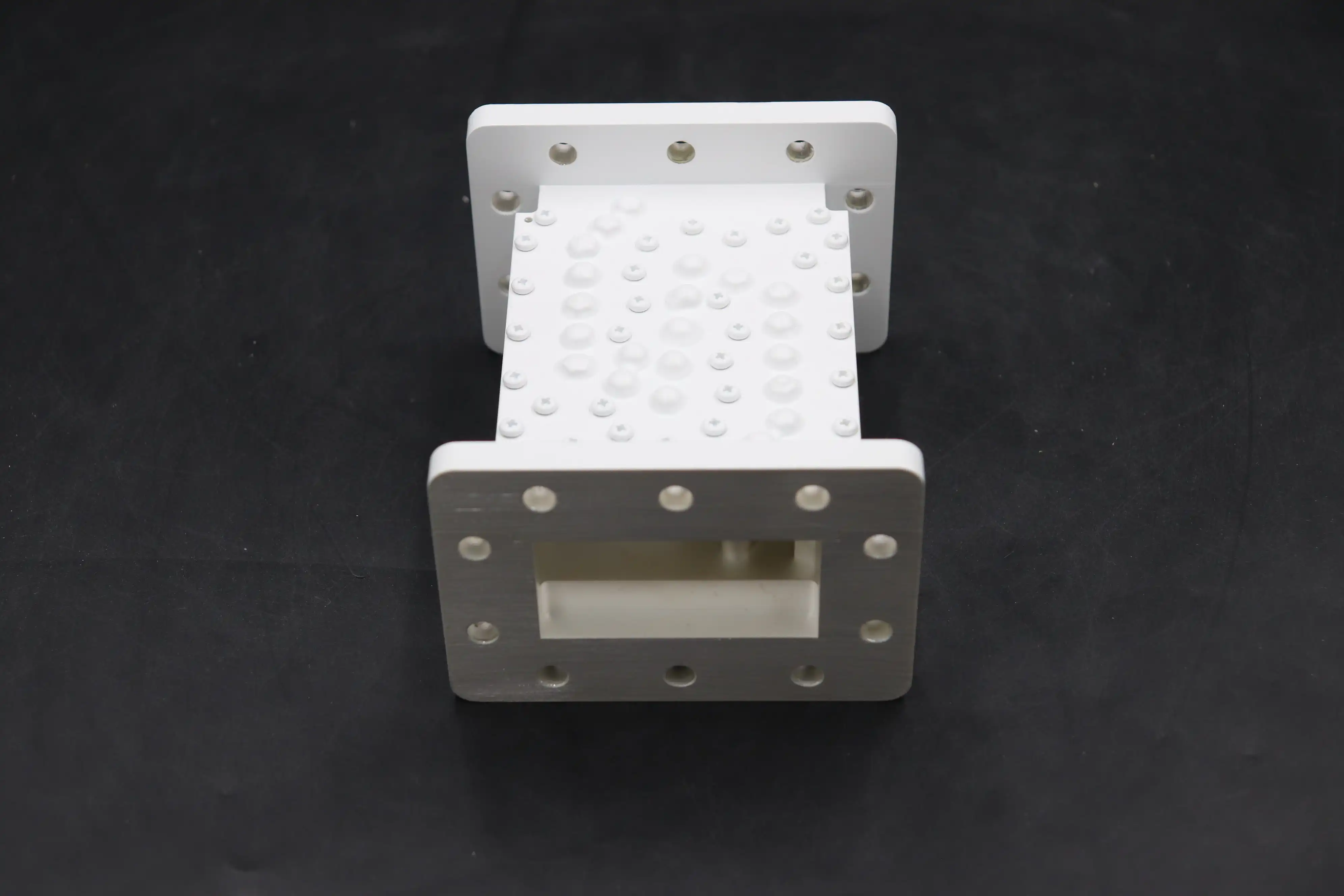
Materials and construction
What materials are used and how they are built have a big effect on how well and how reliably a filter works. Take a look at the following:
- Conductor materials: Conductors that are silver-plated or gold-plated work very well electrically and don't rust.
- Things that are dielectric: Low loss and a high Q factor are helped by good dielectrics like PTFE or holes filled with air.
- Materials for the housing: Housings made of aluminum or steel are good at protecting and last a long time.
- The outside of something will last longer and not rust if you nickel- or gold-plate it.
Environmental considerations
Look around you. There should be the right amount of entry protection (IP) for screens that are used outside or in harsh circumstances. The screens should also be made of materials that won't rust and be strong enough to handle shock and shaking.
Reliability and longevity
Think about filters that give long-term durability warranties and meet industry standards like MIL-STD and ISO. Check out the manufacturer's past work and how committed they are to quality control.
Conclusion
There are many things you should think about in order to choose the best coaxial bandpass filter for your RF project. A few of these are the setting, the frequency range, the out-of-band rejection, and the frequency range. You should really think about these things and know what kind of RF system your program needs, whether it's 5G, satellite, or something else. This will help you choose what to do.
There are times when ready-made screens will work and times when you will need something made especially for you. You can get help choosing the best filter from someone who makes things and knows a lot about them.
At Huasen Microwave Technology Co., Ltd., we make high-performance RF and microwave products all the time. One example is better coaxial bandpass filters. We have a lot of experience with RF filters for use in radar, airplanes, security, and telecommunications. So, this means we can help you and tell you what to do. Right away, talk to our staff about how we can help you get better RF service and save money.
FAQ
1. What is the typical frequency range for coaxial bandpass filters?
Coaxial bandpass filters can cover a wide frequency range, typically from a few MHz to over 40 GHz, depending on the specific design and application requirements.
2. How does the size of a coaxial bandpass filter affect its performance?
Generally, larger filters can achieve higher Q factors and better selectivity, while smaller filters offer easier integration but may have some performance trade-offs. The optimal size depends on your specific application requirements and space constraints.
3. Can coaxial bandpass filters be used in high-power applications?
Yes, many coaxial bandpass filters are designed for high-power applications. However, it's crucial to select a filter with appropriate power-handling capabilities that match your system's requirements.
4. How often should coaxial bandpass filters be replaced or serviced?
The lifespan of a coaxial bandpass filter depends on various factors, including operating conditions and environmental exposure. In general, high-quality filters can last for many years without requiring replacement. Regular performance checks and maintenance can help ensure optimal operation throughout the filter's lifespan.
Enhance Your RF System with Premium Coaxial Bandpass Filters | Huasen Microwave
Are you ready to improve the performance of your RF project with high-quality coaxial bandpass filters? Huasen Microwave has a lot of basic and unique filter options that can be used to meet your needs. Our team of experts is ready to help you choose the best filter for your needs, ensuring the best signal quality and system stability. Don't compromise on your RF system's performance – contact us today at sales@huasenmicrowave.com to discuss your requirements and discover how our advanced coaxial bandpass filters can enhance your project.
References
1. Smith, J. (2021). "Advanced RF Filter Design Techniques for Modern Communication Systems." IEEE Microwave Magazine, 22(3), 45-52.
2. Chen, L., et al. (2020). "High-Performance Coaxial Bandpass Filters for 5G Applications." IEEE Transactions on Microwave Theory and Techniques, 68(7), 2925-2934.
3. Brown, R. (2019). "Coaxial Filter Technology for Satellite Communications." Microwave Journal, 62(9), 86-94.
4. Garcia, M., & Lee, K. (2022). "Material Considerations in High-Frequency Filter Design." IEEE Aerospace and Electronic Systems Magazine, 37(4), 18-27.
5. Wilson, T. (2020). "Optimizing Coaxial Bandpass Filter Performance for Radar Systems." Defense Electronics, 15(2), 33-40.
6. Zhang, Y., et al. (2021). "Novel Compact Coaxial Bandpass Filters for mmWave 5G Base Stations." IEEE Access, 9, 54321-54330.
Send Inquiry