How to Choose an Antenna Near Field Measurement Probe






2026-06-05 17:05:30
To choose the correct antenna near-field measurement probe, you need to know what you need it for, how many frequencies it needs to cover, and how accurate you want the measurements to be. The best probe strikes a mix between polarization clarity, sensitivity, and how well it works with your test system mechanically. In the 5G, satellite, and radar industries, engineers have to look at things like cross-polarization separation, connection standards, and the availability of calibration data. With the right near-field probe, you can turn difficult electromagnetic characterization jobs into doable, accurate readings that don't break the bank or your infrastructure.
Understanding Antenna Near Field Measurement Probes
What Defines a Near-Field Measurement Probe?
Within the radiating near-field area of a Device Under Test (DUT), a near-field measurement probe acts as a precise electromagnetic sensor, collecting amplitude and phase data. In contrast to far-field readings, which need to be done at great distances, these tools work very close to the antenna aperture—usually within three to ten wavelengths. This closeness makes it possible to test in a small anechoic room, which is helpful because it frees up space that would otherwise be used for large-scale antenna validation for satellite arrays and 5G massive MIMO deployments.
The main difference between measuring in the near field and the far field is how the data is collected. Near-field probes take readings of the electromagnetic wavefront at several places in space. This data is then turned into accurate far-field radiation patterns by mathematical methods, mostly Fourier transforms. This method gets around the problem that it's not practical to build open ranges for big radio systems that are kilometers long.
Core Operational Principles
Modern near-field probes work as reference devices that have been measured and whose radiation patterns have been carefully described. In order to cut down on scattering interference during measuring scans, their design reduces radar cross-section. Knowing the electromagnetic properties of the probe lets engineers do probe correction, which is a deconvolution process that takes out the probe's pattern impact from recorded data to get to the true performance of the DUT.
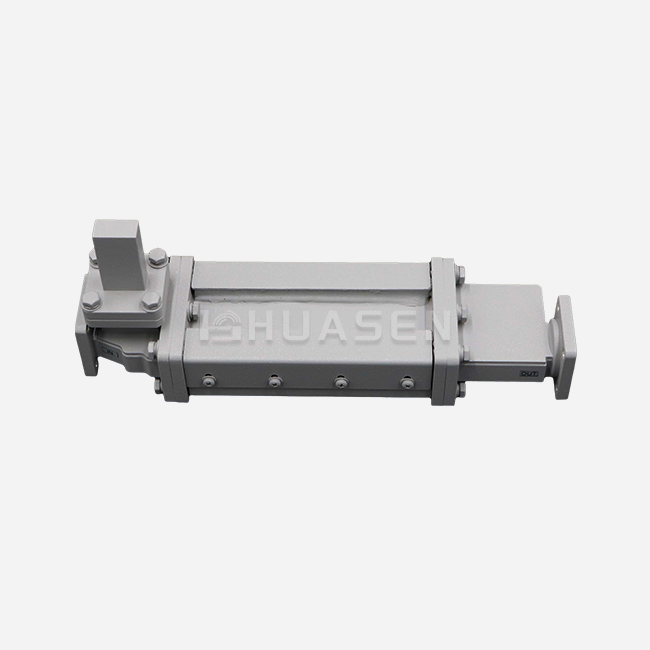
Probe designs are very different depending on the purpose. For precise readings, open-ended waveguide probes are the best because they provide the purest polarization and most stable gain. Dual-polarized probes pick up two different types of polarizations at the same time, which cuts scan time in half, which is a huge benefit for production testing settings with a lot of samples.
Distinguishing Passive and Active Probe Designs
Passive probes only use the electromagnetic energy they receive and don't boost it internally. This makes them simpler and better at handling power. Waveguide-based passive probes can usually handle continuous wave power between 100W and 500W, though cable connections are often what limit their power.
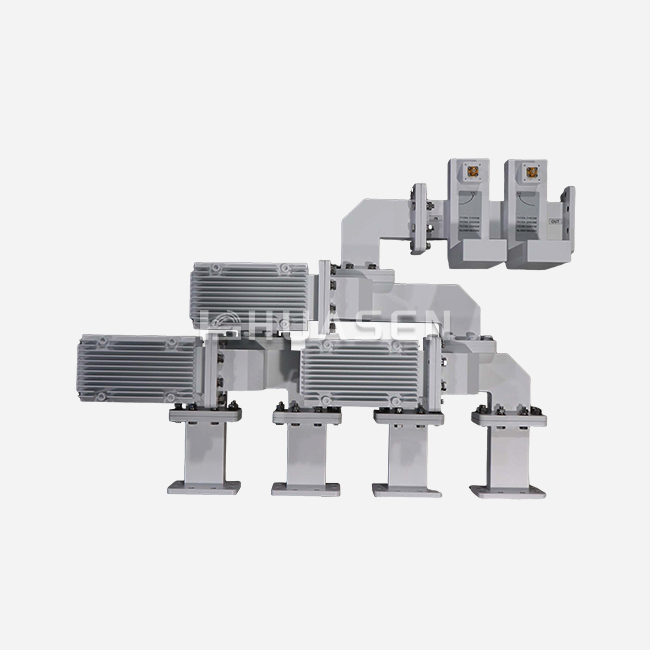
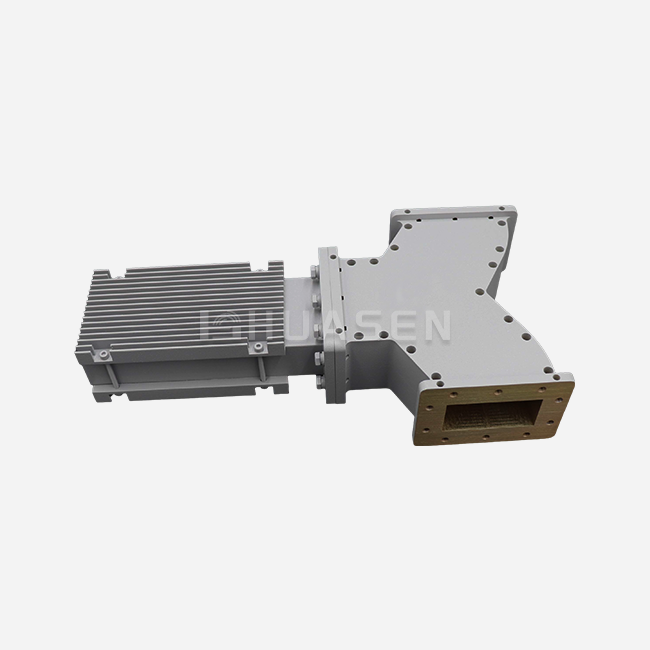
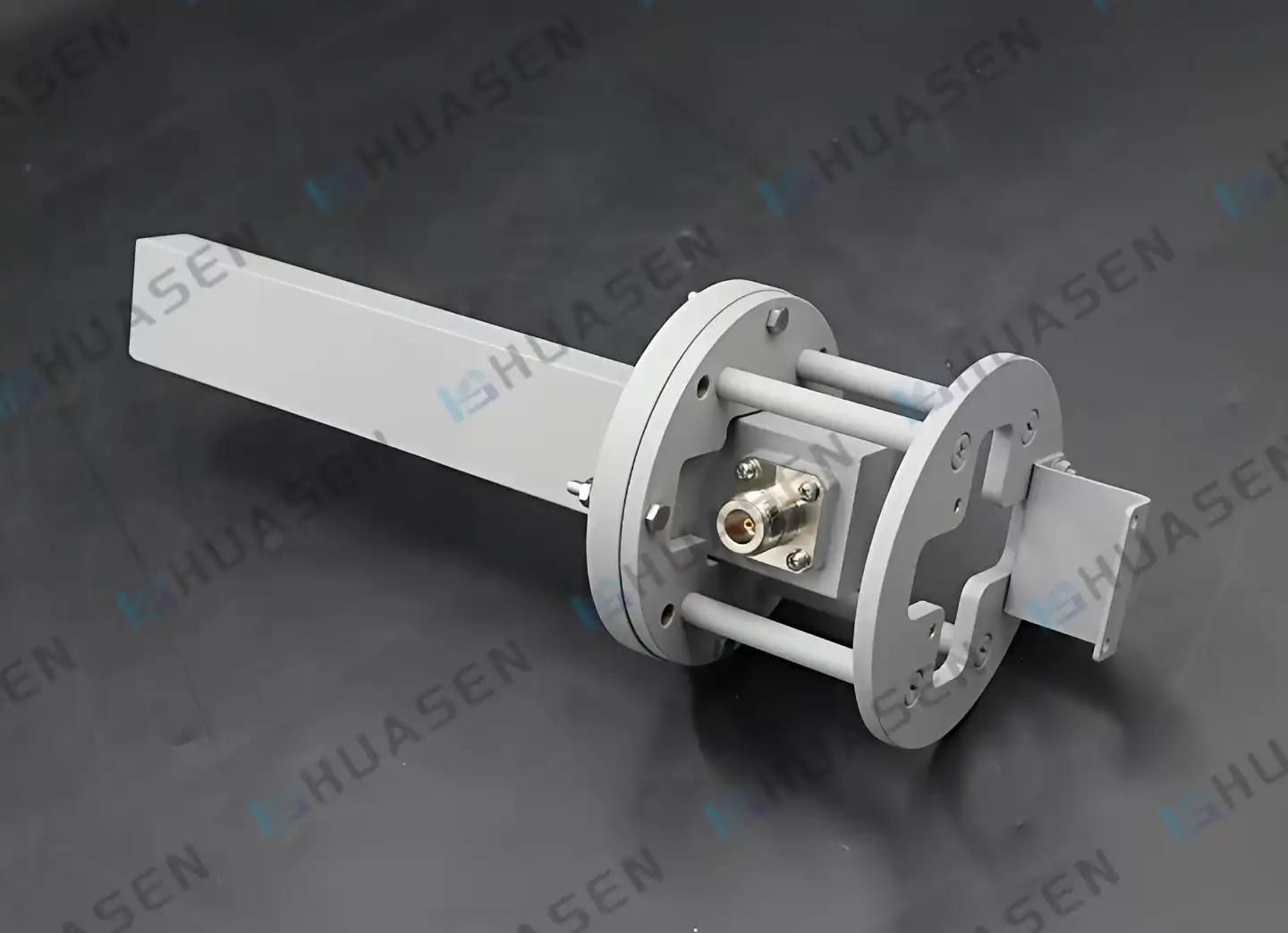
Active probes, such as the Antenna Near Field Measurement Probe, have low-noise boosters built right into the body of the probe. This makes it easier to pick up weak signals. This increase is useful for figuring out what low-gain antennas are like or testing side-lobe performance, where signal levels drop a lot. Active designs, on the other hand, need to think about noise figures more and can usually handle less power than passive designs.
Key Factors to Consider When Choosing a Near-Field Measurement Probe
Frequency Range and Bandwidth Coverage
The most important thing to look for in an antenna near-field measurement probe is that its frequency skills match your antenna testing needs. Modern communication systems work across a huge frequency range, from sub-1 GHz for marine purposes to millimeter-wave 5G bands that go beyond 100 GHz. Single-probe solutions that cover multiple bands make managing supplies easier and lower capital costs, but band-specific probes often give better performance data.
Broadband near-field measurement probes (WBOEWP) meet the needs of testing across multiple bands by covering wide frequency ranges while still delivering good performance. These tools are good for labs that want to characterize different types of antennas for use with different transmission standards. On the other hand, narrowband probes that are tailored for specific frequency windows, like special Ka-band or W-band probes, offer better cross-polarization separation and phase center stability, which are very important for checking the accuracy of radar and satellite antennas.
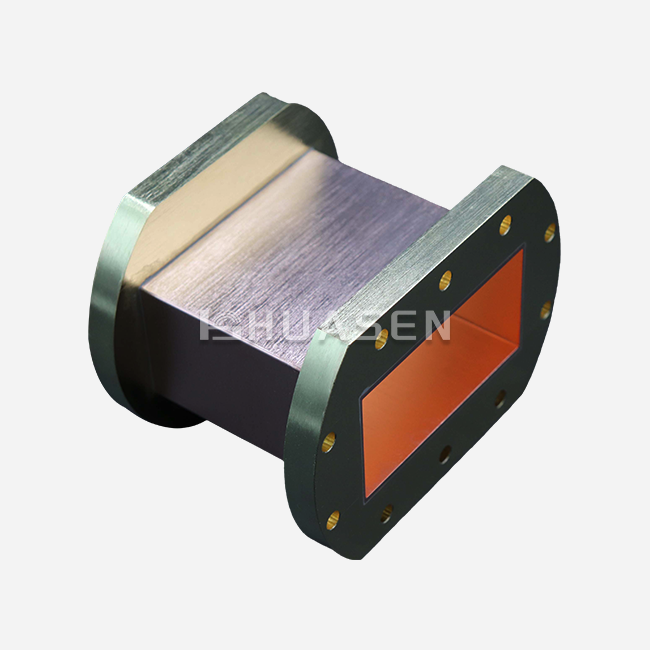
Waveguide-based probes naturally work very well in the frequency bands they are designed for. Waveguide structures' working frequency ranges are based on their physical measurements. Larger waveguides can handle lower frequencies, while precision-machined millimeter-wave waveguides can handle higher bands. Companies like Huasen Microwave make probe families that cover frequencies from 0.49 GHz to 112 GHz. With the right probe choice, these families can be used for uses in all bands, from L-band to W-band.
Cross-Polarization Isolation Performance
Cross-polarization discrimination tells us how well a probe can tell the difference between co-polarized signals and cross-polarized ones. This parameter has a direct effect on how accurately measurements are made when describing antenna polarization purity. This is especially important for satellite communications, radar systems, and current MIMO antenna arrays, where polarization diversity sends data or lowers interference.
Cross-polarization isolation of professional-grade probes is better than 25 dB, and 30 to 40 dB is achieved by luxury designs. Higher separation values let you measure antenna cross-polarization levels accurately without getting probe-induced contamination. When engineers test circularly polarized satellite antennas or dual-polarized 5G base station arrays, they use this performance feature to find small polarization flaws that could hurt the system's performance.
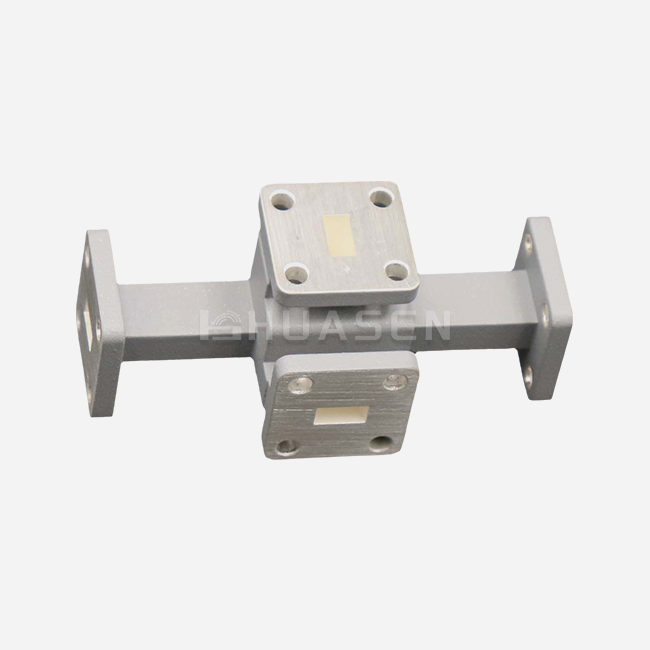
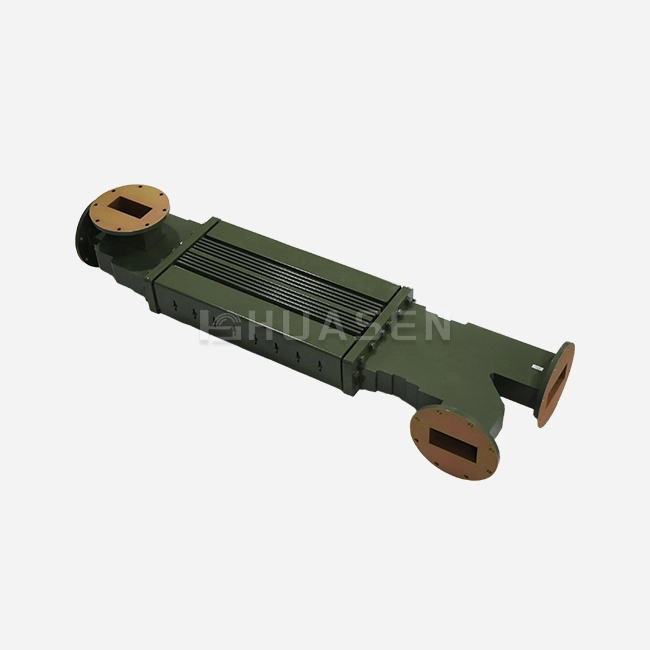
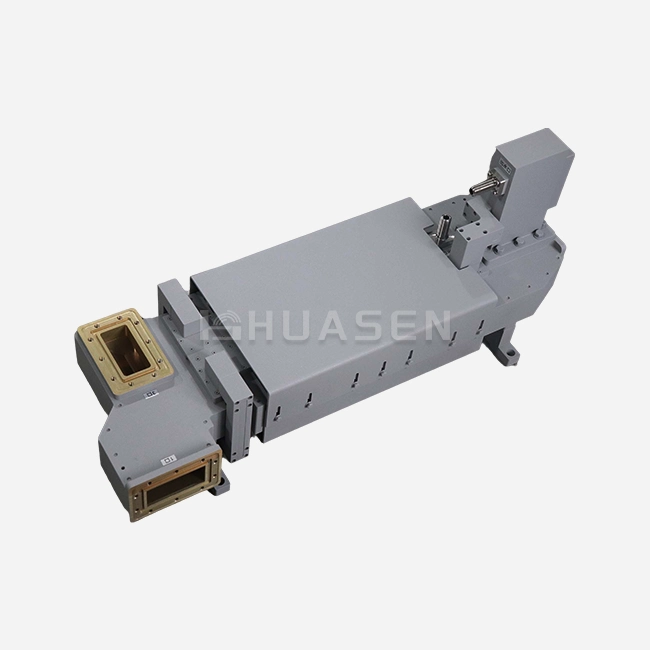
Waveguide orthogonal feed probes (WOEWP) and dual-polarization measurement probes (WOEWDP) are designed methods that provide very pure polarization. Their even field patterns and exact construction keep unwanted polarization coupling to a minimum, which guarantees accurate measurements across the entire operating bandwidth.
Connector Standards and Mechanical Integration
How well a probe works with current measurement systems depends on how well its physical link works with those systems. Standard RF connectors, such as SMA-K, 2.92-K, and K-type interfaces, make links that work well at frequencies up to and beyond 40 GHz. To keep the signal strong at higher frequencies, millimeter-wave uses might need special waveguide flanges or 1.85 mm and 1.0 mm coaxial connections.
The mechanical measures affect how well the scanner works with the measurement box. Planar scanning systems can have tighter spacing because of compact probe designs. This makes the spatial precision better. However, the size of the probe needs to be balanced with its ability to handle power and its need for pattern clarity. Coaxial symmetric dipole probes (COECP) have small physical footprints that make them good for testing settings with limited space. They also work well enough for many uses.
Positioning precision and mechanical stability during scanning operations are affected by the mounting options and the Antenna Near Field Measurement Probe. Probes with precise alignment features and strong mounting surfaces make setup easier and make it easier to repeat measurements. Temperature-stable materials, like gold-plated aluminum or special composites, keep their dimensions the same even when the environment changes. This is important for correct near-field-to-far-field transformations because it keeps the phase center fixed.
Market Overview: Selecting From Leading Near Field Probe Suppliers
Established Measurement Instrumentation Manufacturers
A number of well-known equipment companies that focus on antenna near-field measurement probe technology are part of the antenna measurement industry. Keysight Technologies and Rohde & Schwarz are two companies that have large probe portfolios that cover a wide range of frequencies and come with well-documented calibration data. Their products usually work well with their own measurement tools and positioning systems, giving labs that care about ecosystem support complete solutions.
These companies stress the importance of having available calibration certificates and being able to trace measurements back to national standards. This is very important for labs that need to keep their ISO/IEC 17025 approval or help defense programs that need measurements that can be traced back to NIST. Their infrastructure for after-sales support offers expert help, recalibration services, and replacement choices that make mission-critical testing centers safer places to work.
Specialized RF Component Manufacturers
RF and microwave component makers have a lot of experience designing passive devices and making them with great accuracy. As an example, Huasen Microwave Technology has specialized near-field probe families that were created through 30 years of high-frequency component engineering starting in 1993. Their waveguide-based probe designs, which include orthogonal feed configurations (WOEWP, WOEWPI) and waveguide termination feed versions (WOEWPE), provide performance measures that are ideal for demanding defense, aerospace, and telecommunications uses.
This part of manufacturing often offers better customization options, changing standard designs to fit specific testing needs. When you work with makers who have their own design and manufacturing departments, you can get custom frequency bands, specialized polarization configurations, and changed mechanical interfaces. This kind of adaptability is useful for study groups making new antenna designs or system designers dealing with testing situations that aren't standard.
Evaluating Technical Specifications and Support Services
To compare probe specifications, you need to know which factors have a direct effect on your test goals. When the Voltage Standing Wave Ratio (VSWR) is less than 1.5:1, the measurement dynamic range and power flow are at their best. Pattern symmetry requirements, which are usually within ±0.1 dB across the main beam, make probe correction methods easier to use and boost the accuracy of far-field reconstruction.
How regularly the probe acts as a point source during mathematical processing depends on how stable the phase center is across the working bandwidth. Manufacturers who provide thorough probe characterization data, such as complicated radiation patterns and receiving qualities, make it possible for more advanced probe correction methods, which lead to more accurate measurements.
Total cost of ownership is affected by warranty terms, testing times, and the Antenna Near Field Measurement Probe itself. Probes that need to be recalibrated every year have higher running costs than designs that are physically strong and keep working for two to three years between certifications. Handling damage is the main cause of passive probes breaking down. Dents in the opening or damaged connectors change the electromagnetic properties, so they need to be replaced right away.
Conclusion
To choose the right antenna near-field measurement probe, you need to carefully consider its frequency range, polarization performance, and mechanical fit with the testing needs. Engineers working on 5G infrastructure, satellite communications, or radar development can benefit from tools that offer more than 25 dB of cross-polarization isolation, a wide range of frequency coverage, and standard connection interfaces. The best procurement choices are made by balancing technical requirements with budget realities and taking into account how reliable the seller is and what kind of help they can offer. Maintenance, handling, and choosing the right tool for the job are all important for making sure that measurements are accurate and that equipment lasts as long as possible. When you work with experienced makers who offer full technical support, choosing probes goes from being a difficult job to a smart investment that improves your ability to develop products and test them in production.
FAQ
1. What distinguishes near-field from far-field antenna measurement approaches?
For antenna near-field measurement probes, electromagnetic field data is collected close to the antenna. This data is then mathematically transformed into far-field patterns using Fourier methods. By using this method, small test ranges can be made that work with big antennas, making it impossible to use standard far-field distances. Far-field measurements look at radiation patterns directly at distances where spherical wavefront assumptions hold true. They need a lot of room but don't need any math changes.
2. How often should the calibration of test tools be done?
Best practices in the industry say that a probe should be recertified every two to three years when it is used normally. After mechanical shocks, drops, or any other physical damage that could change the shape of the opening or the integrity of the connection, it needs to be recalibrated right away. To meet the standards for tracking and keep measurement trust, organizations that are ISO 17025 accredited or that help with military programs may set up more frequent verification plans.
3. Can a single test cover all 5G frequency bands well?
Wideband designs can work over a lot of different frequency ranges, but to get the best results across both sub-6 GHz and millimeter-wave 5G bands, you usually need more than one special tool. Band-specific probes are better than ultra-wideband probes at telling the difference between cross-polarizations, keeping patterns symmetrical, and keeping the phase center stable. Laboratories that study different kinds of antennas usually keep tool families that work with certain frequency ranges. This way, they can balance the quality of measurements with the cost of keeping equipment on hand.
Partner With Huasen Microwave for Precision Near Field Measurement Solutions
Huasen Microwave Technology has been working with antenna measurement problems for 30 years and has a lot of experience making high-frequency parts. Our wide range of probes, which cover frequencies from 0.49 to 112 GHz and have cross-polarization separation of more than 25 dB, is perfect for tough telecommunications, military, and defense needs. Waveguide orthogonal feed designs (WOEWP, WOEWPI), coaxial symmetric dipole configurations (COECP), and broadband versions (WBOEWP) offer adaptable options that can be used for a range of testing needs. As a well-known Antenna Near Field Measurement Probe supplier, we help system designers and research institutions improve the accuracy of their measurements by providing them with thorough calibration data, custom frequency bands, and quick technical support. Get in touch with our engineering team at sales@huasenmicrowave.com to talk about your specific antenna characterization needs and find out how our tried-and-true near-field probe solutions can improve your testing capabilities while keeping costs low for both prototype development and production settings.
References
1. Balanis, Constantine A. "Antenna Theory: Analysis and Design," 4th Edition, John Wiley & Sons, 2016.
2. Gillespie, E.S. "Special Issue on Near-Field Scanning Techniques," IEEE Transactions on Antennas and Propagation, Vol. 36, No. 6, June 1988.
3. Hansen, Jørgen E. "Spherical Near-Field Antenna Measurements," IET Electromagnetic Waves Series, Peter Peregrinus Ltd., 1988.
4. Joy, Edward B. and Paris, Dennis T. "Spatial Sampling and Filtering in Near-Field Measurements," IEEE Transactions on Antennas and Propagation, Vol. AP-20, No. 3, May 1972.
5. Yaghjian, Arthur D. "An Overview of Near-Field Antenna Measurements," IEEE Transactions on Antennas and Propagation, Vol. AP-34, No. 1, January 1986.
6. IEEE Standard 1720-2012, "IEEE Recommended Practice for Near-Field Antenna Measurements," Institute of Electrical and Electronics Engineers, December 2012.
Send Inquiry