How to Calculate Directivity in a Directivity Coupler






2026-06-11 21:05:09
The logarithmic measure of isolation (the attenuation from the input to the isolated port) and coupling factor (the energy removed to the coupled port) are used to figure out the directivity of a directivity coupler. Mathematically, Directivity (dB) = Isolation (dB) - Coupling Factor (dB). This measure shows how well the device can tell the difference between forward power and mirrored power. Accurate directivity calculation is needed for precise RF testing situations like radar calibration, 5G base station verification, and satellite upload tracking to make sure the measurements are correct. Engineers use network analyzers to measure S-parameters (S31 for coupling and S32 for isolation) over a range of operating frequencies. They then subtract these values to make sure the coupler meets the standards, which are usually more than 40dB for metrology-grade applications.
Understanding Directivity and the Directivity Coupler
To keep the purity of the data, RF and microwave systems need accurate power measurements. This is especially true for high-stakes uses like aerospace radar, telecommunications infrastructure, and electronic warfare systems. The Directivity Coupler is an inactive four-port device that is at the center of these measurement chains. Its job is to sample electromagnetic energy moving in a certain direction while ignoring signals moving in the opposite direction.
What Defines a Directivity Coupler?
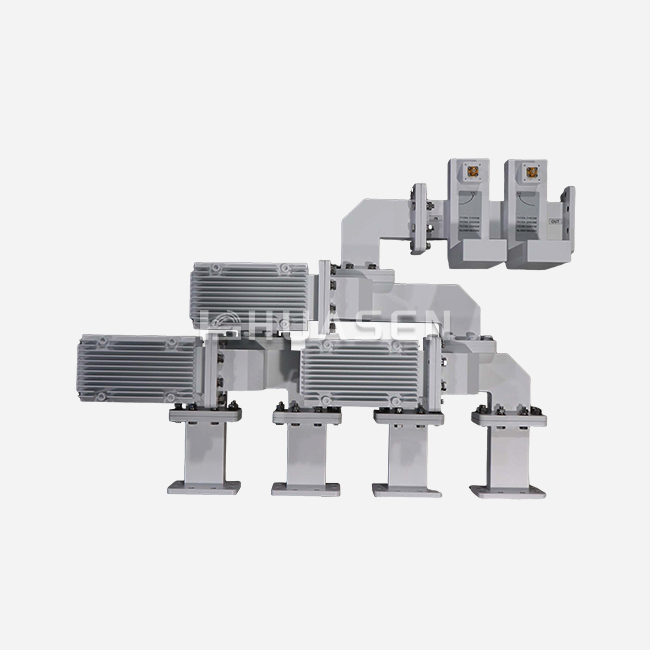
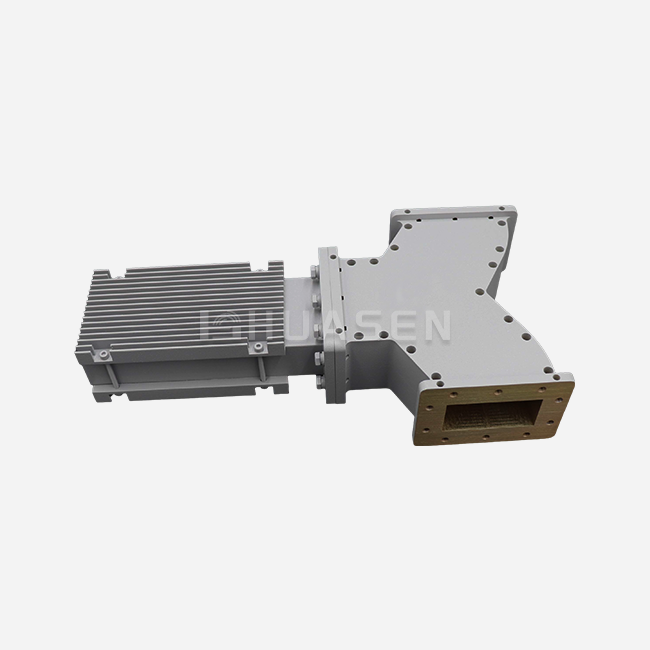
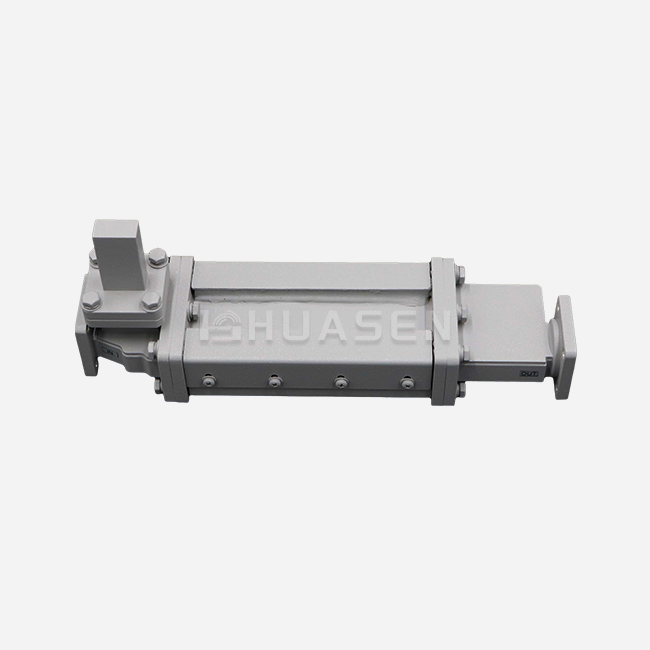
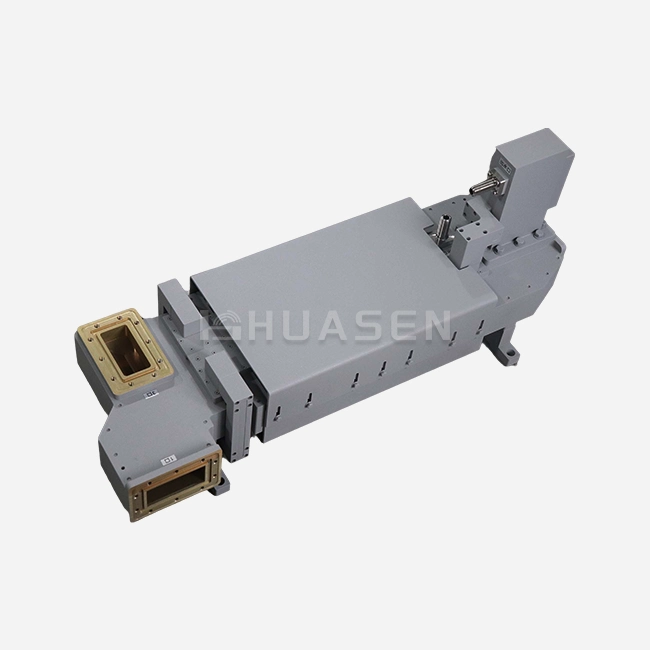
A directivity coupler works by electromagnetically linking a small, relative part of the wave that is moving forward. The device has four ports: an input port, a through port (mainline output), a linked port (sampled signal), and an isolated port (ideally ended). It is possible to use openings in waveguide walls, stripline gaps in coaxial designs, or multi-hole arrays in precision waveguide couplers for the coupling process. Couplers keep most of the power on the stream and send a scaled copy to the coupled port. This is different from power dividers, which split signals evenly.
Critical Performance Parameters
Coupler performance is controlled by three measures that work together. The coupling factor tells you the relationship between the input power and the linked output power. It can be anywhere from 10dB to 50dB, based on the needs of the application. Insertion loss measures how much primary power is lost; low values (under 0.5dB) are needed for high-power radar and amplifier chains, where each decibel impacts how well the system works. The device's directivity tells you how well it can tell the difference between forward and backward waves. The higher this number, the more accurately you can measure VSWR or return loss without load reflections getting in the way.
Why Directivity Matters in Real-World Systems?
Imperfect directivity makes measurements less accurate when checking the output of a radar emitter or setting up a vector network analyzer. Imagine that a 30dB coupler can only send 20dB in one direction. If the load shows -10dB of power back, the paired port gets both the forward sample that was meant to be sent and a reverse component that is -30dB. This backward leaking messes up the measurement, making a load that is only slightly mismatched look like it is well-matched. A high-directivity waveguide coupler with 50dB directivity, on the other hand, makes sure that the linked signal is pure forward power, which lets accurate reflectometry work even with difficult loads.
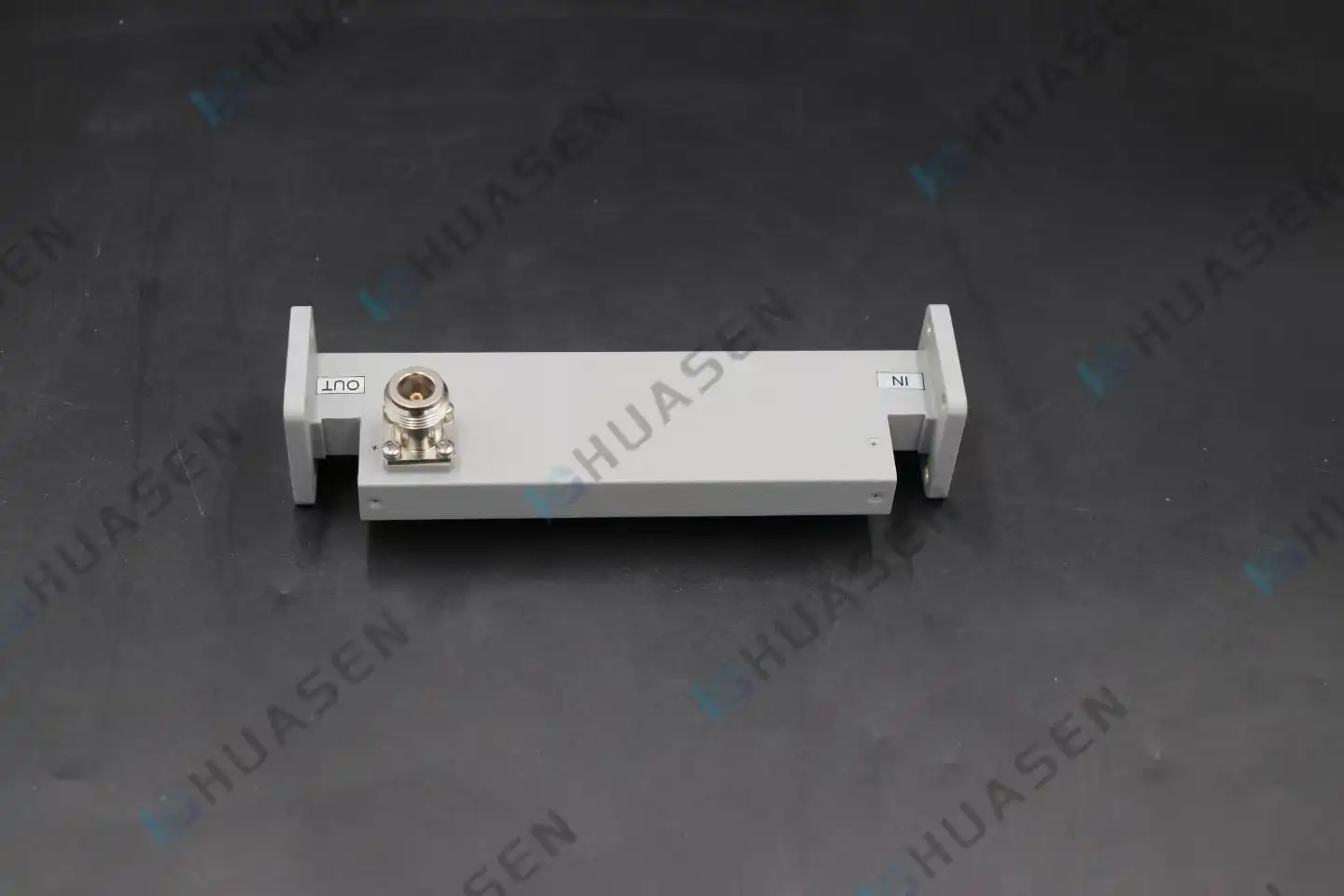
Step-by-Step Process: How to Calculate Directivity in a Directivity Coupler
To figure out directivity, you need to use standardized test tools to take systematic measurements. Characterizing certain S-parameters that show how energy moves between the ports of a directivity A coupler, when it is excited from the input, is part of the process.
Required Equipment and Setup
You need a vector network analyzer (VNA) that can work with the coupler's frequency range, whether that's X-band (8–12 GHz) for radar, Ku-band (12–18 GHz) for satellite communications, or millimeter-wave bands for testing 5G backup. To get rid of systematic mistakes, the VNA needs to be adjusted using the right standards (open-short-load-thru). Use precision fittings or waveguide flanges to connect the coupler. Make sure the flanges are flat and torqued correctly to stop RF leakage that lowers the measured directivity.
Understanding the Directivity Formula
The usual method is easy to understand:
Directivity (dB) = Isolation (dB) - Coupling Factor (dB)
To break this down further, isolation (S32) is the transfer coefficient from port 1 (input) to port 4 (isolation), measured with port 3 closed. It measures the transfer coefficient from the input port (Port 1) to the linked port (Port 3), with Port 4 closed. Both numbers are zero in decibels, which means they are attenuated. The difference leads to directivity, which is a positive dB number that shows how well the directivity coupler can tell the difference between two signals.
Practical Calculation Example
Take readings from a waveguide coupler that is made to work at 10 GHz. At the middle frequency, the VNA sweep shows that S31 (coupling) = -20.3dB and S32 (isolation) = -62.7dB. Using the formula:
When you subtract -20.3dB from -62.7dB, you get 42.4dB.
This means that at 10 GHz, the coupler can tell the difference between forward and backward waves by 42.4dB. You would check several frequency points across the whole waveguide band (8.2-12.4 GHz) to make sure that the directivity stays above the minimum requirements, maybe 40dB from band edge to band edge. Changes happen a lot at the highest and lowest frequencies because of flaws in the structure that couples the signals.
Interpreting Results for System Impact
When the directivity is above 40dB, it works well for difficult tasks like checking amplifier load-pull or calibrating antenna range. For regular power tracking in communication devices, values between 25dB and 35dB are fine. The coupler can't be used for precise reflectometry below 20dB, but it can still be used for simple forward power sampling. Check to see if the connector is dirty, the flange is aligned correctly, or there is damage inside the connection apertures—these are typical problems in units that have been sent out into the field.
Comparing Directivity Couplers with Other RF Components
People who work in procurement often get confused between RF gadgets that sound the same. Making these differences clearer helps find the right part for measuring jobs using a Directivity Coupler.
Directional Coupler vs. Directivity Coupler
The two terms are often used equally, but there are some small changes in how they are used in different industries. "Directional coupler" refers to any device that couples energy in a certain direction, while "directivity coupler" focuses on the success measure for directivity. High-directivity waveguide couplers are a special subset that is best for measurement. They have precision terminations and multi-hole designs that regular directional couplers don't have.
Power Dividers and Hybrid Couplers
Power dividers send equal amounts of input signals to various outputs, and they don't have any inherent directivity, so all ports see the same amount of connection, no matter which way the signal is going. Hybrid couplers, which come in 90° or 180° types, join signals that have certain phase relationships. They are used for creation rather than measurement. When separating forward and backward power, neither can be used instead of a directivity coupler.
Circulators and Isolators
Circulators use ferrite materials and magnetic bias to send signals repeatedly through ports. They offer great isolation (20-30dB), but they need DC bias power and have a smaller bandwidth. Isolators, also known as two-port circulators, completely stop backward signals. These keep amps safe from reflections, but they don't provide the paired sample needed for power measurement. This means that they work with each other instead of against each other.
Bridge Couplers in Reflectometry
Resistive bridge networks can measure VSWR, but they give off a lot of heat and can only handle a small range of frequencies. Coupled-line and waveguide directivity. Couplers have a wider bandwidth with less insertion loss. This makes them better for wideband test systems and high-power settings where heat buildup is a problem.
Selecting the Best Directivity Coupler for Your Application
When putting together parts for radar systems, test fixtures, or telecommunications infrastructure, it's important to find the best Directivity Coupler that matches technical performance with business facts like cost, wait time, and vendor support.
Matching Frequency Range to System Requirements
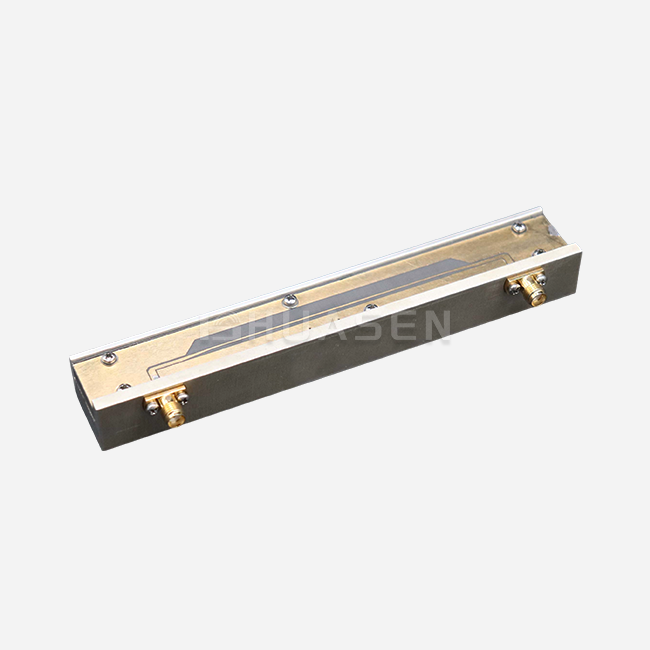
Waveguide couplers naturally allow large fractional bandwidths (often 40–50% of the center frequency), which means they can cover whole waveguide bands like WR-90 (8.2-12.4 GHz) or WR-28 (26.5–40 GHz). Coaxial models that use TEM-mode transmission can cover more than one octave, but they can't handle as much power and may offer lower directivity of a directional coupler. When you need a coupler for a 5G n257 band (26.5-29.5 GHz) or satellite Ka-band (27-31 GHz) application, make sure that the promised performance envelope fully covers your working frequencies, leaving enough room for temperature-induced drift.
Directivity Level and Measurement Precision
Standard couplers give off 15 to 25dB of directivity, which is enough for checking forward power when reflected power is low. For precise tasks, 40dB or more is needed. If you want to calibrate network monitors or characterize high-Q filters with a return loss of more than 30dB, the coupler's directivity must be greater than the return loss you want to measure. If it isn't, measurement floor noise will take over. The high-directivity waveguide couplers from Huasen Microwaves regularly reach 50–60 dB across certain bands, setting measurement floors below -50 dB for tough test conditions.
Insertion Loss and Power Handling
Mainline insertion loss has a direct effect on how well the system works. Even a 0.3 dB loss in a 1kW radar emitter chain loses 70 W as heat, so it needs to be managed to keep the temperature down. Waveguide designs have much less loss (usually 0.1 to 0.3dB) than coaxial designs (0.5 to 1.5dB), which is why they are better for high-power uses. Make sure that the power rates include both the average and peak levels. For example, pulsed radar systems with 10kW peaks and 100W average demand use couplers that are rated for pulse duty, not just CW power.
Mechanical and Environmental Specifications
Physical measurements are set by the amount of room available for installation in planes, spaceships, or racks full of equipment. Waveguide couplers take up more space than coaxial types, but you don't have to worry about connectors with them. It's important that the interfaces work with each other, so choose WR-series flanges (UG-style), SMA/K connectors for coaxial versions, or custom mounts for OEM integration. Outdoor uses like point-to-point wireless bridges or marine radar need to be sealed with IP65+ materials that don't rust (aluminum alloy with chromate conversion coating or stainless steel) and be able to withstand temperatures from -40°C to +85°C according to MIL-STD-810.
Certification and Supply Chain Reliability
Defense contractors and aerospace OEMs require that quality standards (ISO 9001, AS9100) and military requirements (MIL-DTL-3928 for waveguides) be met. Calibration certificates that can be traced back to NIST or a similar national measurement center show that the measured parameters match what the datasheet says they are. Long-term buying is affected by how stable the vendor is. For example, Huasen Microwave, which has been in business since 1993, offers continuity for multi-year projects, easy access to spare parts, and institutional knowledge that supports custom changes.
Troubleshooting and Optimizing Directivity Measurement Performance
Even well-designed couplers don't work as well as they should when mistakes in the measurement method or the surroundings happen. Recognizing common pitfalls for the Directivity Couplers lets you fix them quickly, which protects the purity of the test plan.
Common Measurement Errors
The main cause of errors is a VNA that hasn't been calibrated properly. At both ends of the coupler, full two-port calibration fixes cable losses and connection echoes that show up as poor directivity otherwise. If you use different terminations on ports that aren't being used, they will cause standing waves that mess up S-parameter readings. Always use accurate 50Ω loads that are rated for the frequency range.
Environmental Influences
Changing temperatures can change the coupling factor, the directivity of a directional coupler, and the direction of the signal because the substrate's permittivity changes and the coupling pores expand. Allow thermal soak time (30 minutes or more) before taking data when trying in a wide range of temperatures. Phase noise is caused by vibrations during testing, which can happen on airplanes or naval installations. Isolation mounts or post-vibration settling periods can lessen this effect.
Optimizing Coupler Selection
If you choose a coupler with more directivity cushioning than you need (for example, 50dB when 40dB is enough), you can account for things like age, connection wear, and environmental stress. Multi-section Chebyshev-optimized coupling arrays keep the directivity flatter across the bandwidth compared to single-hole designs, which lowers mistakes that depend on frequency. Integrated terminations on the separated port that are exactly matched during manufacturing work better than field-attached loads, which make it hard to make the same connection over and over.
Best Practices for Consistent Results
Set up a process for calibration: use a stable reference measure to check the direction of the beam every month. Keep track of the number of times the connections are mated. After 500 to 1000 rounds, precision RF connectors break down and need to be replaced. Keep couplers in a controlled humidity environment (30–60% RH) to keep metal areas from rusting. If the directivity drops out of the blue, check for physical damage like dents in the waveguide walls, dirty dielectric substrates in coaxial types, or bolts that aren't tight enough and letting RF leak out.
Conclusion
To figure out the directivity of a directivity coupler, you need to carefully measure its isolation and coupling factors and then use the simple formula that shows how well it can separate signals. Accurate results rely on properly calibrated tools, the right way of setting it up, and knowing how external factors affect performance. Differentiating directivity couplers from related parts makes it easier to buy them, and choosing factors like frequency range, directivity level, insertion loss, and vendor stability helps with the specification process. Troubleshooting skills help avoid common measurement mistakes that lower the accuracy of tests. When engineers and procurement workers understand these rules, they can better use RF measurement systems in defense, telecommunications, radar, and satellite applications where accuracy is crucial to mission success.
FAQ
1. What frequency ranges do directivity couplers typically cover?
Depending on the type of building, Directivity Couplers range from DC to millimeter waves. Coaxial systems work in octave or multi-octave bands from 0.5 GHz to 40 GHz. Waveguide couplers work with certain bands, such as X-band (8.2-12.4 GHz), Ku-band (12.4-18 GHz), or Ka-band (26.5-40 GHz), and they can handle 40 to 50 percent of the bandwidth. Millimeter-wave waveguides come in versions that go up to and beyond 110 GHz and can be used for 5G FR2 and satellites.
2. How does insertion loss affect measurement accuracy?
Insertion loss lowers stream power but doesn't hurt directivity directly. Too much loss (above 1dB) lowers the performance of the machine and generates heat. When measuring, high insertion loss might mean that more power is needed to keep the signal-to-noise ratio at the linked port at a good level. This could push the device past its power limit and lead to nonlinear distortion that messes up results.
3. Can directivity couplers measure both forward and reflected power simultaneously?
Most four-port couplers measure forward power at the port that is connected. To find the mirrored power, you need either a second coupler that is angled the opposite way or a coupler that can connect in both directions. Dual-directional designs have two coupling structures inside one housing. They allow for both forward and backward samples to be sent at the same time, which makes them perfect for VSWR tracking and closed-loop amplifier safety systems.
Partner with a Trusted Directivity Coupler Manufacturer
The Huasen Microwave Technology Co., Ltd. was founded in 1993 and has 30 years of experience making high-directivity waveguides and coaxial couplers. Our high-directivity waveguide couplers provide 50–60dB of separation across full waveguide bands. They come with MIL-DTL-3928 compliance and NIST-traceable calibration certificates. Our engineering team can help you with design, custom parameter optimization, and quick technical support throughout the whole purchase cycle, whether you're putting parts into 5G infrastructure, military radar systems, or satellite ground stations. Our ISO 9001 certification makes sure that the quality of each production run is the same and that we can serve large orders on time. Contact our applications engineers at sales@huasenmicrowave.com to talk about your specific frequency, power, and environmental needs. We'll then either suggest the best configurations from our large catalog or create custom solutions that fit your system architecture and help you meet your measurement accuracy and project timeline goals for each Directivity Coupler.
References
1. Pozar, David M. Microwave Engineering, 4th Edition. Wiley, 2011.
2. Collin, Robert E. Foundations for Microwave Engineering, 2nd Edition. IEEE Press, 2001.
3. Riblet, H.J. "A Mathematical Theory of Directional Couplers." Proceedings of the IRE, vol. 35, no. 11, 1947, pp. 1307-1313.
4. Kumar, Anand, and Rajeev Jyoti. "Design and Analysis of High Directivity Broadband Waveguide Couplers." International Journal of RF and Microwave Computer-Aided Engineering, vol. 28, no. 6, 2018.
5. Marcuvitz, Nathan. Waveguide Handbook. McGraw-Hill, 1951. Reprint, IET, 1986.
6. U.S. Department of Defense. MIL-DTL-3928: Couplers, Directional, Radio Frequency, Coaxial and Waveguide. Defense Logistics Agency, 2018.
Send Inquiry