How Does a Yagi Antenna Achieve Long-Range Signal Reception?






2026-06-26 17:01:19
A Yagi antenna achieves long-range signal reception through its directional design, which concentrates electromagnetic energy in a single direction rather than dispersing it omnidirectionally. This focused beam pattern results from the precise arrangement of parasitic elements—reflectors and directors—working in concert with a driven element. The reflector redirects signals toward the front, while multiple directors channel and amplify the signal along the boom's axis. This configuration enhances gain and minimizes signal loss, allowing the antenna to capture weak distant signals while rejecting interference from unwanted directions, making it ideal for point-to-point communications, backhaul links, and RF testing applications.
Understanding the Core Design Principles of Yagi Antennas
Anatomy of a Yagi Antenna: The Driven Element, Reflector, and Directors
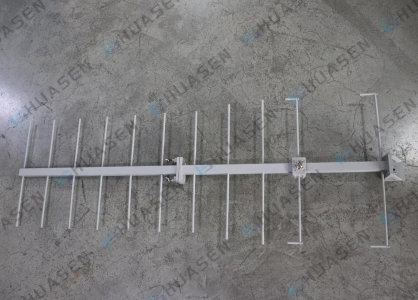
The driven element, the reflector, and the directors make up a Yagi antenna. Three important parts must work together for directional antennas to be effective. The driven element is the main radiator and is directly connected to the transmission line. The reflector element, which is usually a little longer than the driven element, is placed behind it and bounces signals forward, making the front-to-back ratio higher. In front of the driven element, several shorter and shorter directors focus the radiation pattern into a narrow beam.
This set-up makes positive interference in the way that is wanted and destructive interference in other directions. The impedance matching and gain properties are directly affected by the distance between elements, which is typically between 0.1 and 0.4 wavelengths. Companies like Huasen Microwave carefully design these factors to get the best results across certain frequency bands.
How do element spacing and length affect directionality?
The resonant frequency and radiation properties are set by the element's size. The length of the reflector, which is about 5% longer than the driven element, moves the energy forward. Directors, which are each about 5% shorter than the one before it, keep the beam coherent and boost gain. The length of the boom can handle more directors, and each one adds about 1-2 dB of gain.
But after a certain number of elements, the benefits start to fade. A design with 10 elements might get 13 dBi gain, but one with 15 elements only gets 15 dBi. Adding more elements makes the antenna heavier and more resistant to wind, but it doesn't improve performance by the same amount. This balance is very important when choosing antennas for base stations on towers or mobile platforms, since weight and wind load have a direct effect on the structure needed and the cost of running the system.
Applications Where Yagi Designs Excel Compared to Other Antenna Types
When considering antenna designs, parabolic dishes have a higher gain but need to be perfectly aligned and have a lot of mounting hardware. Log-periodic antennas have a wider spread, but they lose some of their gain. Dipole antennas can pick up signals from all directions, but they don't have the directed energy that is needed for long-distance connections.
Yagi antenna designs are most common for uses that need modest gain (6–18 dBi) and narrow beamwidths across certain frequency bands. They are used by telecom companies for cellular backhaul lines between towers, and their directional properties help keep interference from neighboring areas to a minimum. They are used by maritime communication devices on ships to connect the ship to the shore. Their small size and durability make them suitable for use in harsh saltwater settings. Military contact units like that are portable and can be set up quickly while on the ground.
How Do Yagi Antennas Solve the Challenge of Long-Range Signal Reception?
Mitigating Attenuation, Interference, and Multipath Effects
Three basic issues plague long-distance radio links. Signal attenuation increases with distance, lowering listener power density according to the inverse square law. Interference from other sources using the same channels lowers signal quality. Multipath propagation occurs when messages bounce off buildings, the ground, or the atmosphere and return to the listener with varied phases.
A well-designed Yagi antenna's directed gain overcomes all these issues at once. By focusing radiated power into a tight beam, it increases EIRP without increasing gearbox output. The small beamwidth, usually 35° to 60° depending on element count, eliminates side-angle interference. The front-to-back ratio, which in ideal designs is generally over 20 dB, reduces multipath components from neighboring structures by eliminating signals from behind the antenna.
Improving Signal-to-Noise Ratio Through Directional Design
More than signal strength, signal-to-noise ratio tells us how reliable a link is. Omnidirectional antennas pick up messages and noise from all directions at the same rate. The directional design of a Yagi antenna only picks up messages from the source that it's supposed to while blocking noise from other directions.
This is shown by Huasen Microwave's Tri-band Yagi Standard Gain Antenna (SGABM), which works across VHF and UHF bands with a set 5.3 dB gain and 10% bandwidth. This makes it good for precise measurement tasks that need stable, repeatable performance. The managed radiation pattern makes sure that test equipment gets signals within known limits. This makes measurements more accurate and consistent in both lab and field testing situations.
Real-World Deployment Case Studies Demonstrating Proven Efficacy
A regional wireless internet service provider in rural Montana used high-gain directional antennas to link distribution stations 15 to 20 kilometers apart. The modest beamwidth allowed neighboring places to use the same frequency without issues, enhancing network capacity. Power transfer was good with VSWR values below 1.5:1, and the strong build weathered winter storms with sustained winds of 160 km/h.
In another operation, offshore oil platforms needed to dependably deliver data to coastal monitoring posts. Corrosion-resistant 6063-T5 aluminum alloy with extensive anodization above 12 microns is used. The signal remained intact despite salt spray and high temperatures. Performance was largely unchanged after three years of uninterrupted use. Remote sites with expensive and restricted maintenance need long-term reliability.
Evaluating and Selecting the Right Yagi Antenna for Your Business Needs
Key Criteria: Gain, Frequency Compatibility, and Environmental Resistance
When buying antennas for industrial use, purchase teams should look at a number of technical factors that have a direct effect on how well the system works and how much it costs to run. Here are the main things that people think about when they decide to buy something:
Gain specifications determine the link budget and covering range based on the gain requirements. For point-to-point links over 20 to 30 kilometres, you usually need 12 to 15 dBi of gain. For shorter lengths or point-to-multipoint deployments, 6 to 9 dBi designs might work. There are trade-offs that come with higher gain. For example, a smaller beamwidth requires more accurate pointing, and longer booms put more stress on tower structures from wind.
Frequency range and bandwidth must match the airwaves you use for operations. The dual-polarised antena yagi (DCP+DA) from Huasen Microwave works from 200 MHz to 2500 MHz by default, but it can be customized to work from 30 MHz to 5800 MHz. This makes it possible for a wide range of uses, from VHF marine communications to 2.4 GHz ISM band bridges and UHF LTE backhaul, all without having to keep a lot of different antenna types on hand.
VSWR and return loss affect how well a transmission works. Specifications below 1.5:1 VSWR across the working bandwidth show good impedance matching, which reduces the amount of wasted energy and possible damage to receivers. Low insertion loss keeps the signal strength, which is especially important in receive chains where sensitivity changes by as little as 0.1 dB.
Mechanical robustness and environmental ratings determine longevity in harsh circumstances. For coastal locations, corrosion protection is proven by salt spray testing that lasts 500 hours or more and follows ASTM B117 standards. Vibration testing mimics years of wind-related wear and tear, making sure that the joints between the elements and the booms stay electrically connected. Temperature ranges from -40°C to +70°C allow sites to be put in places with climates ranging from the arctic to the desert.
Contrasting Off-the-Shelf Products with Custom OEM Solutions
Regular stock products have been tested and work well. They are affordable and can be supplied immediately, making them suitable for typical frequency bands and gain needs. When deployment plans are tight or applications fit market standards, off-the-shelf solutions reduce project risk and engineering work.
Custom OEM manufacturing helps with unique system needs. Due to frequency ranges, polarization requirements, or technical constraints, custom designs are typically needed. Huasen Microwave's dual-polarized Yagi antenna offers adjustable beamwidth (35°×35° to 110°×60°) and strength (3-12 dB). Emergency contacts and short-term event coverage benefit from its quick-deployment architecture, which can be set up in under 15 minutes.
Global Procurement Factors: Pricing, MOQ, and Supplier Reliability
Aside from technical details, business terms that affect the project's cost and the stability of the supply chain also play a big role in procurement choices. Prices vary a lot from one manufacturer to the next, but for standard goods, bulk savings usually start around 10 to 20 units. For custom patterns, the minimum order quantity may need to be 50 to 100 units in order to cover the cost of the tools. However, some providers will accept smaller batches at a higher price.
Lead times vary from 8 to 12 weeks for custom manufacturing, which includes design approval and production, and from right away for things that are in stock. When it comes to shipping, antennas with booms longer than two meters may have to pay extra for their size or need freight shipping instead of fast shipping, which can change the landing costs.
Being reliable as a supplier means more than just delivering on time. Mistakes that cost a lot of money can be avoided by getting expert help during the planning and installation stages. Manufacturer defects are covered by warranties, which usually last between one and two years for business goods and longer for premium products. Parts availability makes sure that connectors, mounting tools, and new parts are always available for the antenna. This way, there aren't any single-source dependencies that could make system maintenance harder years after the antenna was first put in place.
Practical Guide to Installing and Maintaining Yagi Antennas for Optimal Performance
Step-by-Step Installation: Mounting, Aiming, and Safety Standards
Installing equipment properly begins with examining the site to locate the optimal locations without surrounding obstructions that could impede the radiation pattern. Mounting hardware must withstand wind loads. Most building codes require designs to withstand winds 50% faster than previous peak speeds. Stainless steel U-bolts and passivated hardware prevent galvanic rusting when metals are joined.
Performance is highly affected by Yagi antenna placement. Initially, compass bearings aim the device correctly, but for optimal performance, signal strength readings must be recorded while gradually altering azimuth and elevation. Professional spectrum analyzers or connection test instruments are more accurate than mobile phone apps for pointing. Before tightening the mounting bolts, check the distant station's polarization alignment for vertical, horizontal, or 45° tilts.
Tower workers above two meters must wear harnesses and safety lanyards. Make sure transmission line connections are weatherproofed with tape or heat shrink and grounding point connections fulfill lightning protection requirements to stay safe around electricity. Business installations on buildings over a certain height often require licensed techs.
Troubleshooting Common Technical Problems
VSWR mismatch is usually caused by broken connections, water getting in, or mechanical force on the feed points. A hand-held VSWR meter can help find the source of a problem. High readings mean there are problems between the meter and the antenna, while normal readings mean there are problems with the cables or links going to the emitter. Carefully check all of the cable connections, replacing any damaged parts and making new ones if any of the terminations look fishy.
Damage from wind, ice, or bird hits can change the lengths or spacings of the elements, which can detune the Yagi antenna and lower its gain. Visual analysis can find parts that are bent or out of place. Small changes may improve performance, but major damage to the structure generally needs to be replaced. Trying to fix precision-tuned parts in the field rarely brings them back to their original specs.
Plant growth that blocks the Fresnel zone can cause interference and a shorter range. The Fresnel zone is the circular volume around the straight path where signal clearance is needed. Over time, trees can grow into this area, which means the antenna needs to be trimmed or moved to a higher resting spot.
Preventative Maintenance Schedules and After-Sales Support Expectations
Inspections should be done once a year to make sure that the mounting hardware is tight, that any metal surfaces that are visible are free of corrosion, and that the coaxial links are still waterproof. Because rust rates are faster in coastal and industrial areas, checks may need to be done every six months. Cleaning means getting rid of built-up dirt, bird droppings, or salt deposits with water and light soap. Do not use rough materials that could damage protected coatings.
Access to technical documents like mechanical drawings, electrical specs, and installation guides should be part of the after-sales help. Problems with release can be fixed quickly if there are responsive customer service methods, such as email, phone, and maybe even web-based ticketing systems. Warranty terms should make it clear what is covered, how to get a replacement part, and how long it will take to fix the problem. Established makers keep parts on hand for models that are no longer being made, which helps with long-term serviceability.
Conclusion
Directional antenna designs have been shown to work well in many situations where effective long-range wireless communication is needed. They are very important for telecommunications infrastructure, marine communications, and specialized tests because they can focus radiated energy, block disturbances, and work reliably in harsh environments. To make smart buying choices, you need to know the technical rules that govern how elements are arranged, how directional patterns solve propagation problems, and how to carefully compare specifications to application needs.
Huasen Microwave Technology has been making RF components for 30 years and makes Yagi antennas that are designed to meet strict industry needs. These antennas range from standard gain models for measurement purposes to dual-polarized designs that can be used in a variety of situations across the VHF to UHF bands. With the right setup, upkeep, and help from the provider, these systems will last for years and protect your infrastructure investments while meeting the growing need for wireless connectivity.
FAQ
1. Why Do Yagi Antennas Outperform Dipoles in Long-Range Applications?
Dipole antennas send out the same amount of radiation in all directions that are perpendicular to their axis. This spreads the power evenly around the whole room. The same power is focused into a narrow beam by Yagi antenna designs, which boosts the power that is sent in the desired direction by at least 10 to 15 decibels. With this directed gain, the range goes up—a link that can go 5 kilometres with a dipole might be able to go 15 to 20 kilometres with a Yagi antenna. The directional design also blocks influence from unwanted directions, which makes the signal quality better even when the signal strength is already good.
2. What Customisation Options Are they available for specific requirements?
Manufacturers like Huasen Microwave can make changes that aren't in the list specs. Ranges of frequencies can be changed from 30 MHz to 5800 MHz to match approved space. Gain needs between 3 and 12 dB to work with a range of link lengths and coverage patterns. You can change the beamwidth from 35° to 110° to get the best mix of directional gain and covering area. You can choose from vertical, horizontal, dual-linear, or circle polarisation. Mechanical changes are made to deal with mounting connections, boom lengths that are limited by installation room, and levels of toughness for harsh locations. Custom wire lengths and socket types make it easier to link to current systems.
Partner with a Trusted Yagi Antenna Manufacturer for Your Critical Communication Needs
Since 1993, Huasen Microwave Technology has been making precise RF and microwave parts for research institutions, military contractors, telecommunications companies, and aerospace integrators around the world. We have a variety of Yagi antennas, from standard gain models for accurate readings to dual-polarised designs that can be used for MIMO in VHF, UHF, and microwave bands. Every product goes through a lot of tests, like VSWR verification, radiation pattern validation in anechoic chambers, and external stress screening, which includes salt spray and shaking testing, to make sure that the specs match how the product works in the real world.
Whether your application needs catalogue goods that are available right away or OEM solutions that are specifically designed to meet your needs, our expert team can help with the design process from the initial requirements to post-deployment support. Email our sales team at sales@huasenmicrowave.com to talk about the needs of your project. We have reasonable prices, flexible minimum order amounts, thorough technical paperwork, shipping all over the world, and a guarantee that covers everything. Visit huasenmicrowave.com to see all of our products and learn how our 30 years of experience in radio frequency (RF) can help you with your long-range communication problems.
References
1. Balanis, Constantine A. Antenna Theory: Analysis and Design. 4th ed. Hoboken: John Wiley & Sons, 2016.
2. Kraus, John D., and Ronald J. Marhefka. Antennas: For All Applications. 3rd ed. New York: McGraw-Hill Education, 2002.
3. Stutzman, Warren L., and Gary A. Thiele. Antenna Theory and Design. 3rd ed. Hoboken: John Wiley & Sons, 2012.
4. IEEE Antennas and Propagation Society. IEEE Standard for Definitions of Terms for Antennas. IEEE Std 145-2013. New York: IEEE, 2014.
5. Hall, Gerald, ed. The ARRL Antenna Book. 23rd ed. Newington: American Radio Relay League, 2015.
6. Volakis, John L., ed. Antenna Engineering Handbook. 4th ed. New York: McGraw-Hill Professional, 2007.
Send Inquiry