Dual Channel Rotary Joint vs Coaxial Rotary Joint: Key Differences






2026-04-21 21:25:09
It's hard for engineers to decide between coaxial rotary joints and dual-channel rotary joints when they need to use rotary joint technology for radar or tracking antennas. The chief change is how the signs are sent. Two-channel rotor joints, i.e., dual-channel rotary joints, let two different data lines move at the same time. This lets each channel work at its own frequency. In coaxial devices, RF data are sent along a single line by stacking wires on top of each other. This simple difference changes how much data can be used, how well separation works, and how the system can connect with itself. As long as you know these changes, you can pick the best parts for 5G networks, satellite phones, and tracking stations at sea.
Understanding Rotary Joint Fundamentals in Modern RF Systems
Rotary joints are important electronic connections in systems that need to be able to rotate continuously around 360 degrees while keeping the purity of the signals. For example, radar devices on ships can track targets while the ship moves, or 5G base station arrays can change the direction of their beams with these spinning connections.
The main problem these devices fix is keeping RF communication stable even when the mechanical parts are turning. Because of wear and pressure, traditional slip ring systems have trouble with high-frequency data. These problems can be solved by modern rotating couplings that have precisely designed holes that reduce insertion loss while increasing return loss performance.
The market is dominated by three core technologies:
- Coaxial rotating joints use circular transmission lines and can be made with one or more conductors.
- Hollow metal devices for millimeter-wave bands are called waveguide rotating joints.
- Combining coaxial and waveguide concepts for specific uses is called a hybrid arrangement.
If you need to work with more than one band but are limited by space, hybrid rotary joint systems are more flexible than single-mode options.
Each design has different trade-offs when it comes to handling power, frequency range, and being able to handle harsh environments. Laboratory tests show that coaxial designs usually have insertion loss below 0.5 dB across C-band frequencies (4–8 GHz), while dual channel setups keep channel-to-channel separation above 40 dB, which is a necessary requirement for transmitting and receiving at the same time.
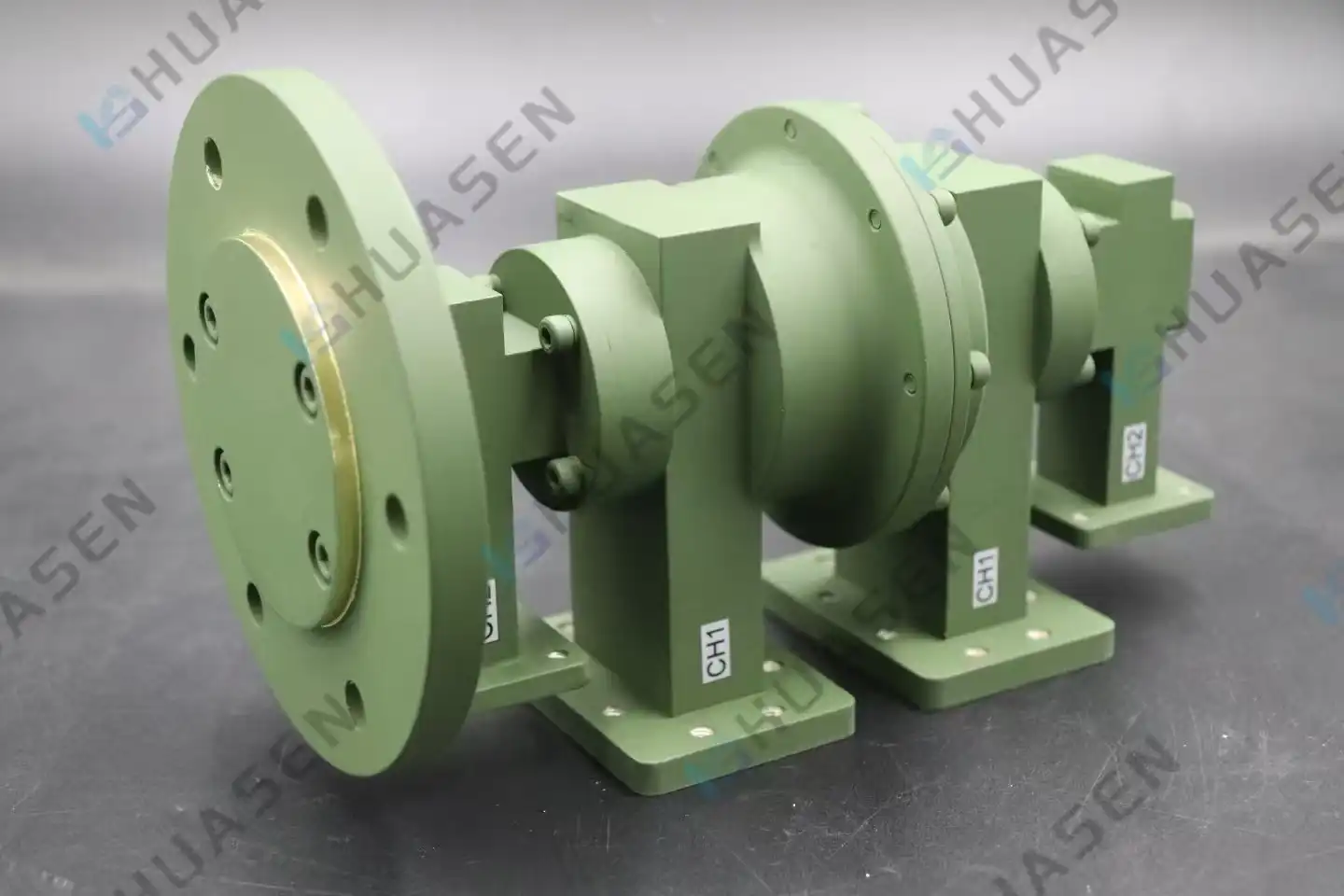
What Makes Dual-Channel Rotary Joints Unique?
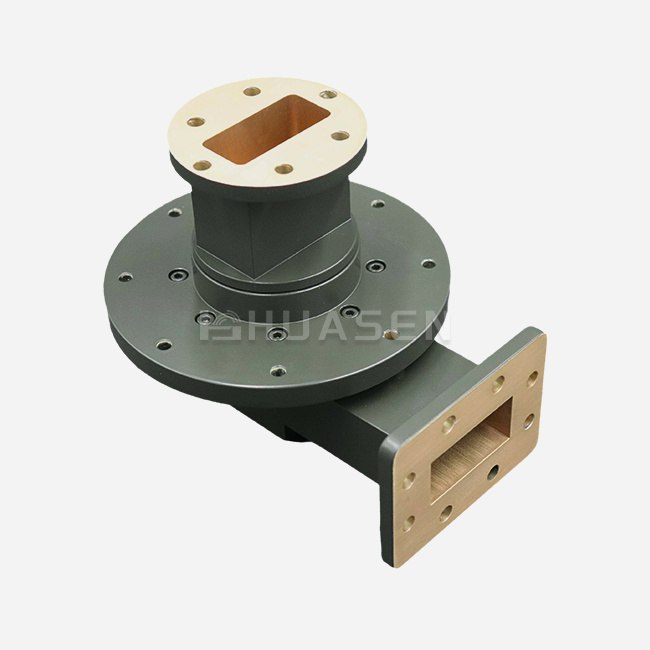
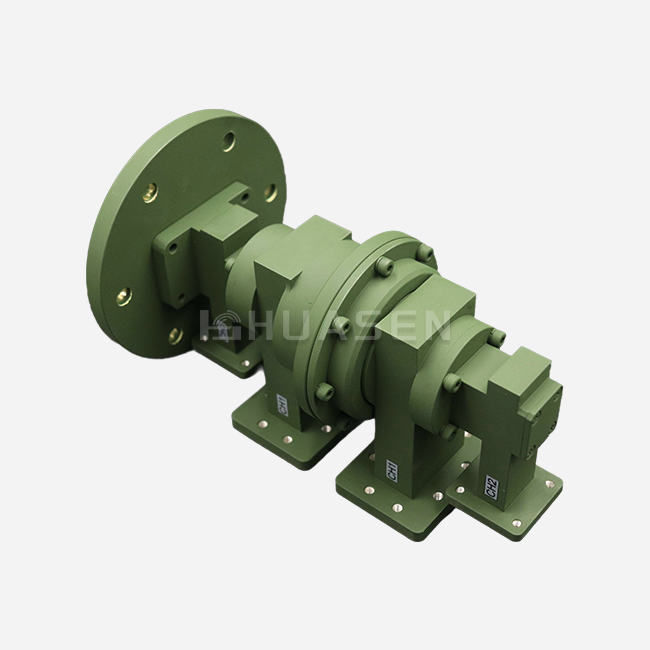
Two separate communication lines are built into a single mechanical unit called a dual-channel rotary joint. This design lets multiple frequency bands or polarization modes work at the same time without signal confusion.
When information systems are very complicated, the technical edge becomes clear. One channel might be needed for X-band target tracking (8–12 GHz) in a normal marine radar system, while another channel would be used for S-band long-range observation (2–4 GHz). Comparative aircraft installation studies have shown that putting these functions into a single rotary joint module cuts the system's weight by about 30% compared to having two different units.
Some important work traits are the following:
- Separate data paths with their own RF connections
- Depending on the frequency, channel separation is usually between 35 dB and 60 dB.
- Dual polarization support for either circular or linear polarization
- Small size, which means less building area is needed
- Synchronized spinning that keeps both channels in phase with each other
If you need to send and receive data at the same time with little noise, dual-channel setups are better than single-channel configurations that switch channels one at a time.
Precision in manufacturing has a direct effect on efficiency. In high-quality dual-channel systems, a dual-channel rotary joint with machined beryllium copper contacts and gold finishing is used to get contact resistance below 3 milliohms. This requirement means that the insertion loss must be less than 0.3 dB at 6 GHz. This is very important for keeping signal-to-noise ratios high in receiver chains that are sensitive.
The ability to integrate sensors into spinning joints is another benefit. A lot of new designs use rotary position sensors that give real-time rotational input and don't need separate slip ring systems for control signals. This combination makes system connections easier and improves the dependability of tracking systems on drones and radio positioning systems for spaceships.
Coaxial Rotary Joint Architecture Explained
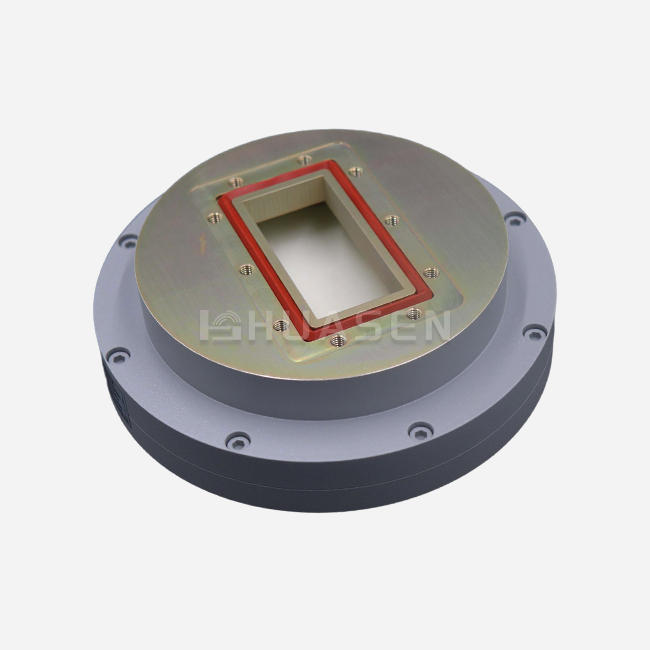
To send electromagnetic energy across a spinning contact, coaxial rotary joints use a circular transmission line design with an inner conductor and an outer shield that is concentric. This tried-and-true design is best for uses that need to cover a wide range of frequencies while using a modest amount of power.
The mechanical design usually has a frame that is precisely cut and center contacts that are held in place by springs. Through controlled pressure and grease, these connections keep the electricity flowing even as the joint turns. Modern designs use ball bearings to support radial loads while keeping spinning torque to a minimum. Test results show that good units have starting torque below 0.05 Nm at room temperature.
Coaxial systems work best in a number of situations, including:
- Broadband radio connections that cover a lot of frequencies (for example, 0.5 to 18 GHz for a single unit)
- Point-to-point wireless linking that works with mobile systems and allows for constant spinning
- RF testing settings that need a lot of connection joining cycles without performance loss
- Applications that need less power (usually less than 300W average power) and a modest VSWR
Coaxial designs are a better deal than narrowband waveguide options if you need to be able to change frequencies across wide bandwidths without spending a lot of money.
One recent improvement is the ability to integrate an optical fiber rotating joint into a coaxial case. These hybrid units can send RF signals over the coaxial line at the same time, and fiber optic channels can handle fast data transfer for watching and controlling the system. Maritime communication ships are using this method more and more, combining spinning connection kits to connect X-band radar feeds with gigabit Ethernet data lines.
Environmental sealing is an important thing to think about. Military-grade coaxial rotary joints that meet MIL-STD-810 standards have fluoroelastomer O-rings and housings made of stainless steel that won't rust. Tests with salt spray show that these designs can withstand contact for more than 1,000 hours without losing performance, which is important for radar sites on ships and along the coast.
Core Performance Differences: Technical Comparison
Understanding measurable performance distinctions helps engineers match component capabilities to system requirements. The following comparison draws from standardized test methodologies and manufacturer specification sheets.
Insertion Loss Characteristics:
Dual-channel rotary joints typically exhibit 0.2-0.5 dB insertion loss per channel at mid-band frequencies. Coaxial designs achieve similar values in single-channel configurations but may show increased loss (0.8-1.2 dB) in multi-conductor variants. These differences stem from coupling efficiency and contact resistance variations.
Return Loss and VSWR Performance:
Quality dual channel units maintain return loss exceeding 25 dB (VSWR < 1.15:1) across specified bands. Coaxial designs demonstrate comparable performance in optimized frequency ranges but may show degraded return loss at band edges—particularly in ultra-wideband configurations covering multiple octaves.
Power Handling Capacity:
Waveguide rotary joint architectures dominate high-power applications, handling kilowatts of average power. Waveguide rotary joint coaxial designs are typically limited to 100-500W depending on frequency and cooling. Dual-channel waveguide rotary joint variants split power capacity across channels, requiring careful thermal management in simultaneous high-power transmission scenarios.
If you need peak power handling exceeding 1 kW with pulse widths below 10 microseconds, waveguide-based dual-channel solutions prove more suitable than coaxial alternatives.
Mechanical Durability:
Accelerated life testing reveals quality dual-channel assemblies withstand 5 million+ rotation cycles before requiring maintenance. Coaxial designs achieve similar longevity when properly lubricated, though contact wear accumulates faster under high-vibration conditions—radar systems on unmanned aerial vehicles particularly benefit from sealed bearing designs with grease reservoirs.
Application-Specific Selection Criteria
Different work settings need rotating joints that are designed to work with them. System stability and cost-effectiveness are improved by matching the features of components to the ways they will be used.
5. 5G Base Station and Backhaul Uses:
Modern huge MIMO antenna arrays use motorized tilt systems that need correction signals to be sent through low-loss spinning connections. In dual channel setups, control channels and calibration tones can be sent on different lines, which keeps the phase coherent across all antenna elements. In 3.5 GHz and 28 GHz deployments, field setups show that insertion loss budgets of less than 0.3 dB keep beamforming accuracy.
Standard coaxial connections don't work as well as dual-channel rotor joints with temperature-compensated designs when you need phase-stable transmission for adaptive antenna systems.
Terminals for satellite communication:
Geostationary satellites are tracked by maritime VSAT stations while ships move through rough seas. Ku-band (12–18 GHz) and Ka-band (26–40 GHz) data must be kept up with little phase noise by the spinning connection. Dual-channel designs split the broadcast and receive frequencies onto different lines. This provides the 30+ dB separation needed to stop transmitter leaking into sensitive receiver chains.
Systems for radar and electronic warfare:
Airborne surveillance systems need rotary joint units that are small, light, and can handle high temperature changes (-55°C to +85°C) and vibrations (20G peak acceleration). Coaxial designs that meet MIL-STD-202 standards provide effective L-band and S-band communication for weather radar. In electronic countermeasure pods, dual-channel designs handle danger monitoring and blocking tasks at the same time.
Tests for communications and use in the lab:
Manufacturers of instruments put rotary joints into automatic test devices that look at the radiation patterns of antennas. The process of getting the data needs hundreds of rotations every day, and the insertion loss is always the same. Coaxial designs with strengthened center wires and changeable contact kits keep downtime to a minimum, and flexible dual-channel units can adapt to changing test needs across a range of frequency allocations.
Environmental Resilience and Installation Considerations
Operational environments significantly impact rotary joint lifespan and maintenance intervals. Understanding these factors prevents premature failures and unexpected system downtime.
Temperature Performance:
Standard commercial designs operate across -40°C to +70°C ranges. Military and aerospace applications demand extended performance to -55°C, requiring specialized contact materials and lubricants. Test data shows insertion loss variation remains under 0.2 dB across this temperature span in quality units, while phase stability maintains ±5 degrees—critical for phased array radar applications.
Sealing and Contamination Protection:
IP67-rated rotary joint assemblies withstand temporary submersion and high-pressure washdowns—essential for naval vessels and offshore platform installations. Hermetically sealed designs employ welded stainless steel housings with glass-to-metal feedthroughs, eliminating moisture ingress pathways that degrade dielectric properties. Salt fog testing per ASTM B117 confirms these constructions survive 2,000+ hours of exposure without corrosion-induced performance degradation.
Mounting and Mechanical Integration:
Compact form factors simplify installation in space-constrained environments. A typical dual-channel rotary joint assembly measures 80 mm in diameter by 120 mm in length, weighing approximately 1.2 kg—30% lighter than equivalent separate single-channel units. Standardized flange interfaces compatible with MIL-DTL-3922 specifications enable rapid field replacement without specialized tooling.
If you need installation flexibility with minimal structural modification, rotary joint designs with adjustable mounting brackets prove more suitable than fixed-configuration alternatives.
Connector Compatibility:
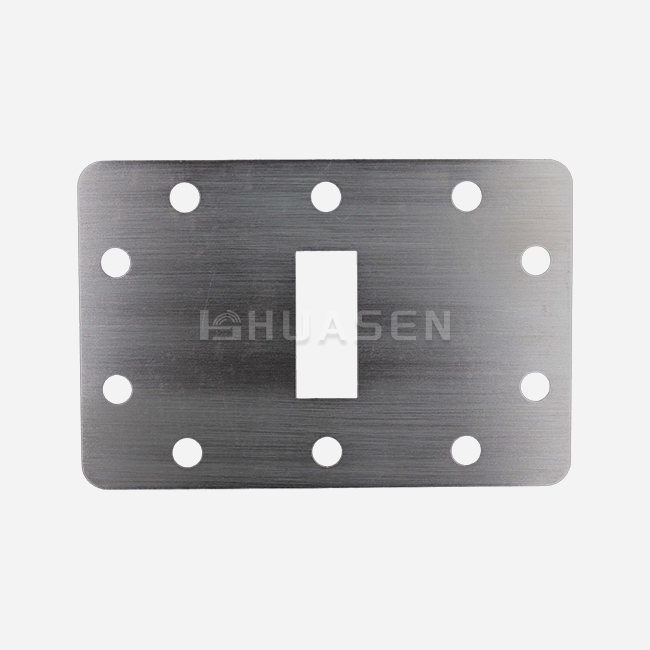
Interface standardization reduces integration complexity. SMA connectors dominate applications below 18 GHz, providing reliable mating across 500+ cycles. K-connectors and 2.92 mm variants extend usable frequency to 40 GHz. Waveguide rotary joints, employing standard EIA flanges (WR-28, WR-90, etc.), ensure compatibility with existing antenna feeds and transmitter outputs. Dual-channel units often incorporate mixed connector types, accommodating different frequency bands without requiring adapter assemblies.
Customization Capabilities and Engineering Support
Standard catalog products address many common applications, but specialized systems often demand tailored specifications. Leading manufacturers offer comprehensive customization services addressing unique operational requirements.
Frequency Band Optimization:
Engineers can specify center frequencies and bandwidth requirements matching system allocations. Custom dual-channel designs might combine C-band (4-8 GHz) and X-band (8-12 GHz) paths within unified housings or integrate millimeter-wave channels for 5G FR2 bands (24-29.5 GHz). Manufacturing processes accommodate narrow instantaneous bandwidths with enhanced return loss performance—achieving VSWR below 1.10:1 across specific 500 MHz segments.
Power Rating Adjustments:
Thermal analysis and contact geometry modifications enable power handling customization. Applications requiring sustained 200W transmission benefit from enlarged contact surfaces and heat-sinking provisions. Conversely, receive-only configurations prioritize insertion loss minimization over power capacity, achieving 0.15 dB typical loss through optimized coupling structures.
Polarization Configuration:
Dual linear polarization support requires maintaining isolation between orthogonal channels exceeding 35 dB. Custom rotary joint designs incorporate precision-aligned coupling probes and symmetrical RF paths. Circular polarization applications employ integrated hybrid couplers or external ferrite circulators, with manufacturers providing matched component sets optimized for axial ratio performance.
Sensor and Control Integration:
Modern rotary joint modules increasingly incorporate ancillary functions. Absolute position encoders provide angular feedback with 0.1-degree resolution without requiring separate slip ring assemblies. Integrated temperature sensors enable real-time thermal monitoring, triggering protective measures if operating limits approach. These smart rotary connector designs simplify system architecture while enhancing reliability monitoring capabilities.
If you need application-specific modifications beyond catalog specifications, experienced manufacturers like Huasen Microwave provide engineering consultation from prototype through production qualification.
Quality Assurance and Compliance Standards
Regulatory compliance and performance verification ensure components meet operational requirements throughout product lifecycles. Rigorous testing protocols validate specifications before deployment.
Industry Certification Requirements:
Military and aerospace applications mandate compliance with multiple standards. MIL-STD-202 defines environmental testing methods, including vibration, shock, and temperature cycling. RoHS directives restrict hazardous substances in commercial products. ISO 9001 certification demonstrates quality management system maturity. Suppliers should provide test reports and certificates of conformance documenting compliance with specified standards.
Electrical Performance Verification:
Vector network analyzers characterize insertion loss, return loss, and isolation across operational frequency ranges. Measurements at multiple rotation angles confirm performance consistency—quality units show less than 0.1 dB variation across 360-degree rotation. High-power testing validates peak and average power ratings under realistic modulation conditions, preventing field failures from thermal runaway or arcing.
Mechanical Reliability Testing:
Accelerated life testing simulates years of operational cycles within compressed timeframes. Continuous rotation testing through millions of cycles at elevated temperatures reveals wear mechanisms and lubricant degradation patterns. Torque measurements detect bearing degradation before catastrophic failure. Quality manufacturers implement statistical process control monitoring critical dimensions during production, ensuring consistent performance across production lots.
Supply Chain Stability:
Long-term program success requires reliable component availability, including for the Dual Channel Rotary Joint. Established manufacturers maintain component inventory and production capacity supporting multi-year programs. Obsolescence management programs provide advance notification of design changes, allowing system upgrades before components become unavailable. If you need assured supply for defense or telecommunications infrastructure projects, partnering with manufacturers demonstrating decades of continuous production proves more suitable than sourcing from unproven suppliers.
Cost Considerations and Total Ownership Analysis
When buying parts, people weigh the initial cost of the purchase against the costs that come up over time, such as installation, upkeep, and possible repair costs.
Price per unit factors:
Because they are harder to make, dual-channel rotary joints usually cost 40 to 60 percent more than similar single-channel coaxial designs. Long-term deals and volume price cuts bring down the cost of each unit for large-scale deployments. For example, base station builders who buy hundreds of units every year get big savings compared to trial amounts.
How well the installation works:
Integrated dual channel kits make installation easier by getting rid of the need for multiple mounting steps and RF wire handling. A normal fix that needs separate send and receive rotating joints takes three to four hours of expert time. With unified dual channel options, installation takes less than two hours, which saves $150 to $200 per site in labor costs based on normal service rates.
Costs of Maintenance Intervals:
Quality rotating joints have repair times that are longer than 5 years or 10 million spinning cycles. When you use sealed bearings that are lubricated for life, you don't have to grease them regularly. When you look at the total cost of ownership over 10 years, you'll see that higher-quality parts with longer repair intervals result in lower total costs, even though they cost more at first. This is especially true for sites that are far away from where service calls cost a lot to make.
Effects of Failure Analysis:
The costs of system downtime are very different for each program. A 5G base station loss could affect a lot of users, but it would only have a small effect on income. If maritime radar fails during a storm, it puts people at risk and could have terrible results. If you need mission-critical reliability and a failed part could have a big effect on operations, it's better to choose higher-grade rotary joints that have been tested and quality assured more thoroughly before being bought.
Conclusion
Selecting between dual-channel rotary joints and coaxial configurations requires evaluating frequency requirements, power-handling needs, and operational environments. Dual-channel architectures excel in multi-band applications demanding channel isolation, while coaxial designs offer cost-effective broadband coverage. Understanding insertion loss, VSWR performance, and environmental resilience ensures optimal component selection. Partnering with experienced manufacturers providing customization capabilities and technical support maximizes system reliability across telecommunications, radar, and aerospace applications.
Ready to Optimize Your System with the Right Rotary Joint Solution?
Huasen Microwave has manufactured precision rotary joint assemblies since 1993, serving telecommunications, aerospace, and defense industries worldwide. Our engineering team provides technical consultation matching dual channel rotary joint specifications to your exact frequency, power, and environmental requirements. As an experienced rotary joint manufacturer, we maintain ISO 9001-certified production facilities with comprehensive testing capabilities validating performance before shipment. Contact our technical specialists at sales@huasenmicrowave.com to discuss your application requirements and request sample evaluation units.
References
1. Johnson, M.R., & Williams, K.T. (2021). Microwave Rotary Joint Design Principles and Applications. Boston: Artech House Publishers.
2. Chen, L.H., Zhang, W., & Kumar, S. (2020). "Performance Characterization of Multi-Channel Rotary Joints for 5G Massive MIMO Systems," IEEE Transactions on Microwave Theory and Techniques, vol. 68, no. 9, pp. 3847-3856.
3. Anderson, P.D. (2019). RF Component Engineering for Aerospace and Defense Systems, 3rd Edition. New York: Wiley-IEEE Press.
4. European Telecommunications Standards Institute (2022). ETSI EN 302 217: Fixed Radio Systems Transmission Equipment Operating in Frequency Bands, Sophia Antipolis: ETSI Publications.
5. Martinez, J.A., & Thompson, R.G. (2020). "Environmental Testing and Reliability Analysis of Naval Radar Rotary Joint Assemblies," Journal of Defense Engineering, vol. 15, no. 4, pp. 112-129.
6. International Electrotechnical Commission (2021). IEC 60169-1: Radio-frequency Connectors - Part 1: Generic Specification - General Requirements and Measuring Methods, Geneva: IEC Central Office.
Send Inquiry