Directional Coupler Comparison: Microstrip vs Coaxial Designs Explained






2026-02-09 21:40:47
When selecting the right directional coupler for your RF system, understanding the fundamental differences between microstrip and coaxial designs becomes crucial. Microstrip couplers excel in compact integration scenarios with moderate power requirements, while coaxial directional coupler solutions deliver superior performance for high-power applications demanding exceptional isolation. Both architectures serve distinct roles in modern telecommunications infrastructure, from 5G base stations to satellite communication systems, making the choice dependent on specific performance criteria, environmental constraints, and system integration requirements.

Understanding Directional Coupler Fundamentals
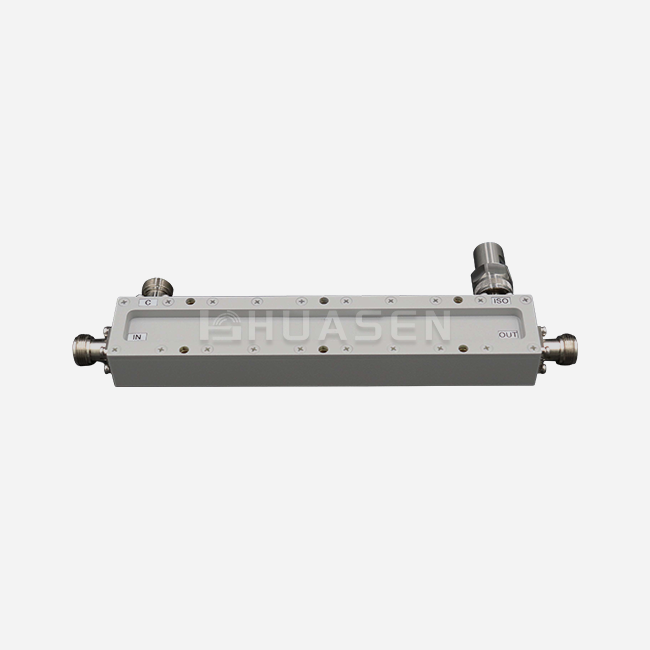
Directional couplers function as four-port passive devices that sample a portion of the forward or reverse power traveling through transmission lines. These components enable signal monitoring, power measurement, and system protection across various microwave applications. The coupling mechanism relies on electromagnetic field interaction between two transmission lines positioned in close proximity. Primary line carries the main signal while the secondary line extracts a predetermined fraction based on the coupling coefficient.
Three essential parameters define coupler performance:
- Coupling factor: Determines the power fraction extracted from the main line
- Directivity: Measures the ability to distinguish between forward and reverse signals
- Isolation: Quantifies unwanted signal leakage between ports
Modern RF systems demand precise control over these characteristics to maintain signal integrity throughout complex communication networks. If you need basic power monitoring with space constraints, microstrip designs offer compelling advantages. If you require high-power handling with maximum directivity, coaxial architectures prove more suitable.
Microstrip Directional Coupler Design Characteristics
Microstrip couplers utilize printed circuit board technology with conductive traces fabricated on dielectric substrates. This planar construction enables mass production while maintaining consistent electrical properties. The coupling mechanism occurs through electromagnetic field interaction between parallel microstrip lines separated by specific gaps. Engineers control coupling strength by adjusting trace width, hybrid coupler spacing, and substrate thickness.
Key microstrip coupler advantages include:
- Compact footprint suitable for dense circuit integration
- Cost-effective manufacturing using standard PCB processes
- Excellent repeatability across production batches
- Easy integration with other planar components
- Precise coupling control through photolithographic techniques
Typical insertion loss ranges from 0.1 to 0.5 dB, depending on frequency and substrate materials. Directivity performance typically achieves 15-25 dB across the operational band, with performance drift across temperature extremes. If you need integration into compact modules or cost-sensitive applications, microstrip couplers delivered width. Temperature stability depends heavily on the substrate's coefficient of thermal expansion. High-quality materials like Rogers RO4000 series minimize the optimal value proposition.
Coaxial Directional Coupler Architecture
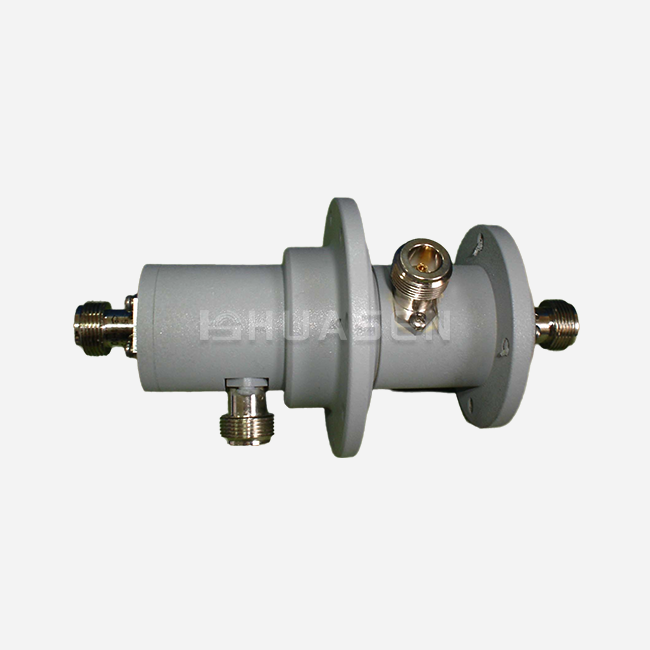
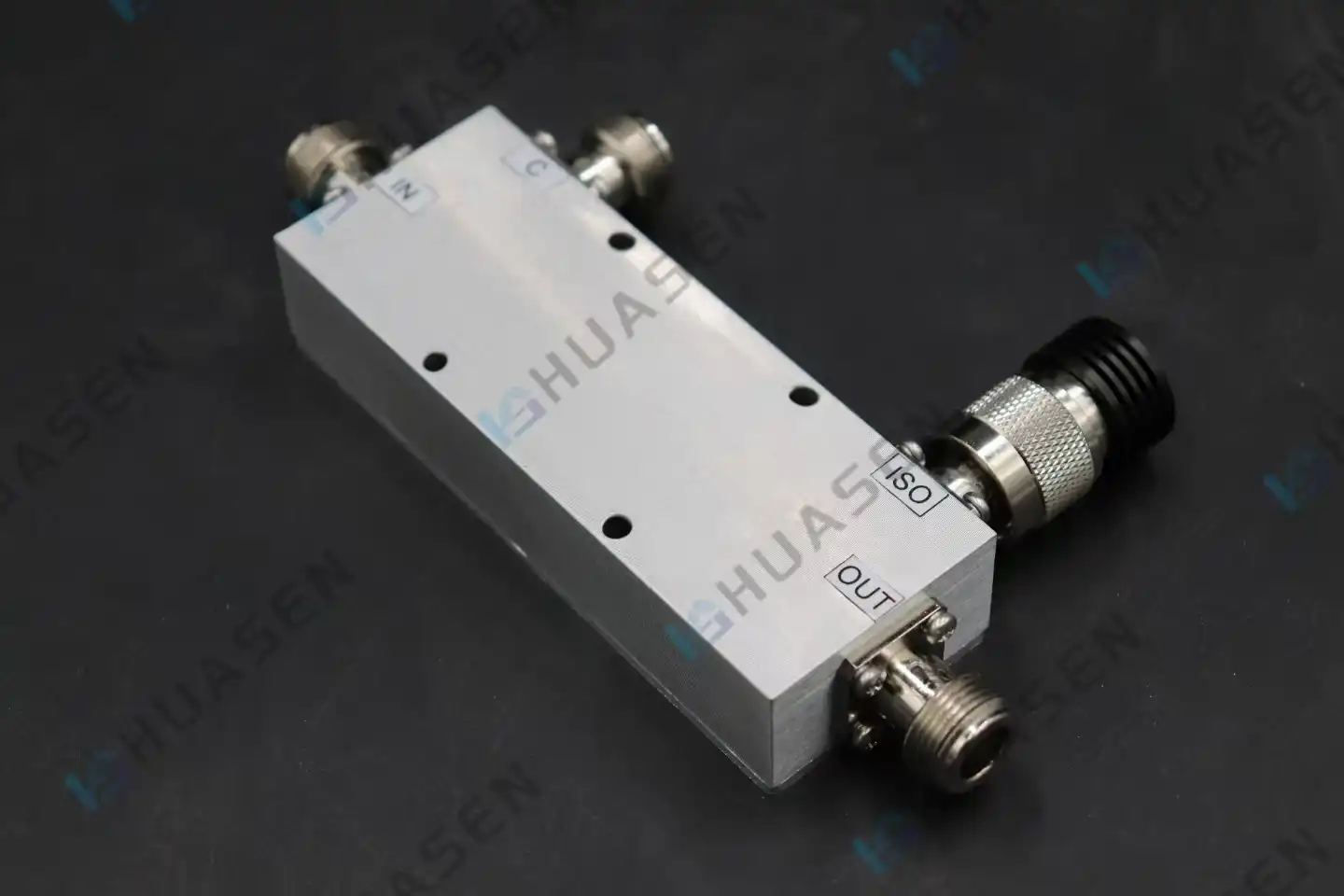
Coaxial couplers employ cylindrical transmission line geometry with center conductors surrounded by dielectric materials and outer shield conductors. This configuration provides superior electromagnetic isolation compared to planar alternatives. The coupling mechanism utilizes various techniques, including aperture coupling, loop coupling, or distributed coupling along the transmission line length. Each method offers distinct performance characteristics suited to different applications.
Primary coaxial coupler benefits encompass:
- Exceptional power handling capabilities exceeding 1000 watts
- Superior directivity performance reaching 40+ dB
- Minimal electromagnetic interference susceptibility
- Robust mechanical construction suitable for harsh environments
- Excellent temperature stability across wide operating ranges
Insertion loss typically remains below 0.2 dB while maintaining consistent performance across multi-octave bandwidths. The coaxial geometry inherently provides better isolation between the input and the hybrid coupler. Manufacturing precision directly impacts electrical performance, requiring tight tolerances on conductor dimensions and dielectric properties. If you need maximum power handling or operate in electromagnetically noisy environments, coaxial designs provide unmatched performance reliability.
Performance Comparison: Technical Analysis
Comprehensive testing reveals distinct performance characteristics between microstrip and coaxial directional coupler implementations across critical parameters.
Frequency Response Characteristics:
- Microstrip: Bandwidth limited by substrate dispersion (typically 1-2 octaves)
- Coaxial: Broader bandwidth capability (often 3+ octaves)
Power Handling Comparison:
- Microstrip: 1-50 watts continuous (substrate and trace width dependent)
- Coaxial: 100-2000+ watts continuous (diameter and dielectric dependent)
Directivity Performance:
- Microstrip: 15-25 dB typical across operating bandwidth
- Coaxial: 25-40+ dB achievable with precision manufacturing
Real-world testing data demonstrates coaxial couplers maintain ±0.5 dB coupling variation across temperature ranges from -40°C to +85°C. Comparable microstrip designs show ±1.5 dB variation under identical conditions. S-parameter measurements indicate coaxial designs achieve superior port-to-port isolation, critical for accurate power measurements in high-dynamic-range applications. If you need wide bandwidth coverage with minimal frequency-dependent variation, coaxial architectures offer superior performance consistency.
Size, Weight, and Integration Considerations
Physical constraints often drive coupler selection decisions, particularly in space-limited applications like drone communication systems or portable test equipment.
Microstrip Dimensional Characteristics:
- Thickness: 0.5-3.0 mm, depending on substrate choice
- Footprint: Scalable from 5x5 mm to larger implementations
- Weight: Minimal impact on overall system mass budget
Coaxial Physical Properties:
- Diameter: 3-50+ mm depending on power requirements
- Length: 10-200+ mm based on coupling and frequency specifications
- Weight: Significantly higher due to metal construction
Integration complexity varies dramatically between technologies. Microstrip couplers integrate seamlessly with other planar components using standard assembly processes. Coaxial devices require mechanical mounting provisions and cable interface considerations. Thermal management differs substantially. Microstrip designs rely on substrate thermal conductivity and PCB heat spreading. Coaxial couplers benefit from superior heat dissipation through metal construction but require appropriate heat sinking for high-power applications. If you need minimum size and weight for mobile or aerospace applications, microstrip solutions provide clear advantages.
Environmental Durability and Reliability
Environmental performance becomes critical in outdoor base station installations, maritime communication systems, and military radar applications. Microstrip couplers face moisture ingress challenges at substrate edges and connector interfaces. Conformal coating applications help mitigate corrosion risks but add manufacturing complexity and cost. Coaxial designs inherently provide superior environmental protection through sealed construction. The outer conductor shields internal components from moisture, dust, and electromagnetic interference.
Reliability Comparison Data:
- Microstrip: 100,000+ hour MTBF in controlled environments
- Coaxial: 200,000+ hour MTBF in harsh environmental conditions
Vibration and shock resistance favor coaxial construction due to robust mechanical design. Microstrip implementations require careful attention to solder joint reliability and substrate attachment methods. Temperature cycling affects both technologies differently. Coaxial designs demonstrate superior dimensional stability, while microstrip performance depends heavily on substrate material properties. If you need an operation in extreme environmental conditions or require maximum long-term reliability, coaxial directional coupler solutions prove more dependable.
Cost Analysis and Manufacturing Scalability
Economic considerations significantly influence coupler selection, dual directional couplers,particularly for high-volume production scenarios.
Microstrip Cost Factors:
- Low material costs using standard PCB substrates
- Automated manufacturing compatibility
- Minimal hand assembly requirements
- Scalable production volumes from prototypes to millions of units
Coaxial Manufacturing Economics:
- Higher material costs due to precision machining requirements
- Labor-intensive assembly processes
- Custom tooling for specific designs
- Economic advantages in lower volume, high-performance applications
Manufacturing lead times differ substantially. Microstrip couplers leverage existing PCB fabrication infrastructure with typical delivery schedules of 2-4 weeks. Coaxial devices often require 6-12 weeks due to precision machining and assembly complexity. Customization costs vary inversely. Microstrip designs accommodate easy parameter modification through mask changes. Coaxial customization requires new tooling investments for unique specifications. If you need cost-effective solutions for high-volume production, microstrip technology provides compelling economic advantages.
Application-Specific Selection Guidelines
Different application domains favor specific coupler technologies based on performance priorities and operational constraints.
5G Base Station Requirements
Coaxial couplers dominate high-power amplifier monitoring applications where power handling exceeds 500 watts. Microstrip designs serve low-power signal processing functions within indoor small cell equipment.
Satellite Communication Systems
Space-based applications prefer microstrip technology for weight minimization. Ground station equipment utilizes coaxial couplers for maximum power handling and environmental durability.
Test and Measurement Applications
Laboratory environments benefit from coaxial precision and repeatability. Portable test equipment incorporates microstrip designs for size and weight optimization.
Radar Systems
High-power radar transmitters require coaxial solutions for power handling capabilities. Receiver front-end circuits often employ microstrip technology for integration density. If you need solutions for specific application domains, careful evaluation of performance priorities guides optimal technology selection.
Future Technology Trends and Innovations
Emerging RF technologies drive continued innovation in both microstrip and coaxial coupler designs. Advanced substrate materials enable microstrip couplers to achieve improved temperature stability and higher frequency operation. Low-loss dielectrics reduce insertion loss while maintaining compact form factors. Coaxial technology benefits from precision manufacturing improvements and novel coupling mechanisms. 3D printing techniques enable complex internal geometries previously impossible with traditional machining. Hybrid approaches combine microstrip and coaxial elements to optimize specific performance characteristics. These innovations address applications requiring both compact integration and high-power capability. Millimeter-wave frequencies challenge both technologies with increasingly demanding precision requirements and materials science limitations. If you need future-ready solutions accommodating next-generation requirements, staying informed about technology evolution becomes essential for optimal system design.
Huasen Microwave Directional Coupler Advantages:
Comprehensive Design Expertise: Thirty years of specialized experience in both microstrip and coaxial coupler technologies, enabling optimal architecture selection for specific application requirements across telecommunications, aerospace, dual directional couplers,and defense sectors.Advanced Manufacturing Capabilities: State-of-the-art fabrication facilities supporting precision microstrip PCB processing and high-tolerance coaxial machining with automated testing systems ensuring consistent electrical performance and mechanical reliability.Wide Frequency Coverage: Product portfolio spanning DC to 110 GHz across multiple technology platforms, supporting narrow-band and ultra-wideband applications with coupling values from -3 dB to -50 dB and directivity exceeding 40 dB.High Power Handling: Coaxial designs supporting continuous power levels up to 2000 watts with peak power capabilities exceeding 10 kW, while microstrip solutions optimize performance for applications requiring compact integration with moderate power requirements.Environmental Durability: MIL-STD-810 compliant designs featuring corrosion-resistant materials, sealed construction, and temperature operation from -55°C to +125°C, ensuring reliable performance in harsh outdoor and aerospace environments.Custom Engineering Services: Dedicated application engineering team providing design optimization, electromagnetic simulation, prototyping, and testing services tailored to unique customer specifications and system integration requirements.Quality Assurance: ISO 9001:2015 certified manufacturing processes with comprehensive testing protocols, including S-parameter characterization, power handling verification, and environmental stress screening,g ensuring consistent product quality.Rapid Prototyping: Advanced design simulation tools and flexible manufacturing processes enabling prototype delivery within 3-4 weeks for microstrip designs and 6-8 weeks for custom coaxial configurations.Supply Chain Reliability: Established procurement partnerships and inventory management systems, ensuring consistent component availability and delivery performance supporting both prototype and high-volume production requirements.Technical Support Excellence: Expert application engineering support throughoutthe product lifecycle, including design consultation, integration assistance, calibration services, and responsive technical troubleshooting for optimal system performance.

Conclusion
Selecting between microstrip and coaxial directional coupler technologies requires careful evaluation of performance requirements, environmental constraints, and cost considerations. Microstrip designs excel in applications demanding compact integration, cost-effective manufacturing, and moderate power levels. Coaxial architectures provide superior performance for high-power applications requiring maximum directivity and environmental durability. Both technologies continue evolving to meet emerging challenges in 5G infrastructure, satellite communications, and advanced radar systems. Understanding these fundamental differences enables engineers to make informed decisions optimizing system performance while meeting project constraints and budget requirements.
Choose Huasen Microwave for Superior Directional Coupler Solutions
Huasen Microwave Technology delivers industry-leading directional coupler manufacturer expertise across both microstrip and coaxial technologies. Our three decades of RF innovation provide customers with optimized solutions meeting exact performance specifications. Whether you require compact microstrip designs for 5G infrastructure or high-power coaxial couplers for radar applications, our engineering team ensures superior quality and reliable performance. Contact our specialists at sales@huasenmicrowave.com to discuss your specific requirements and discover why leading telecommunications companies trust Huasen Microwave for critical RF components.
References
1. Pozar, David M. "Microwave Engineering, Fourth Edition." John Wiley & Sons, Inc., 2011. Chapter 7: Power Dividers and Directional Couplers.
2. Mongia, Rajesh, Inder Bahl, and Prakash Bhartia. "RF and Microwave Coupled-Line Circuits, Second Edition." Artech House Publishers, 2007.
3. Edwards, Terry C., and Michael B. Steer. "Foundations of Interconnect and Microstrip Design, Third Edition." John Wiley & Sons, Ltd., 2000.
4. Gupta, K.C., Ramesh Garg, Inder Bahl, and Prakash Bhartia. "Microstrip Lines and Slotlines, Third Edition." Artech House Publishers, 2013.
5. Ramo, Simon, John R. Whinnery, and Theodore Van Duzer. "Fields and Waves in Communication Electronics, Third Edition." John Wiley & Sons, Inc., 1994.
6. Ludwig, Reinhold, and Pavel Bretchko. "RF Circuit Design: Theory and Applications, Second Edition." Pearson Education, Inc., 2009.
Send Inquiry