Circularly Polarized Horn Antenna Features Explained for RF Engineers






2026-05-26 21:38:46
RF components like circularly polarised horn antennas are used in situations where receiver orientation or ambient multipath reflections cannot affect signal dependability. Instead of linearly polarised antennas, this technology radiates electromagnetic waves with a continuous electric field vector rotation in RHCP or LHCP, ensuring consistent performance regardless of transmitter-receiver alignment. This technology tackles significant issues in satellite communications, radar systems, and advanced wireless infrastructure, where polarisation mismatch or dynamic platform movement would decrease connection quality.
Understanding Circularly Polarised Horn Antennas
Electromagnetic Principles Behind Circular Polarisation
Two orthogonal linearly polarised waves of identical amplitude with a 90-degree phase difference form circular polarisation. The Huasen Microwave Circularly Polarised Horn Antenna uses linear-to-circular converters and dual linear orthogonal excitation. The revolving electric field prevents deep signal fades in mobile satellite terminals and tumbling spacecraft by maintaining power transmission even while the receiving antenna rotates axially.
How CP Horn Antennas Operate?
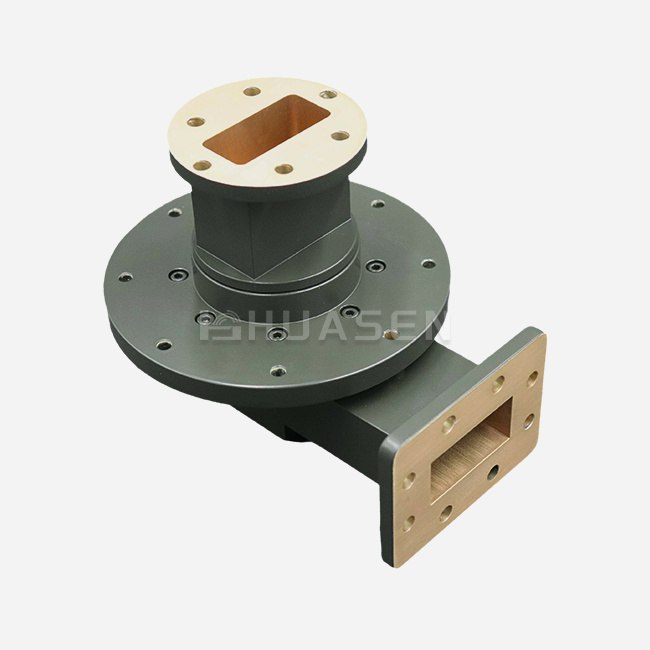
The basic waveguide mode is circularised using precision-engineered internal structures like stepped septum polarisers, dielectric phase shifters, or corrugated waveguide sections in the operational core. Huasen's cone-shaped horn with broadband dual linear polarisation synthesis operates from 0.5 to 110 GHz. Across operating bandwidths, step diaphragm architecture minimises orthogonal component phase error, ensuring excellent axial ratio performance sub 0.5 dB.
Key Benefits in Modern RF Systems
The antennas handle numerous issues at once. In reflecting industrial or urban contexts, multipath interference is controllable because reflected signals reverse their polarisation sense—RHCP becomes LHCP—and the antenna rejects this cross-polarised energy. In ionospheric transmission, Faraday rotation kills linearly polarised satellite signals but has no effect on circular polarisation. Circular polarisation minimises the need to test numerous linear orientations when describing device radiation patterns, saving testing laboratories time.
Radiation Patterns and Frequency Coverage
Normal radiation patterns have smooth, symmetrical beams with low sidelobes. System designers can balance beamwidth and directivity using gain options from 10 to 25 dB. Wide frequency coverage from L-band to W-band supports 5G massive MIMO testing and millimetre-wave satellite backhaul. Premium units keep axial ratio (AR) below 1.5 dB throughout operational bandwidths to ensure cross-polarisation discrimination surpasses 25 dB.

Design Principles and Performance Features
Waveguide Configurations and Polariser Technologies
Advanced designs use numerous techniques, such as the circularly polarised horn antenna. Septemberum polarisers create orthogonal mode differential path lengths by inserting a tiny metallic vane into the waveguide throat. Huasen's step-diaphragm implementation provides precise bandwidth control, allowing for customisation from narrowband (≤5% fractional bandwidth) for military communications to ultra-wideband (≤67% fractional bandwidth) for spectrum monitoring and electronic warfare. Dual-feed topologies allow single-antenna RHCP and LHCP operation with port-to-port isolation reaching 30 dB, providing flexibility.
Critical Performance Metrics Decoded
Interconnected parameters are key to understanding specification sheets. The axial ratio measures polarisation purity—values around 0 dB imply perfect circular polarisation, whereas deterioration beyond 3 dB significantly diminishes antenna orientation mismatch immunity. VSWR below 1.5:1 guarantees efficient power transmission with negligible reflection loss. If a single antenna can replace numerous narrowband units, system inventory costs and mechanical complexity in phased array installations depend on gain stability across frequency bands.
Comparison with Alternative Antenna Types
Patch antennas are small yet have limited bandwidths (3-5%) and low power handling. Microstrip designs integrate readily into planar arrays but have higher insertion loss and worse environmental durability. Linear horn antennas provide high gain and bandwidth but need mechanical or electrical polarisation diversity. Broad bandwidth, high power handling (essential for radar transmitters), environmental durability, and inherent polarisation agility without active components are all features of the circularly polarised horn antenna.
Optimisation for 5G and Radar Applications
As calibrated reference sources, these antennas provide accurate total radiated power measurements in 5G over-the-air testing chambers without sophisticated gimbal systems to spin the probe across all linear polarisation angles. This greatly decreases test cycle time. Weather radars use circular polarisation's differential phase measurements between co-polar and cross-polar returns to distinguish spherical raindrops from oblate hailstones, improving prediction accuracy.
Procurement Considerations and Market Comparison
Criteria-Based Selection Framework
Structured evaluation should guide procurement decisions. The frequency range must match the allotted spectrum and growth plans. In congested RF situations, gain requirements balance link budget and beamwidth. Physical dimensions increase integration difficulty, especially in aerial or marine systems with size and weight restrictions. Interface prices and vibration reliability depend on connector compatibility—SMA, Type-N, or WR waveguide flanges.
Global Manufacturer Landscape
Understanding these issues simplifies vendor talks and speeds project completion. Environmental standards are crucial for outdoor base stations and maritime applications where temperature variations, salt fog, and UV exposure reduce antenna life, including for horn antennas' circular polarisation. Compliance certifications (MIL-STD-810 shock/vibration, IP67 water intrusion) save long-term maintenance costs by demonstrating reliability.
The market has strong, established players. European manufacturers appeal to aerospace prime contractors that want comprehensive material certifications with precise machining and test data traceability. North American vendors provide quick prototyping with reduced lead times and responsive engineering. Asian manufacturers like Huasen Microwave, which has been making RF components since 1993, provide reasonable costs and comprehensive customisation, from flange kinds to axial ratio at customer-specific frequencies.
Pricing Structures and Procurement Strategies
Huasen's product line includes configurable gains from 10 to 25 dB, bandwidth tailoring from narrowband radar feeds to broadband electronic warfare receivers, and commercial SMA to military-spec connectors. Engineering cooperation takes 8-12 weeks for sophisticated bespoke designs, whereas basic setups take 4-6 weeks.
Frequency, bandwidth, and performance determine antenna costs. Due to manufacturing accuracy, broadband millimetre-wave units with axial ratios < 0.5 dB cost more. Volume discounts can be 15-25% for orders over 50 units. Custom manufacturing requires upfront engineering expenditures but reduces system-level costs by consolidating functions. Online procurement systems provide supplier comparison but need specification verification. Instead of datasheet summaries, request axial ratio versus frequency charts, radiation pattern measurements, and VSWR curves. Reference customer deployments in similar applications demonstrate the vendor's ability to satisfy strict criteria.
Practical Applications and Industry Use Cases
Satellite Communications and Telemetry
Ground stations for low-earth-orbit satellite constellations benefit from circularly polarised horn antennas. Satellites rotate relative to the ground station as they fly above. These rotations would fade linear antenna signals, necessitating complicated tracking algorithms or mechanical steering. Circularly polarised feeds retain link margin during passes. Telemetry, tracking, and command activities essential for constellation management are immune to Faraday rotation, an ionospheric distortion that scrambles linear polarisation during solar storms. Deep space missions enhance these benefits. Signal dropouts from polarisation mismatches are unacceptable for spacecraft communicating via atmospheres or interplanetary distances. Circular polarisation ensures reliable data return from probes billions of kilometres from Earth.
Radar Systems and Target Detection
Meteorological radars classify precipitation using circular polarisation. Nearly spherical raindrops reflect signals with little polarisation. Ice crystals' and hailstones' uneven forms change polarisation. By measuring the correlation between transmitted and received polarisation states, computers can distinguish rain from hail, estimate droplet sizes, and enhance severe weather alerts. Military radar likes circularly polarised horn antennas for clutter elimination. Ground clutter and sea surface returns depolarise RHCP transmission, making it partly LHCP. Complex-shaped target aircraft keep polarisation well. Processing only the co-polar return channel reduces congestion by 10-15 dB, improving detection ranges in difficult conditions.
Emerging 5G and Wireless Infrastructure
Testing antenna arrays with hundreds of elements is difficult for massive MIMO base stations in 5G advanced and 6G research. Anechoic chambers with horn antenna circular polarisation allow pattern characterisation without moving the array or measurement probe for vertical and horizontal polarisation sweeps. This speeds development and cuts facility expenses. Millimetre-wave wireless backhaul lines use circular polarisation to reduce rain fading. Despite increased frequency absorption during precipitation, reducing polarisation mismatch loss recovers many dB of connection margin, typically the difference between connectivity and outages during storms.
Conclusion
Due to their resilience to orientation mismatch, improved multipath rejection, and consistent performance under difficult environmental circumstances, circularly polarised horn antennas solve basic RF system design problems. Understanding axial ratio, cross-polarisation discrimination, and bandwidth characteristics helps purchase decisions match application needs. Customisable frequency ranges from 0.5 to 110 GHz, with gains from 10 to 25 dB provide for design freedom in satellite ground stations and 5G test facilities. Technical competency, certification compliance, and customisable responses promote project success while evaluating manufacturers.
FAQ
1. What advantages do CP horn antennas offer over linear types?
Circularly polarised horn antennas prevent receiver orientation-induced signal fading on mobile platforms like aircraft and ships. Since the antenna rejects reflected signals with reverse polarisation, multipath rejection improves. Circular polarisation is only slightly affected by ionospheric Faraday rotation, which kills linearly polarised satellite communications during solar activity. This ensures reliable communication during geomagnetic disturbances.
2. What are typical lead times for custom antenna orders?
Standard catalogue configurations from known manufacturers are delivered in 4-6 weeks. Engineering-designed features, including changed frequency ranges, specialist connections, and environmental hardening, take 8-12 weeks. Complex polariser design or qualification testing tasks may take 16-20 weeks. Schedule delays are avoided by early vendor involvement in system design.
3. Can these antennas serve both radar and communication systems?
Absolutely. Radar performance benefits from satellite antenna properties like constant polarisation and multipath rejection. Weather radars analyse precipitation using dual polarisation. Military systems decrease clutter by circular polarisation. Communication systems function below 100 watts constantly, whereas radar transmitters may need several kilowatts of peak power.
Partner with Huasen Microwave for Precision RF Solutions
Huasen Microwave's 30 years of experience as a Circularly Polarised Horn Antenna supplier are helpful to RF engineers and system integrators. The CPHA series offers superior axial ratio performance (≤0.5 dB) for military communications and broadband spectrum monitoring across customizable bandwidths. From tiny UAV terminals to high-power radar feeds, 0.5-110 GHz manufacturing with customizable gain choices meets needs. Contact our engineering team at sales@huasenmicrowave.com for custom specifications, test data, and project quotes.
References
1. Balanis, Constantine A. Antenna Theory: Analysis and Design, 4th Edition. Wiley, 2016.
2. Olver, A.D., et al. Microwave Horns and Feeds. IEEE Press, 1994.
3. IEEE Standard 145-2013. IEEE Standard for Definitions of Terms for Antennas. Institute of Electrical and Electronics Engineers, 2014.
4. Clarricoats, P.J.B. and Olver, A.D. Corrugated Horns for Microwave Antennas. Peter Peregrinus Ltd, 1984.
5. Volakis, John L. Antenna Engineering Handbook, 5th Edition. McGraw-Hill Education, 2019.
6. Love, A.W. Electromagnetic Horn Antennas. IEEE Press, 1976.
Send Inquiry