
Choosing High Power Differential Phase Shift Circulator






2026-06-15 22:26:49
When selecting the right RF component for high-power radar, telecommunications, or particle accelerator applications, understanding the nuances of a High Power Waveguide Differential Phase Shift Circulator becomes critical. Unlike conventional junction circulators that suffer from thermal hotspots and power limitations, differential phase shift circulators employ a sophisticated four-port architecture using hybrid couplers and ferrite-loaded waveguide sections. This design distributes thermal loads more evenly, handles megawatt-level peak power, and provides superior isolation—making it the preferred choice for protecting expensive klystrons, magnetrons, and traveling wave tubes in mission-critical systems where reliability and signal integrity cannot be compromised.
Introduction
Protecting high-value RF sources and making sure signals move freely has become a must in many fields, from 5G infrastructure to military radar and satellite communications. High Power Waveguide Differential Phase Shift Circulators solve these problems by very precisely controlling the flow of energy in one direction. These special gadgets reflect power from hurting receivers, lower intermodulation distortion, and keep things running smoothly even when there is a lot of electromagnetic and heat stress.
My goal is to show you why these circulators are so important, how to compare them to the needs of your system, and how to buy them from trusted sources. This guide has all the technical information and useful tips you need, whether you're an RF engineer making plans for a new generation of base station front-ends or a procurement officer looking for parts for a military radar upgrade.
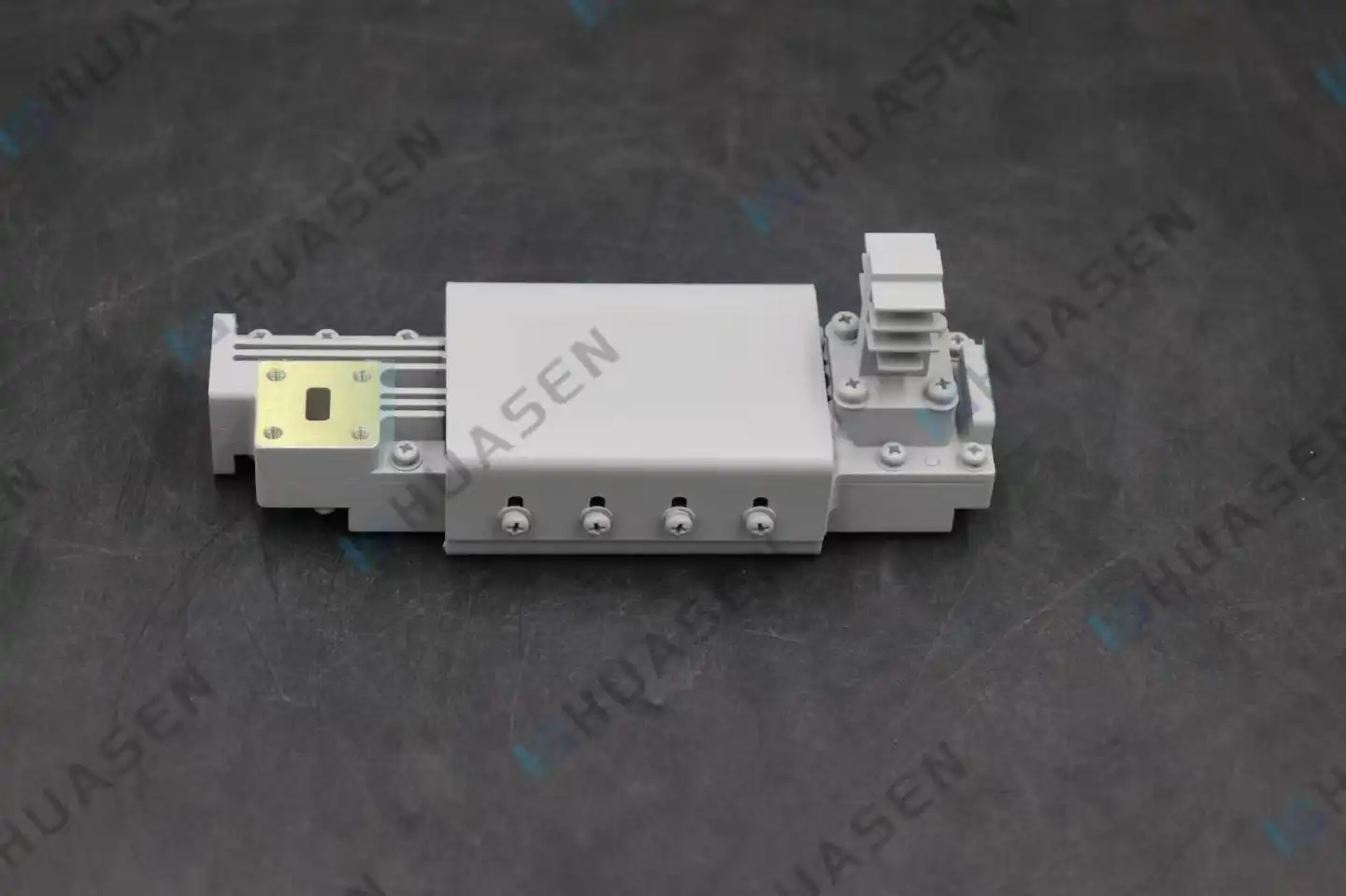
Understanding High Power Waveguide Differential Phase Shift Circulators
What Sets Differential Phase Shift Circulators Apart
A non-reciprocal resonant ferrite chamber makes standard three-port junction circulators operate. They manage temperature efficiently at low power but poorly at continuous wave power exceeding a few kilowatts. When ferrite is heated, its magnetic characteristics change, disrupting the device and worsening isolation. High Power Waveguide Differential Phase Shift Circulators, which divide the RF line into two identical waveguide arms filled with ferrite and apply a regulated phase shift to each arm, can solve this problem. Putting these signals back together using a second hybrid coupler allows directed separation without concentrating heat in a single resonant part.
This design can handle 10 kW to 100 kW continuous wave and many megawatts of peak power. Due to the spread-out heat load, liquid cooling using water or glycol running via ducts near the waveguide walls is efficient. This prevents ferrite from reaching harmful temperatures when it loses its magnetic characteristics or its links break.
Core Operating Principles and Technical Features
Non-reciprocal phase shifting, power division, and recycling power in the device. Port 1 input signals are divided in half by a 3 dB magic tee or short-slot hybrid coupler. As each arm passes through a permanent magnet-pushed ferrite portion, the forward phase shift is 90 degrees. When mixed again at the output, constructive interference powers Port 2 and destructive interference shuts off Port 3. Instead of returning to Port 1, energy from Port 2 is reflected to Port 4, a high-power water load. Because the 180-degree phase shift is reversed.
Separation should be higher than 20 dB, voltage standing wave ratios less than 1.15:1, and insertion loss less than 0.25 dB throughout S-, L-, and X-band frequencies. The frequency bandwidth depends on the hybrid coupler design and ferrite resonance setting. Over 2-3% bandwidth, narrowband optimised equipment has superior specifications to broadband counterparts.
Why These Circulators Excel in High-Stress RF Environments
This technique is suitable for severe areas that require reliability. Air traffic control radars with megawatt pulse power levels employ circulators to protect klystron amplifiers against antenna icing and mechanical damage that causes excessive VSWR. They prevent catastrophic tube failure in 915 MHz or 2.45 GHz industrial microwave systems used to dry ceramics or make food by protecting magnetrons from load faults. Any instability between the RF sources and the accelerating holes can compromise beam focus and treatment precision. This is crucial for particle and medical linear accelerators.
Pressurising waveguides with SF6 or dry air increases voltage breakdown limits. This allows them to be utilised at higher elevations or in damp, arcing-prone areas. Following MIL-DTL-85528 ensures these devices fulfil rigorous military radar specifications. Following the requirements for common waveguide flanges like WR-284, WR-90, and WR-650 ensures their easy integration into global RF systems.
Key Criteria for Choosing the Right High Power Differential Phase Shift Circulator
Matching Frequency Range and Power Specifications to Your Application
Waveguide size and ferrite material depend on device frequency. WR-284 waveguide is utilised for 3 GHz S-band systems and WR-90 for 10 GHz X-band systems. The average power handling must be 20% more than your emitter's constant output to account for heating and wear. Also crucial is peak power capacity. Pulsed radar systems that employ megawatt-level bursts every microsecond need a High Power Waveguide Differential Phase Shift Circulator that can manage that high energy immediately to prevent dielectric breakdown and ferrite cracking.
Insertion loss affects system performance. At 0.15 dB loss, a gadget loses 3.4% of its power as heat. Devices with 0.3 dB loss lose 6.9% more. This disparity makes cooling equipment cost more and last less at higher kilowatt power levels. Specifications for return loss exceeding 23 dB safeguard sensitive amplifier stages by minimising power loss even when impedances differ.
Evaluating Material Quality and Thermal Management Design
Ferrite material's purity and bonding determine its durability. Good garnets retain their hysteresis and magnetic properties at many temperatures. Ferrite-to-waveguide wall material must withstand temperature variations without breaking, a main cause of field failures. To ensure heat distribution, request thermal profile data with infrared camera scans from full-power testing throughout the procurement process.
Designing a nice UI is crucial. Coolant lines in liquid-cooled devices must be precisely machined to maximise surface contact area and minimise flow obstruction. Gasket materials must withstand temperature and water chemical changes. Check the cooling channels' ability to survive hydraulic pressure tests at 60–100 PSI and the completely sealed units' helium leak rates below industry requirements.
Supplier Credibility and Certification Requirements
Checking supplier qualifications prevents costly mistakes. Older manufacturers have ISO 9001 quality management systems and provide test reports and material certificates. Ask vector network experts for bandwidth-wide S-parameter sweep data on insertion, separation, and return loss. High-power burn-in tests that indicate steady performance at rated power for 24–48 hours under unmatched loads confirm the thermal design.
Compliance badges suit your business. Telecommunications may require RoHS and REACH compliance for environmental concerns. MIL-STD testing is necessary for military contracts. Standard waveguide flange connections for High Power Waveguide Circulator with dimensional constraints, seal, and mechanically align the system during integration. Working with certified distributors or direct OEMs reduces the possibility of counterfeit parts in global supply chains.
Comparing Differential Phase Shift Circulators With Conventional and Low Power Alternatives
Performance Advantages in High-Power Scenarios
For uses with less than 1 kW of average power, conventional junction circulators work well because they are small and cheap. When power levels go above this point, the ferrite structure of these devices becomes more concentrated, which causes thermal hotspots that change the resonant frequency and make isolation worse. High Power Waveguide Differential Phase Shift Circulators split the magnetic circuit into two ferrite parts that are physically separate from each other. Each section works at half of the overall power density. In ongoing duty cycles, this change in architecture means that the mean time between failures is longer.
By itself, balance makes electromagnetic interaction better. The split-path design gets rid of some harmonic modes that cause problems for junction circulators. This lowers the amount of unwanted emissions that mess up neighboring frequency bands, which is very important in places with a lot of devices using the same spectrum, like cellular base stations. Signal quality is kept higher when intermodulation distortion is low in sensitive communication links where third-order products need to stay below -60 dBc.
Operational Lifespan and Maintenance Considerations
Stress from changing temperatures speeds up the aging process of parts. When junction circulators are close to their temperature limits, the ferrite grain boundaries move, and the bond lines get worn out after 5,000 to 10,000 hours. Differential phase shift versions with good cooling systems often go more than 50,000 hours without needing to be serviced. The time between maintenance windows gets longer, which is good for radar workers who like having more time to work before and after maintenance windows.
Repairability varies, too. With a modular design, you can change single hybrid couplers or ferrite sections in the field without having to throw away the whole assembly. Lifecycle costs are lower for system workers who are in charge of big installations spread out over many places with this design.
Procurement Tips for Sourcing High Power Waveguide Differential Phase Shift Circulators
Identifying Authorized Distributors and Reliable OEMs
Start with public case studies and industry sources to assess the manufacturer's performance. Radar and telecommunications companies that have been around for decades know the stress elements of each application and manufacture their products accordingly. Ask for customer reference lists and follow up with professional connections at similar organisations to assess the product's real-world performance and customer service.
As global supply chains grow, authorised distribution networks protect you against bogus parts with authentication assurances. Distributors should offer entire documentation sets, including national-standard calibration certifications, S-parameter datasets, and CAD-compatible mechanical interface models.
Customization Capabilities and Lead Time Realities
Off-the-shelf circulators operate with many frequencies, although unique designs work better for some systems. Suppliers with design teams may customise flange arrangements, cooling interfaces, and ferrite bias fields for your system. Talk to engineers early in the project schedule for a High Power Waveguide Differential Phase Shift Circulator since customisation adds 8–12 weeks to lead times.
The minimum order quantity depends on item complexity. Unique designs require 5 to 10 units to justify the tools' cost. Standard shop products ship in one unit. When system integrators install hundreds of base stations, volume price matters. To meet project deadlines, they should negotiate framework agreements that fix rates but allow delivery at different dates.
Documentation and Compliance Verification
Full datasheets should include nominal performance, ambient operating ranges, MIL-STD-810 shock and vibration limitations, and altitude derating curves. Integration shocks during system-level qualification testing are prevented by electromagnetic compatibility test reports showing radiated and conducted emission compliance.
Test sample units before committing to production numbers to ensure they fulfil criteria. This allows your engineering team to test mechanical fit, RF performance, and cooling connection stress using realistic duty cycles. Reliable merchants appreciate this inspection and frequently provide reduced trial units to potential buyers.
Future Trends and Innovation in High Power Waveguide Circulators
Advanced Materials Enhancing Performance Boundaries
According to research into low-loss ferrite formulas, insertion loss can be cut to less than 0.1 dB while power handling stays the same. Yttrium iron garnet types that have been treated with rare earth elements show better temperature stability, which means they work better from -40°C to +85°C. These materials make it possible for High Power Waveguide Differential Phase Shift Circulators to be used in deep-space transmission systems and platforms in the stratosphere, where temperatures are very high and very low.
Additive manufacturing methods make it possible to make cooling channels with complicated shapes that would not be possible with standard machining. Conformal cooling passages that have been improved through computational fluid dynamics studies get rid of heat more efficiently while reducing the size of the device without affecting its thermal performance. These small form factors are good for uses that need to save room, like radar pods for unmanned aerial vehicles and phased array installations on ships.
Integration With Next-Generation RF Systems
As 5G massive MIMO and 6G designs progress, circulators with beamforming arrays that can handle higher instantaneous bandwidths will be needed. Single-device multi-octave designs that encompass 2 to 6 GHz simplify radio front-end layouts and system complexity. Researchers are developing electrically adjustable differential phase shift circulators with voltage-controlled ferrite bias for real-time impedance matching to propagation circumstances.
Pressure from authorities and business sustainability goals drives eco-friendly production. RoHS and WEEE require lead-free soldering, hexavalent chromium-free surface treatments, and recyclable packaging. Suppliers who care about the environment succeed because buyers value supply chain sustainability above technological excellence.
Strategic Recommendations for Long-Term Value
Partner with merchants who invest in R&D rather than merely selling ordinary things. Companies demonstrate thought leadership by submitting expert papers at IEEE conferences or working on standards, which improves products. Technology roadmap discussions demonstrate if a supplier's development aims fit your future system improvements. Avoid obsolescence and costly redesigns with this.
Scalability matters when test projects enter production. Sellers should stock extra capacity in case demand rises without impacting supply timings. Dual-source solutions streamline the supply chain, but backups must fulfil performance criteria immediately to avoid requalification delays. Framework agreements with selected suppliers that reserve capacity give supply security and flexibility.
Conclusion
When choosing a High Power Waveguide Differential Phase Shift Circulator, you have to weigh the technical specs against the dependability needs of your application and the cost of the product. Because they offer better separation and spread thermal management, these devices are necessary to safeguard important RF sources in radar, telecommunications, and science equipment. A careful check of the frequency range, power handling, material quality, and seller references will make sure that your investment works well for a long time. As 5G and 6G systems require more power and bandwidth, new materials and production techniques offer even better performance. When you work with experienced makers who know the problems your industry faces, choosing the right parts stops being a one-time thing and turns into a strategic partnership that speeds up system development and improves your place in the market.
FAQ
Q1: How do differential phase shift circulators differ from conventional junction circulators in practical performance?
RF energy is spread out over two separate ferrite-loaded waveguide sections by High Power Waveguide Differential Phase Shift Circulators instead of being concentrated in one resonant cavity. This makes better heat control possible, which lets it handle 5–10 times more power than junction circulators of the same size. Because there isn't any isolated heating of a single ferrite element that would cause magnetic detuning, isolation stays stable over a wider range of temperatures. Because the balanced signal routes cancel out some nonlinear products, intermodulation distortion goes down by a measurable amount.
Q2: What typical lead times and minimum order quantities should I expect?
Standard catalog items from well-known companies usually ship in four to six weeks for small orders. Lead times can go up to 10 to 14 weeks for custom designs that need changed flanges, special cooling connections, or frequency bands that aren't standard. This depends on how complicated the engineering is. Minimum order numbers range from one unit for testing to five to ten units for fully customized designs that need to amortize the cost of the tools used. Buyers who send 50 or more units a year or more can negotiate blanket purchase orders with staggered drops and better prices.
Q3: What best practices ensure electromagnetic compatibility during system integration?
Check that the waveguide flange is flat and that the aperture measurements are correct to keep RF from leaking out at the contact points. To get even gasket compression, torque the screws to the manufacturer's suggested levels using calibrated wrenches. To keep magnetic fields from getting into sensitive receiving stages, run cooling lines and bias magnet wires in pairs that are twisted. After installation, run full system VSWR sweeps to make sure that the impedance matches across the working bandwidth. Only then should full emitter power be applied.
Partner With Huasen Microwave for Your High Power Circulator Needs
With more than 30 years of experience, Huasen Microwave Technology has been designing and making precise RF and microwave parts for tough uses. We are a well-known company that supplies High Power Waveguide Differential Phase Shift Circulators. To make sure that every unit meets MIL-STD requirements, we use strict quality control methods such as vector network analyzer analysis, high-power burn-in testing, and thermal profiling. Our engineering team works with system integrators all over the world to make sure that the frequency bands, cooling connections, and mechanical configurations are just right for radar, telecommunications, and aerospace installs.
Every shipment comes with full scientific documents, such as S-parameter datasets, thermal simulation results, and safety certificates. Whether you need a few units for testing or a lot of units for production, our helpful sales team at sales@huasenmicrowave.com can get you quotes quickly and help you with your application, which will speed up the process of buying. You can trust that we will protect your important RF equipment with reliable, high-performance circulators.
References
1. Linkhart, D. K. (2014). Microwave Circulator Design (2nd ed.). Artech House Publishers.
2. Helszajn, J. (2008). The Stripline Circulator: Theory and Practice. Wiley-IEEE Press.
3. Pozar, D. M. (2012). Microwave Engineering (4th ed.). John Wiley & Sons.
4. Adam, J. D., Davis, L. E., Dionne, G. F., Schloemann, E. F., & Stitzer, S. N. (2002). Ferrite devices and materials. IEEE Transactions on Microwave Theory and Techniques, 50(3), 721-737.
5. Fay, C. E., & Comstock, R. L. (1965). Operation of the ferrite junction circulator. IEEE Transactions on Microwave Theory and Techniques, 13(1), 15-27.
6. Button, K. J., & Lax, B. (1962). Microwave Ferrites and Ferrimagnetics. McGraw-Hill Book Company.
Send Inquiry
You may like
