Choosing a Double Ridged Waveguide to Coaxial Adapter in 2026






2026-01-28 21:57:12
When your microwave test system experiences unexplained signal loss and poor VSWR performance, the problem often lies with an incompatible or poorly matched Double Ridged Waveguide to Coaxial Adapter. Selecting the right adapter in 2026 requires understanding critical specifications like frequency coverage, insertion loss, VSWR characteristics, connector compatibility, and power handling capabilities. This comprehensive guide provides the technical knowledge and practical insights needed to choose high-performance Double Ridged Waveguide to Coaxial Adapter solutions that eliminate signal degradation, ensure optimal impedance matching, and deliver reliable performance across your entire operational bandwidth for telecommunications, radar, aerospace, and defense applications.
Understanding Double Ridged Waveguide to Coaxial Adapter Technology
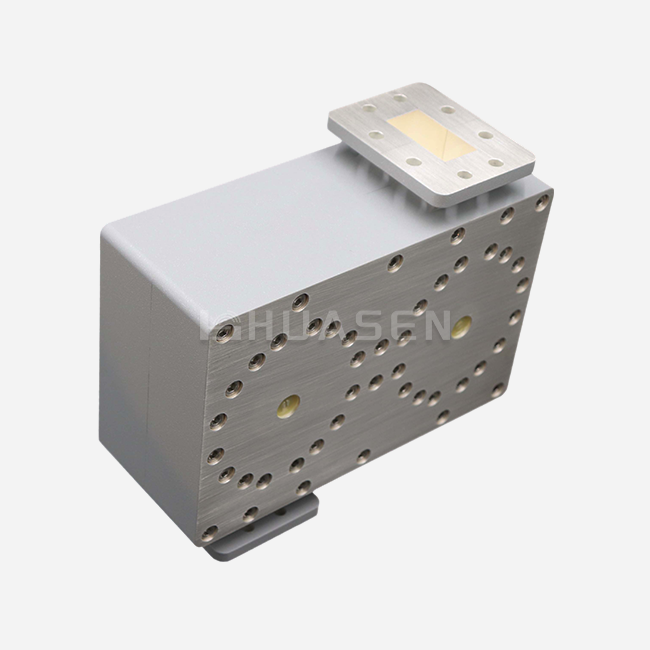
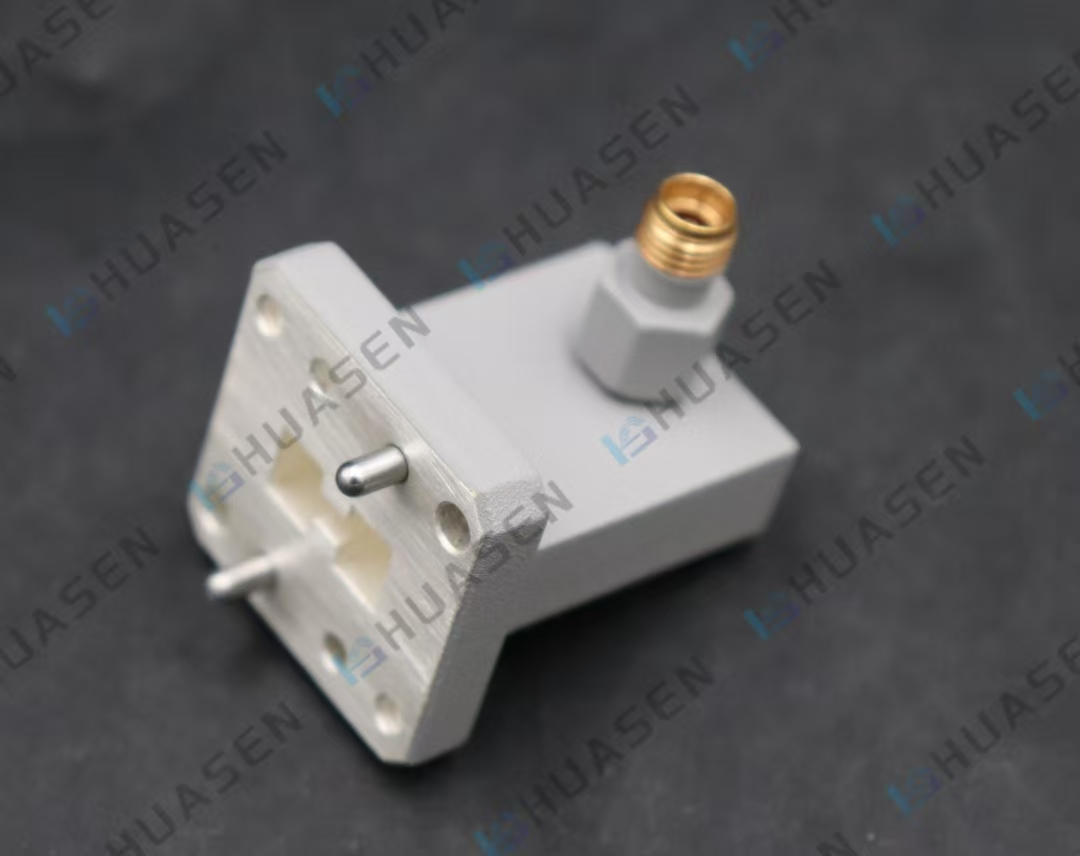
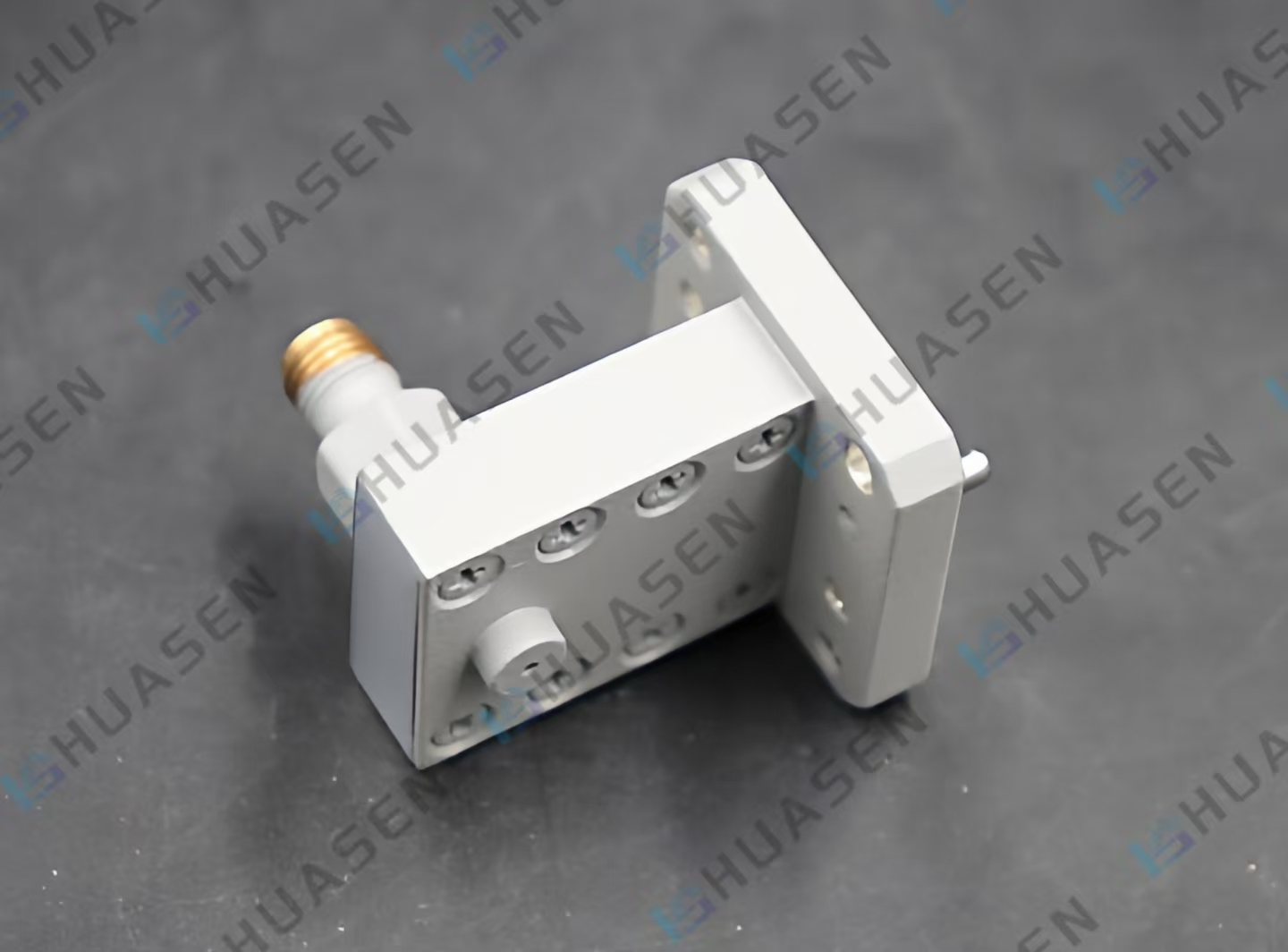
Double ridged waveguide technology represents a significant advancement in microwave component design, offering superior bandwidth capabilities compared to traditional rectangular waveguides. A Double Ridged Waveguide to Coaxial Adapter serves as the critical interface between broadband waveguide systems and coaxial transmission lines, enabling seamless signal transfer while maintaining exceptional electrical performance. The internal ridge structure fundamentally alters electromagnetic field distribution within the waveguide, effectively lowering the cutoff frequency of the dominant mode while simultaneously raising cutoff frequencies of higher-order modes. This creates an extended single-mode operation region spanning multiple octaves, typically ranging from 2 to 3 octaves of continuous bandwidth. Engineers selecting adapters for modern applications must recognize that the double ridge configuration provides bandwidth advantages that single ridge designs simply cannot achieve, making these components indispensable for wideband measurement systems, electronic warfare applications, and advanced radar installations.
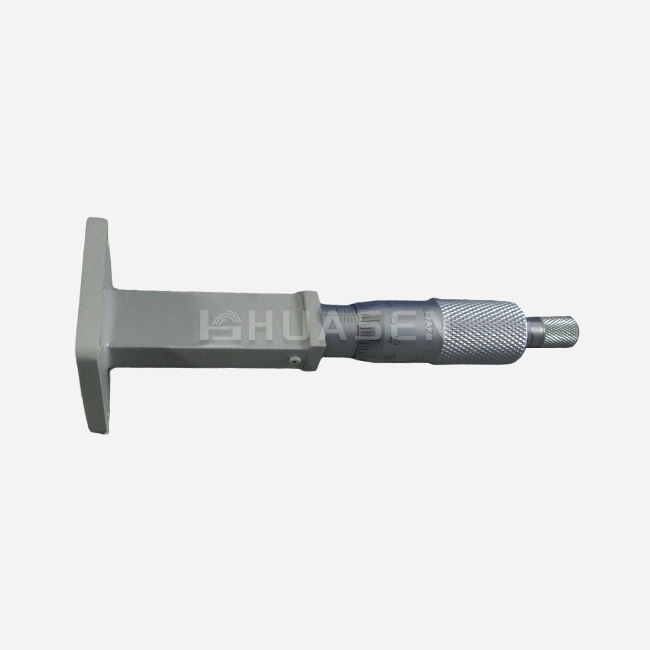
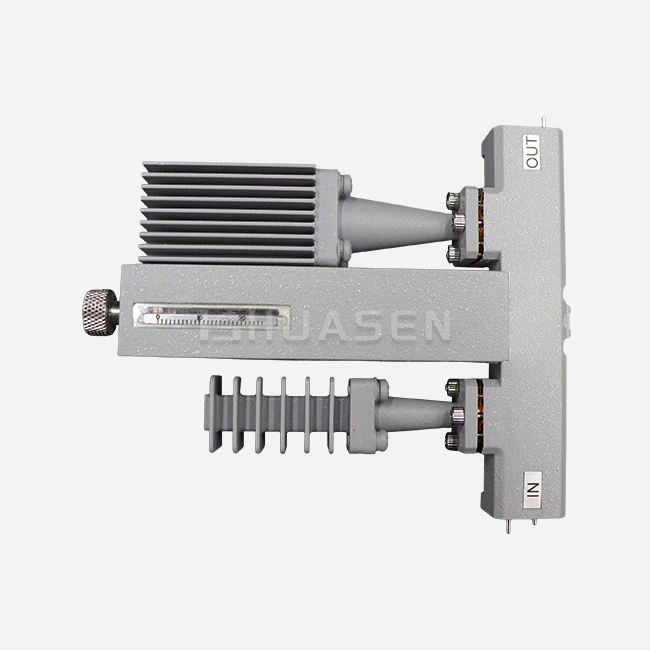
The transition mechanism within a Double Ridged Waveguide to Coaxial Adapter must accomplish impedance transformation from the waveguide's characteristic impedance to the standard 50-ohm coaxial environment. This transformation occurs through carefully engineered probe structures or reactive matching networks that minimize reflections across the operational bandwidth. Manufacturing precision directly impacts adapter performance, with dimensional tolerances typically held to within micrometers to ensure consistent electrical characteristics. Modern fabrication techniques utilizing CNC machining, EDM processing, and precision brazing technologies enable manufacturers to produce adapters with VSWR specifications below 1.25 across full waveguide bandwidth. Advanced testing facilities equipped with vector network analyzers calibrated to millimeter-wave frequencies verify performance parameters before delivery, ensuring each adapter meets stringent specifications for insertion loss, return loss, and phase linearity that critical applications demand.
Critical Performance Specifications for Adapter Selection
Voltage Standing Wave Ratio represents the fundamental performance metric for any Double Ridged Waveguide to Coaxial Adapter, quantifying how efficiently the component transfers electromagnetic energy without reflections. Industry-leading adapters achieve VSWR values below 1.20 across their entire operational bandwidth, with some precision models reaching 1.15 or better in optimized frequency bands. Lower VSWR values directly translate to reduced insertion loss, minimized signal distortion, and improved measurement accuracy in test applications. Engineers must carefully verify that adapter VSWR specifications align with system requirements, particularly in applications involving sensitive receivers or precision measurement instrumentation where even small reflections can compromise performance. The specified VSWR should remain consistent across the full temperature range and mechanical stress conditions encountered during operational deployment to prevent performance degradation in field environments.
Insertion loss characteristics determine the signal attenuation introduced by the Double Ridged Waveguide to Coaxial Adapter during transmission, with typical values ranging from 0.3 dB to 0.5 dB depending on frequency range and physical configuration. Lower insertion loss preserves signal strength through the transition, maximizing system sensitivity and dynamic range in receiving applications while reducing power requirements in transmit systems. Frequency-dependent loss variation should remain minimal across the operational bandwidth to prevent amplitude distortion in wideband signal processing. Power handling capability constitutes another essential specification, particularly for radar and communications transmitters where adapters may encounter continuous power levels ranging from several watts to hundreds of watts. Thermal management becomes critical in high-power applications, with material selection and mechanical design ensuring adequate heat dissipation to prevent component damage or performance drift. Premium adapters incorporate materials like oxygen-free copper or aluminum alloy 6061 with appropriate surface treatments to maximize conductivity while maintaining mechanical stability across temperature extremes.
Frequency Range and Connector Configuration Considerations
Selecting the appropriate frequency coverage for your Double Ridged Waveguide to Coaxial Adapter requires understanding both current system requirements and potential future expansion needs. Standard waveguide sizes like WRD-180, WRD-250, WRD-650, and WRD-750 provide overlapping frequency coverage from approximately 1.7 GHz through 40 GHz, with each size optimized for specific frequency bands. The WRD-650 series typically covers 2.6 GHz to 7.8 GHz, making it ideal for S-band and C-band applications in satellite communications and weather radar systems. Higher frequency ranges extending into millimeter-wave territory from 18 GHz to 110 GHz require WRD-180 configurations with precision 2.92mm or K-connector interfaces to maintain signal integrity at these demanding frequencies. System designers must ensure the adapter's frequency range encompasses all operational frequencies with adequate margin beyond band edges to accommodate tuning ranges and prevent performance rolloff at critical frequencies.
Coaxial connector selection significantly impacts overall adapter performance and system integration flexibility. Type N connectors provide robust mechanical connections suitable for frequencies up to 18 GHz with excellent power handling and environmental sealing capabilities, making them preferred choices for outdoor installations and high-power applications. SMA connectors extend frequency coverage to 26.5 GHz in standard configurations, offering compact form factors ideal for densely packaged test systems and measurement equipment. For millimeter-wave applications requiring operation above 26 GHz, precision connectors like 2.92mm or K-type become necessary to maintain acceptable VSWR and insertion loss characteristics. Gender configuration requires careful consideration during procurement, with male or female connector options selected to mate properly with existing system infrastructure. Some manufacturers offer adapters with field-replaceable connectors, providing flexibility to reconfigure systems as requirements evolve without replacing the entire adapter assembly.
Material Selection and Manufacturing Quality Factors
The materials used in constructing a Double Ridged Waveguide to Coaxial Adapter fundamentally determine its electrical performance, mechanical durability, and environmental resilience. Aluminum alloy 6061 represents the most common housing material, offering excellent machinability for complex internal geometries while providing sufficient structural rigidity and corrosion resistance for most applications. The material's thermal conductivity facilitates heat dissipation in moderate power applications, while its lightweight characteristics reduce mechanical loading in antenna-mounted configurations. For high-power applications exceeding 50 watts or installations in corrosive environments, oxygen-free copper construction provides superior electrical conductivity and enhanced power handling capability, though at increased weight and material cost. Surface treatments including chromate conversion coatings, hard anodizing, or nickel plating protect base materials from oxidation while maintaining low contact resistance at flange interfaces. Critical internal surfaces require silver or gold plating to minimize ohmic losses and ensure stable electrical performance across temperature variations and extended operational lifetimes.
Manufacturing process quality directly correlates with adapter performance consistency and long-term reliability. Advanced CNC machining centers equipped with multi-axis capabilities enable fabrication of complex internal ridge geometries with dimensional accuracies within ±0.01mm, ensuring predictable electromagnetic behavior matching design specifications. Wire EDM technology produces intricate probe structures and coupling features that conventional machining cannot achieve, while slow-wire cutting delivers superior surface finish quality that minimizes high-frequency losses. Assembly processes utilizing precision brazing techniques in controlled atmosphere furnaces create robust mechanical bonds between components without introducing contamination or geometric distortions that could degrade electrical performance. Quality manufacturers implement statistical process control methodologies throughout production, conducting in-process inspections at critical manufacturing stages to verify dimensional compliance before proceeding to subsequent operations. Coordinate measuring machines verify complex three-dimensional geometries against CAD models, while optical inspection systems detect surface defects and contamination that could compromise performance or reliability.
Testing and Verification Capabilities
Comprehensive testing infrastructure separates premium Double Ridged Waveguide to Coaxial Adapter manufacturers from commodity suppliers. Calibrated vector network analyzers covering frequency ranges from DC through 220 GHz enable full two-port S-parameter characterization, quantifying insertion loss, return loss, and group delay across operational bandwidths. Far-field antenna measurement systems utilizing microwave anechoic chambers provide radiation pattern verification for adapters integrated into antenna assemblies, ensuring proper field distribution without spurious radiation or coupling effects. Environmental testing chambers subject adapters to temperature cycling from -55°C to +125°C, verifying performance stability across military and aerospace temperature extremes. Vibration test systems confirm mechanical integrity under shock and vibration profiles specified in MIL-STD-810 and similar standards, validating designs for mobile platforms and transportation environments. Power handling verification requires specialized test fixtures capable of safely dissipating high RF power levels while monitoring adapter temperature rise, VSWR degradation, and potential corona or multipactor breakdown phenomena at rated power levels.
Manufacturers with ISO 9001, AS9100, or equivalent quality management certifications demonstrate systematic approaches to quality control and continuous improvement. Traceability systems linking individual adapter serial numbers to specific manufacturing lots, material certifications, and test data provide accountability and facilitate root cause analysis should field failures occur. Calibration programs ensuring measurement equipment traceability to national standards maintain testing accuracy and repeatability across production runs. Documentation packages including test reports, material certifications, and conformance declarations support customer qualification processes and regulatory compliance requirements. Technical support capabilities including application engineering assistance, custom design services, and rapid prototype development distinguish full-service manufacturers from distributors of standard catalog products. Access to manufacturing expertise enables optimization of adapter specifications for unique applications, potentially improving performance or reducing cost compared to off-the-shelf solutions.
Application-Specific Adapter Requirements
Radar system applications impose demanding requirements on Double Ridged Waveguide to Coaxial Adapter performance, particularly in pulse compression radar where broadband operation and low group delay distortion prove essential for maintaining pulse fidelity. Weather radar installations operating in C-band or X-band frequencies require adapters with robust environmental sealing to prevent moisture ingress in outdoor waveguide runs connecting antenna feeds to receiver electronics. The adapter must maintain stable electrical performance despite temperature fluctuations between daily heating and nighttime cooling cycles, avoiding phase drift that could introduce errors in Doppler velocity measurements or precipitation intensity calculations. Phased array radar systems incorporate numerous adapter interfaces between waveguide distribution networks and solid-state transmit-receive modules, making adapter cost, size, and weight critical selection factors when hundreds of units populate a single antenna assembly. Low passive intermodulation specifications become mandatory in radar receivers monitoring weak return signals in the presence of strong transmitted pulses, requiring pristine connector interfaces and contamination-free assembly processes.
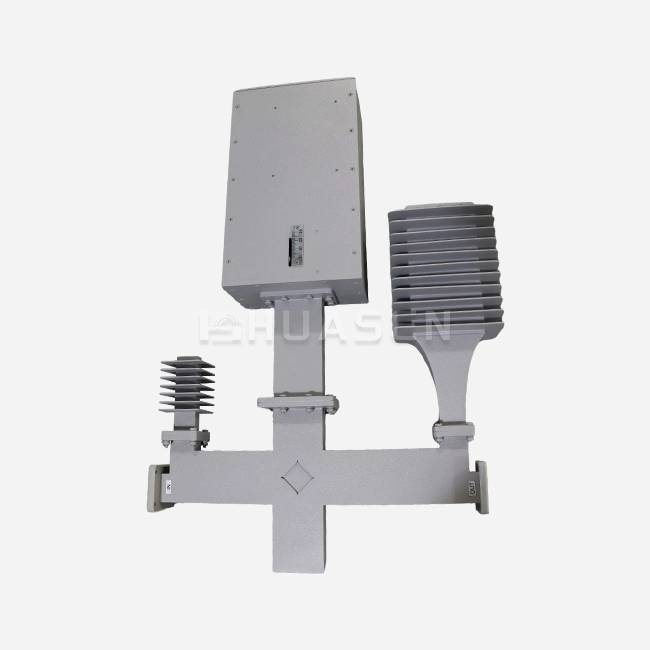
Satellite communication ground stations utilize Double Ridged Waveguide to Coaxial Adapter components in critical feed chain positions connecting antenna feeds to low-noise block converters or high-power amplifiers. Link budget constraints in satellite communications mean every fraction of a decibel loss reduces system margin, making low insertion loss adapters essential for maximizing communication range and data throughput. Extended frequency coverage spanning multiple satellite frequency bands enables single adapter solutions supporting both C-band and X-band frequencies, simplifying inventory management and reducing spare parts requirements. Lightning protection and static discharge considerations require proper DC grounding paths through adapter assemblies to safely conduct atmospheric discharge currents to ground without damaging sensitive receiver electronics. Compliance with International Telecommunications Union frequency mask requirements necessitates adapters with excellent harmonic suppression characteristics to prevent spurious emissions that could interfere with adjacent frequency allocations or violate regulatory limits.
Aerospace and Defense Applications
Military and aerospace applications subject Double Ridged Waveguide to Coaxial Adapter components to extreme environmental stresses including altitude effects, rapid thermal cycling, mechanical shock from weapons release or carrier landings, and electromagnetic interference from nearby high-power transmitters. Adapters for airborne radar systems must function across unpressurized altitude ranges where reduced atmospheric pressure increases corona and multipactor breakdown risks at high power levels. Material selection emphasizing low outgassing characteristics prevents contamination of sensitive optical systems or spacecraft electronics in vacuum environments. Radiation hardening considerations become relevant for space applications where cumulative radiation exposure could degrade dielectric materials or alter metal properties over mission lifetimes spanning years or decades. Security requirements may mandate domestic manufacturing with controlled supply chains to prevent counterfeit components or unauthorized technology transfer of sensitive microwave designs.
Electronic warfare systems demand Double Ridged Waveguide to Coaxial Adapter solutions with ultra-wideband performance spanning multiple octaves to support surveillance across entire threat frequency spectrums. Instantaneous bandwidth requirements exceeding conventional adapter capabilities may necessitate custom designs optimizing transition structures for minimum group delay variation. Fast frequency hopping systems require adapters maintaining phase coherence across widely separated frequencies to preserve modulation fidelity during rapid frequency transitions. Survivability considerations in contested electromagnetic environments require adapters with high power handling capability to withstand directed energy weapons or electromagnetic pulse effects without permanent damage or performance degradation. Maintenance accessibility in deployed systems influences connector selection and flange configurations, with quick-disconnect interfaces reducing mean time to repair during field servicing operations.
Quality Assurance and Certification Standards
Procurement of Double Ridged Waveguide to Coaxial Adapter components for critical applications requires verification of manufacturer quality systems and product certifications. ISO 9001 certification demonstrates implementation of quality management systems with documented procedures for design control, process validation, inspection, and corrective action. AS9100 certification extends ISO 9001 requirements with aerospace-specific provisions addressing configuration management, first article inspection, and traceability requirements common in aviation and space applications. Military specifications including MIL-DTL-3922 for waveguide flanges and MIL-C-39012 for coaxial connectors establish dimensional standards and performance requirements ensuring interchangeability between manufacturers and compatibility with existing military systems. Compliance verification through first article testing validates new designs or manufacturing process changes before full production authorization, reducing risks of non-conforming products reaching operational systems.
Environmental management certifications including ISO 14001 and occupational health certifications demonstrate manufacturer commitments to sustainable operations and worker safety. RoHS compliance restricts hazardous substances including lead, mercury, and certain flame retardants, addressing environmental concerns and regulatory requirements in European markets. REACH regulations governing chemical substances require disclosure and safe handling of materials used in manufacturing processes. Import-export licensing for dual-use technologies subject to export control regulations under ITAR or EAR requires manufacturers to maintain compliance programs preventing unauthorized technology transfer to restricted destinations. Customers operating under government contracts must verify supplier registration in appropriate procurement systems and compliance with flow-down requirements from prime contracts including quality provisions, cybersecurity controls, and cost accounting standards.
Conclusion
Selecting the optimal Double Ridged Waveguide to Coaxial Adapter in 2026 demands comprehensive evaluation of electrical specifications, mechanical construction quality, environmental resilience, and manufacturer capabilities. Success requires matching adapter characteristics to specific application requirements while ensuring long-term reliability and performance stability.

Cooperate with Huasen Microwave Technology Co., Ltd.
Partner with Huasen Microwave Technology Co., Ltd., established in 1993 as a National High-Tech Enterprise with over 30 years of expertise in microwave and millimeter-wave component manufacturing. Our 3,000-square-meter advanced production facility equipped with precision CNC machining, EDM technology, and specialized waveguide processing techniques produces high-quality Double Ridged Waveguide to Coaxial Adapter solutions for telecommunications, radar, aerospace, and defense applications. As a leading China Double Ridged Waveguide to Coaxial Adapter factory, China Double Ridged Waveguide to Coaxial Adapter supplier, and China Double Ridged Waveguide to Coaxial Adapter manufacturer, we offer China Double Ridged Waveguide to Coaxial Adapter wholesale programs with competitive Double Ridged Waveguide to Coaxial Adapter price structures. Our Double Ridged Waveguide to Coaxial Adapter for sale features High Quality Double Ridged Waveguide to Coaxial Adapter construction verified through comprehensive testing in our calibrated anechoic chambers spanning frequencies from 0.5 GHz to 220 GHz. With ISO certifications, Xi'an Famous Trademark recognition, and advanced testing capabilities including 40 vector network analyzers and multiple microwave anechoic chambers, we deliver reliable RF solutions backed by experienced engineering support. Contact our team at sales@huasenmicrowave.com today for technical consultation, custom specifications, and competitive quotations on your Double Ridged Waveguide to Coaxial Adapter requirements.
References
1. "Microwave Engineering Fundamentals and Applications" by Dr. David Pozar, John Wiley & Sons Publishers, 2021
2. "Waveguide Components for Millimeter-Wave Systems" by Professor Thomas Mitchell, IEEE Microwave Theory and Techniques Society, 2023
3. "Advanced RF and Microwave Component Design" by Dr. Sarah Williams, Cambridge University Press, 2024
4. "Double Ridge Waveguide Technology and Applications" by Dr. James Anderson, Journal of Electromagnetic Waves and Applications, 2024
5. "Modern Microwave Measurement Techniques and Instrumentation" by Professor Robert Chen, Institution of Engineering and Technology, 2025
Send Inquiry