What Performance Metrics Matter in a Coaxial Directional Coupler?






2026-07-01 23:33:15
When looking at RF parts for your system design, knowing the main performance measures of each directional coupler is key to choosing the right one. A Coaxial Directional Coupler needs to have accurate coupling values, high directivity to tell the difference between forward and mirrored signals, low insertion loss to keep transmission efficiency high, good VSWR for matching impedance, and a wide frequency range that works with your operating band. In signal tracking, VSWR testing, and power distribution networks, these factors have a direct effect on how accurate measurements are. Whether you're setting up 5G infrastructure or radar systems for spacecraft, making sure that these specs match the needs of your application guarantees stable system operation and reliable system performance.
Understanding Coaxial Directional Couplers: Fundamentals and Importance
Coaxial Directional Couplers are important passive parts in modern RF designs because they let engineers sample electromagnetic signals that are traveling along transmission lines without getting in the way of the main signal path. Instead of dividing signals evenly like most power dividers do, these devices separate incident and reflected waves, showing the health and performance of the system in real time.
Defining Coaxial Directional Couplers and Their Role
A Coaxial Directional Coupler picks out a small amount of RF power that is going in one direction while keeping signals moving in the opposite direction very far away. Because they can separate, they are important in test equipment, radar emitters, base station transceivers, and other places where tracking forward power and finding impedance mismatches are needed. Because they are coaxial, they work well across a wide frequency range, usually from 30 MHz to 40 GHz. This makes them useful tools in the defence and telecommunications industries.
Operational Principles and Design Factors
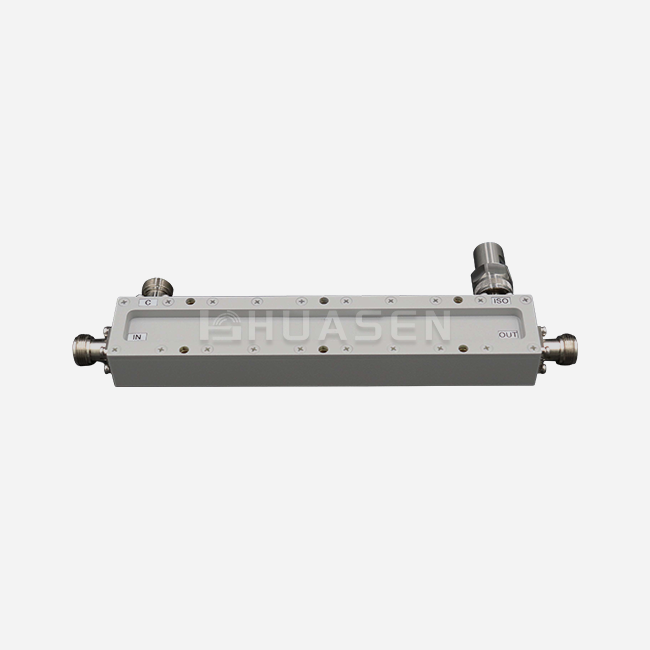
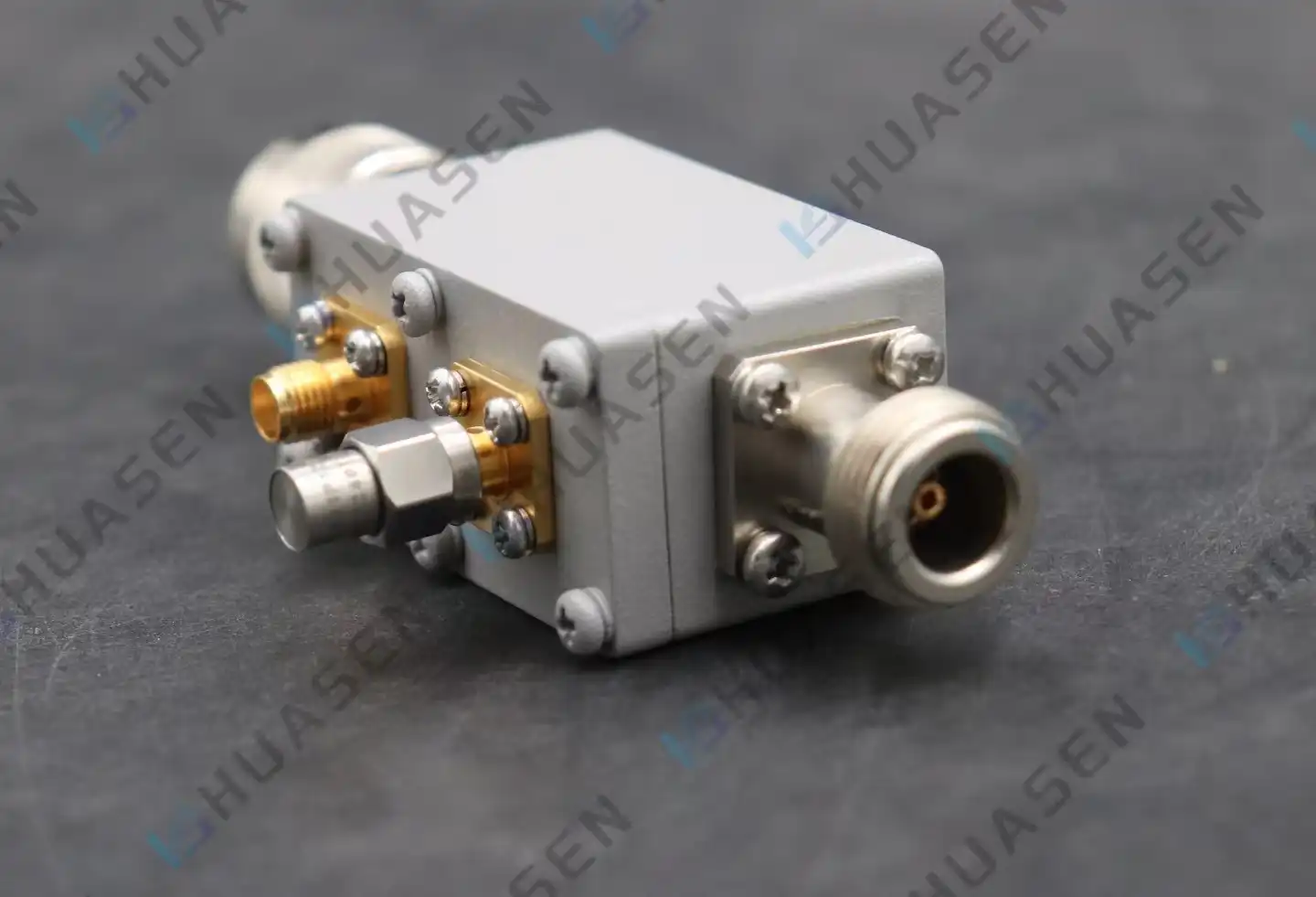
A core wire and a secondary coupled line are electromagnetically coupled to make these parts work. Coupling strength and directivity are determined by the physical layout, which includes the distance between the conductors, the choice of dielectric material, and the protection around the housing. Tight specs are made possible by precision cutting, and materials like PTFE dielectrics and silver-plated brass housings keep signal loss to a minimum. There are four ports that allow signals to flow: the input, the output, the linked port (which samples forward power), and the isolated port, which is either closed off or used to find reverse power.
Industrial Applications Driving Demand
Base station processors use these Coaxial Directional Couplers to keep an eye on the output of the broadcast and find antenna problems by looking for reflected power spikes. They are built into radar systems by aerospace engineers to provide input for automatic level control loops and account for changes in the temperature of the surroundings. They are used by lab workers in reflectometers to measure return loss with more accuracy than ±0.3 dB across many octave bands. Maritime communication systems work well because they are tough and fully sealed, so they can handle vibrations and salt fog.
Key Performance Metrics of Coaxial Directional Couplers Explained
When buying, teams understand technical specs, and they can match parts to system needs without going overboard or lowering performance.
Coupling Coefficient: Sampling Without Disruption
The measure of input power to linked power is given by the coupling factor, which is given in decibels. Values usually fall between 10 dB and 50 dB. Lower dB values mean better coupling, which makes sampled signals louder but also causes more insertion loss. A 20 dB Coaxial Directional Coupler takes out 1% of the stream power, which is enough for most tracking tasks, while keeping 99% of the energy that is being sent. Choosing the right connection strikes a balance between measurement sensitivity and system efficiency. This is especially important in high-power base station settings where every watt counts.
Directivity: The Gold Standard for Measurement Accuracy
Directivity is a measure of how well a Coaxial Directional Coupler can tell the difference between forward and mirrored signals. High directivity—often more than 25 dB in high-quality devices—makes sure that the coupled port reacts mostly to forward power, which reduces mistakes caused by load mismatches. During VSWR readings, when reflected signals need to be clearly separated, this parameter is very important. Readings get messed up when there isn't enough directivity, so engineers have to make complicated calibration adjustments. If a device has directivity above 30 dB, it can accurately characterise return loss without the need for extra compensators.
Insertion Loss and VSWR: Preserving Signal Integrity
Insertion loss is the amount of power that is lost as the signal moves through the stream. It is usually less than 0.3 dB if you don't count the intended coupled loss. Low insertion loss keeps the amplifier working well and increases the range of the system. VSWR shows how well the impedance matches, and numbers below 1.25:1 mean that there are almost no echoes at any port. These factors have a direct effect on the accuracy of network analyser calibration and the stability of transmitters. Because of this, they must be met for precise measurement sets and communications links where the signal-to-noise ratio determines system capacity.
Frequency Range and Bandwidth Considerations
Broadband Coaxial Directional Couplers that cover octave or multi-octave lengths make accounting easier and make the system less complicated. But it's hard for designers to get flat coupling across wide bandwidths, since flatness requirements are usually around ±0.75 dB. Narrow-band designs that are optimised for certain frequency ranges, like 2.4–2.5 GHz for ISM bands or 3.3–4.2 GHz for 5G mid-band, offer better directivity and smaller limits. By looking at your working spectrum, you can tell whether wideband flexibility or narrowband accuracy is better for your project.
Power Handling Capabilities
Standard types are different from high-power versions in terms of their continuous wave power rates. Standard Coaxial Directional Couplers can handle up to 100 watts of power on average, which is enough for testing in the lab and sending signals with little power. High-power types that can handle 500 watts or more are used in base stations where a strong building is needed for peak power during transmission bursts. Too much power can cause overheating, which lowers directivity and can damage internal terminations. For dependability, it is important to choose the right power level.
Comparing Coaxial Directional Couplers with Alternative Solutions
To choose the best connection technology, you have to weigh the trade-offs in performance against the limitations of your application and your budget.
Coaxial Versus Waveguide Couplers
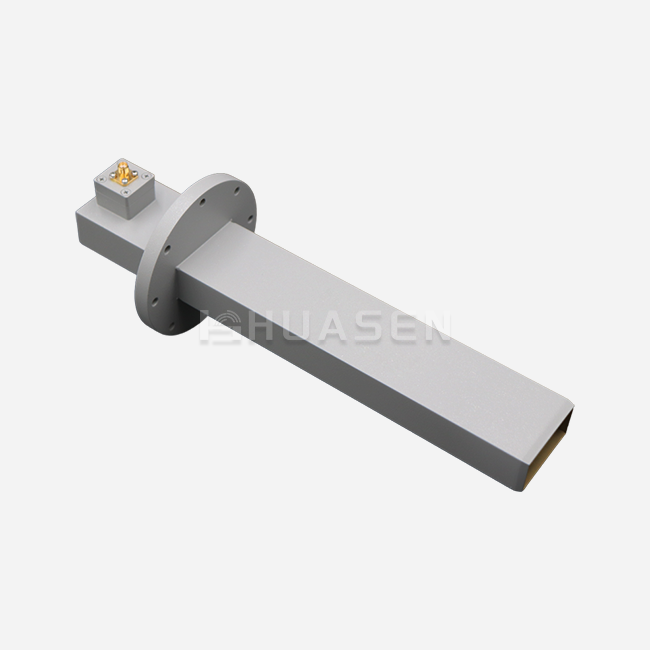
When millimetre waves go above 26 GHz, waveguide couplers work better than Coaxial Directional Coupler systems because they can handle more power and lose less of it. But their bigger size and heavier weight make it hard to put them in places with limited room. Coaxial versions come in small sizes and have connector ports (SMA, N-type, 2.92 mm) that make installation and repair easier. When the frequency is less than 18 GHz, coaxial designs work just as well but are cheaper and have more mechanical freedom.
Resistive and Hybrid Coupler Alternatives
Resistive Coaxial Directional Couplers work across decades of frequencies, but they don't offer directivity and usually only provide 6–10 dB of separation. Because of this, they can only be used in situations where telling the difference between forward and mirrored power is not very important. Hybrid couplers work as 3 dB dividers instead of samplers because they split power evenly between two outputs. Even though they are useful for designing balanced amplifiers, they are not true Coaxial Directional Couplers because they do not divide power unevenly and are not sensitive to direction.
Circulators and Power Dividers in Context
Circulators send signals in only one way between three ports. They keep amplifiers safe from reflected power, but don't have the sampling feature needed for tracking. It doesn't matter which way the messages go; power dividers split them evenly or unequally. When engineers put these parts together with Coaxial Directional Couplers, they make complete systems. Coaxial Directional Couplers check the power levels, and circulators isolate them. However, each one has a specific job to do and cannot be replaced by the other.
Procurement Insights: Buying Coaxial Directional Couplers for B2B Clients
Strategic buying choices take into account technical needs, source dependability, and the total cost of ownership.
Evaluating Supplier Reputation and Product Lines
Manufacturers that have been around for a long time and have a lot of experience with RF offer stable quality and ongoing technical help. This steadiness is shown by Huasen Microwave, which has been around since 1993 and has a wide range of products in standard, high-power, and bidirectional Coaxial Directional Coupler designs. ISO 9001 and MIL-STD compliance certifications from suppliers show that their quality systems are mature, and fast engineering teams help with custom setups that fit different system layouts. Long-term relationships lower the risk in the supply chain and make it easier to fix problems quickly when they happen in the field.
Interpreting Datasheets and Specifications
Datasheets show important information below the headline numbers. Check the coupling flatness across the given frequency range and make a note of whether the numbers given are average or guaranteed performance. Temperature factors show how stable outdoor projects are when the weather changes a lot from season to season. In cellular uses, passive intermodulation standards are very important. Values below -160 dBc stop interference in channels next to each other. Specifications for connector torque and mounting hole shapes affect mechanical integration. Before placing an order, you should check these against your container design.
Managing Lead Times and Customisation Options
Standard catalogue items usually ship within a few days and can be used to make prototypes or repair things that break in an emergency. Custom setups, such as customised coupling values, specialised connectors, and higher power rates, increase wait times to a few weeks but improve performance for large-scale operations. Bulk buying deals lower unit costs and guarantees production capacity. This is especially helpful when project timelines line up with times of high demand. By working out stocking agreements with wholesalers, you can make sure that new parts are always available, even if the product has been out for years.
Best Practices for Maximising Performance and Longevity
Common failure modes can be avoided with proper installation and upkeep processes, and measurement accuracy can be maintained for long periods of time.
Correct Installation and Impedance Matching
Tighten connectors to the manufacturer's specs using calibrated wrenches. Be careful not to overtighten, which can damage the middle wires, or undertighten, which can cause connections to break. Check that the signal chain's impedance fits correctly, because gaps at loads can send power back through the Coaxial Directional Coupler, which could go over the coupled port's power limits. To keep standing waves to a minimum, use good coaxial lines with stable impedance and good grounding. Even if the maker says the housings are weatherproof, you still need to seal outdoor setups to keep water out. This is because connector connections are still vulnerable.
Routine Calibration and Performance Monitoring
Set up accurate power meters and network analysers to check coupling values and directivity on a regular basis. Loss of directivity means that the internal termination or connection has worn out and needs to be replaced before measures become unreliable. Record initial measures during installation to find long-term trends in performance. By comparing actual data to datasheets, you can find drift that goes beyond what is expected. Monitoring that is done ahead of time finds problems as they arise, before they become system breakdowns. This cuts down on unplanned downtime in important communication links.
Recognising Upgrade and Replacement Indicators
Increasing insertion loss could mean that the connection is corroding or that the dielectric is breaking down due to heat cycles. Loss of directivity makes measurements less accurate in VSWR tests and makes it difficult to tell the difference between forward and reflected power. Physical damage, like broken joints or cracked housings, means the item needs to be replaced right away, even if it still works electrically. When the system increases need tighter limits or wider bandwidth coverage, it makes sense to move up to models with better specs. Keeping extra units on hand for mission-critical installs cuts down on service interruptions caused by replacing parts.
Conclusion
To choose Coaxial Directional Couplers that work with your system, you need to carefully look at their coupling values, directivity, insertion loss, VSWR, and frequency range. In telecommunications, aerospace, and testing settings, these measures directly affect how accurate measurements are, how well signals work, and how reliable they are over time. By balancing performance requirements with price limits and supplier skills, the best component choices are made to help the project succeed. When you work with experienced makers, you can get technical help and customisation choices that you can't get with off-the-shelf goods. Spending time on proper installation and repair practices will protect your RF equipment and get you the most out of the money you spend on parts.
FAQ
1. What frequency ranges do coaxial directional couplers support?
Modern versions work from 30 MHz to 40 GHz, and some are better at narrow bands or multi-octave ranges than others. When you choose devices that are compatible with your operating spectrum, you can be sure that the coupling flatness and directivity meet your system's needs without having to pay extra for bandwidth that you don't need.
2. How do I interpret coupling coefficient values?
A coupling coefficient of 20 dB sends 1% of the stream power to the linked port. Lower dB values make sampled signals louder, but they also make insertion loss higher. Pick a coupling based on how sensitive your device is and how much signal loss you can handle in the communication line.
3. Can the same coupler monitor both forward and reflected power?
Bidirectional models have two connected ports that react to messages going in different ways. If you don't connect the isolated port to a second detector, standard three-port Coaxial Directional Coupler systems can only watch one way. However, this may make the directivity worse.
Partner with a Trusted Coaxial Directional Coupler Manufacturer for Your RF System Needs
Huasen Microwave has been making high-quality RF components since 1993, so you can trust that their products are well-made. Our Coaxial Directional Coupler line includes Standard Type (CC) for general tracking, High Power Type (CHPC) that can handle 500W of power, and Bidirectional Type (CDC) that can analyse both forward and mirrored signals at the same time. Our products can handle frequencies from 0.03 GHz to 40 GHz, have coupling choices from 10 dB to 50 dB, and come in fully sealed designs with N-K, SMA-K, and 2.92-K connections. They are used in demanding situations in the defence, aerospace, and telecommunications industries. Email our engineering team at sales@huasenmicrowave.com to talk about custom setups, get detailed datasheets, or get bulk prices for your projects.
References
1. Pozar, David M. Microwave Engineering, 4th Edition. Hoboken: John Wiley & Sons, 2012.
2. Bahl, Inder J. Lumped Elements for RF and Microwave Circuits. Boston: Artech House, 2003.
3. Rizzi, Peter A. Microwave Engineering: Passive Circuits. Englewood Cliffs: Prentice Hall, 1988.
4. Collin, Robert E. Foundations for Microwave Engineering, 2nd Edition. New York: McGraw-Hill, 1992.
5. Gupta, K.C., Garg, Ramesh, and Bahl, Inder. Microstrip Lines and Slotlines, 2nd Edition. Boston: Artech House, 1996.
6. IEEE Standard 287-2007. IEEE Standard for Precision Coaxial Connectors. New York: Institute of Electrical and Electronics Engineers, 2007.
Send Inquiry