Waveguide Seal Window VSWR Performance and Power Handling Guide






2026-01-20 22:55:39
When your critical aerospace radar system experiences signal degradation due to inadequate sealing performance, or when your satellite communication equipment fails under high-power transmission conditions, the consequences can be catastrophic. Understanding Waveguide Seal Window VSWR performance and power handling capabilities is essential for engineers working in demanding RF and microwave applications where both hermetic sealing and optimal signal transmission are non-negotiable requirements.
Understanding Waveguide Seal Window VSWR Specifications
Voltage Standing Wave Ratio (VSWR) represents one of the most critical performance parameters for any Waveguide Seal Window application. In pressurized waveguide systems, maintaining low VSWR values directly correlates with system efficiency, signal integrity, and overall reliability across extended operational periods. The Waveguide Seal Window must achieve exceptional impedance matching while simultaneously providing hermetic sealing capabilities that prevent gas leakage in both positive and negative pressure environments.
Modern high-performance Waveguide Seal Window designs typically achieve VSWR values of 1.25 or lower across their designated frequency ranges, which span from 0.32 GHz to 112 GHz depending on the specific waveguide configuration. This remarkable performance stems from precision-engineered dielectric materials that are carefully selected based on their electrical properties, thermal stability, and mechanical strength characteristics. The dielectric constant, loss tangent, and thickness of the sealing material must be optimized to minimize reflections at the interface between the pressurized and unpressurized sections of the waveguide system.
Critical Factors Affecting VSWR Performance
The VSWR performance of a Waveguide Seal Window depends on multiple interrelated design parameters that must be carefully balanced during the engineering phase. The dielectric material selection process involves evaluating candidates based on their microwave properties, including relative permittivity, dissipation factor, and temperature coefficient of dielectric constant. Common materials include high-purity alumina ceramics, quartz, sapphire, and specialized polymer composites, each offering distinct advantages for specific frequency ranges and environmental conditions.
Interface design between the dielectric element and the metallic waveguide housing represents another crucial factor influencing VSWR performance. Advanced metal-to-dielectric bonding techniques, including diffusion bonding, brazing, and specialized adhesive systems, ensure mechanical integrity while minimizing electrical discontinuities that could generate reflections. The transition geometry, including taper angles and step configurations, must be optimized through electromagnetic simulation and experimental validation to achieve the desired impedance matching across the operational bandwidth.
Frequency-dependent behavior of Waveguide Seal Window assemblies requires careful consideration during the design phase, particularly for broadband applications spanning multiple octaves. While achieving low VSWR at a single frequency is relatively straightforward, maintaining consistent performance across wide frequency ranges demands sophisticated compensation techniques and multi-layer dielectric structures. Temperature variations can also affect VSWR performance through thermal expansion effects and temperature-dependent dielectric properties, necessitating thermal analysis and environmental testing during the qualification process.

Power Handling Capabilities and Thermal Management
Power handling capacity represents the second critical performance metric for Waveguide Seal Window applications, particularly in high-power radar systems, satellite communication uplinks, and industrial heating applications. The maximum continuous wave power that a Waveguide Seal Window can safely handle depends on thermal properties of the dielectric material, heat dissipation mechanisms, and the thermal interface design between the seal window and the surrounding waveguide structure.
Dielectric loss within the seal window material generates heat proportional to the RF power level, frequency, and loss tangent of the material. This heat must be efficiently conducted away from the dielectric element to prevent temperature rise that could lead to thermal runaway, mechanical failure, or permanent degradation of electrical properties. For Rectangular Waveguide Sealed Window (WPW) and Circular Waveguide Sealed Window (CWPW) configurations, thermal management strategies include optimized contact surfaces, thermal interface materials, and in some cases, active cooling systems for extreme power applications.
Design Considerations for High-Power Applications
Engineers specifying Waveguide Seal Window components for high-power applications must evaluate several key parameters beyond simple power ratings. Peak power handling capability differs significantly from average power handling, particularly in pulsed radar applications where instantaneous power levels may exceed continuous wave ratings by orders of magnitude. The duty cycle, pulse width, and repetition frequency all influence thermal behavior and must be considered in thermal modeling and testing protocols.
Material selection for high-power Waveguide Seal Window assemblies prioritizes low-loss dielectric materials with excellent thermal conductivity characteristics. Single-crystal sapphire offers exceptional performance for demanding applications, providing low dielectric loss, high thermal conductivity, and outstanding mechanical strength. However, cost considerations and fabrication challenges may favor alternative materials such as high-purity alumina or specialized glass ceramics for moderate power levels and less demanding environmental conditions.
The mechanical design of high-power seal windows must address thermal expansion mismatch between the dielectric element and the metallic housing. Differential thermal expansion can generate mechanical stresses that compromise hermetic sealing or even cause catastrophic failure through cracking or delamination. Stress relief features, compliant interface layers, and careful material selection help mitigate these challenges while maintaining electrical performance and pressure sealing integrity across the operational temperature range.
Waveguide Seal Window Configuration Options and Selection Criteria
The diversity of waveguide types and frequency ranges demands a corresponding variety of Waveguide Seal Window configurations to meet specific application requirements. Rectangular waveguides, including standard, flat rectangular, and medium flat rectangular profiles, each require appropriately dimensioned seal window designs that maintain the characteristic impedance and mode purity of the transmission line. Similarly, circular waveguides, square waveguides, and specialized configurations such as single-ridge and double-ridge waveguides necessitate customized seal window geometries.
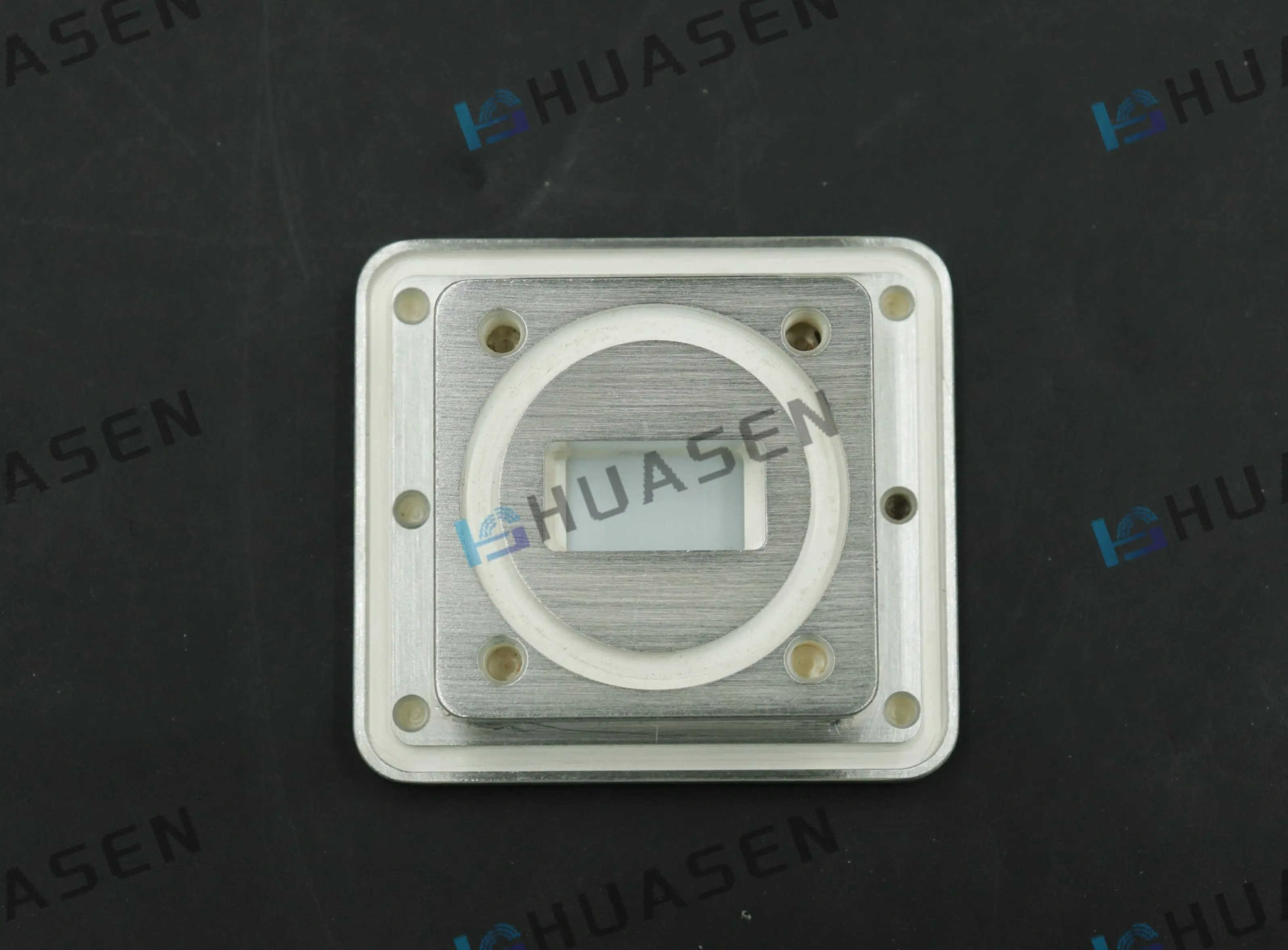
Rectangular Waveguide Sealed Window (WPW) assemblies represent the most common configuration, offering proven reliability across a broad frequency spectrum from L-band through W-band applications. The rectangular geometry provides mechanical advantages for pressure loading and thermal management, while the well-established design principles ensure predictable electrical performance. Standard flange interfaces, including FDP/FDM, FBP/FBM, and FUGP configurations, enable straightforward integration into existing waveguide systems without requiring custom adapter hardware or specialized installation procedures.
Circular Waveguide Sealed Window (CWPW) assemblies serve specialized applications where circular symmetry offers advantages in mechanical design, thermal distribution, or electromagnetic performance. Rotary joints, certain antenna feed configurations, and some high-power transmission systems benefit from circular waveguide topology, necessitating corresponding seal window designs. The fabrication and sealing processes for circular configurations differ somewhat from rectangular approaches, but achieve comparable performance levels when properly engineered and manufactured using appropriate techniques and quality control procedures.
Customization Options for Specialized Requirements
Beyond standard catalog products, Waveguide Seal Window manufacturers offer extensive customization capabilities to address unique application requirements. Custom dimensions, non-standard flange types, exotic dielectric materials, and specialized coatings can be incorporated to meet demanding specifications for military, space, or industrial applications. The development process typically involves electromagnetic simulation, thermal modeling, mechanical stress analysis, and prototype testing to validate performance before committing to production quantities.
Material selection customization extends beyond the primary dielectric element to include housing materials, plating options, and hermetic sealing approaches. Copper and aluminum waveguide systems each require compatible metallurgical considerations for brazing or welding operations. Corrosion resistance, outgassing properties, and compatibility with extreme environments may dictate specialized material choices, surface treatments, or protective coatings that go beyond standard commercial offerings while maintaining the essential VSWR and power handling performance characteristics.
Frequency range optimization represents another important customization dimension for Waveguide Seal Window applications. While broadband designs covering multiple waveguide bands offer flexibility and reduce inventory complexity, single-band optimized designs can achieve superior performance for applications where frequency agility is unnecessary. Narrow-band designs permit more aggressive impedance matching techniques and potentially higher power handling through optimized thermal paths and reduced dielectric volume, albeit at the cost of limited operational bandwidth and reduced system flexibility.
Testing, Validation, and Quality Assurance Protocols
Comprehensive testing and validation procedures ensure that Waveguide Seal Window assemblies meet stringent performance requirements for VSWR, power handling, hermetic sealing, and environmental durability. Vector network analysis provides fundamental characterization of electrical performance, measuring return loss, insertion loss, and VSWR across the specified frequency range with high accuracy and repeatability. Multiple measurements at different orientations and environmental conditions help identify manufacturing variations and validate design margins for production components.
Power handling verification requires specialized test fixtures and calibrated power sources capable of delivering rated power levels while monitoring temperature rise, reflected power, and potential failure modes. Continuous wave testing at maximum rated power for extended durations confirms thermal stability and validates thermal management design assumptions. Pulsed power testing with appropriate duty cycles and peak power levels verifies performance for radar and other pulsed applications, ensuring no degradation or unexpected behavior occurs under realistic operational conditions.
Hermetic seal testing employs helium leak detection equipment with sensitivity levels appropriate for the application requirements, typically in the range of 10^-9 to 10^-10 std cc/sec for aerospace and defense applications. Pressure cycling tests confirm seal integrity under repeated pressurization and depressurization cycles, simulating long-term operational stress. Environmental screening, including temperature cycling, vibration testing, and humidity exposure, validates mechanical robustness and ensures reliable performance throughout the expected service life across the anticipated environmental envelope.
Conclusion
Waveguide Seal Window VSWR and power handling performance directly determines system reliability in critical RF applications. Proper material selection, design optimization, and rigorous testing ensure components meet demanding specifications across diverse operational environments and frequency ranges.
Cooperate with Huasen Microwave Technology Co., Ltd.
As a leading China Waveguide Seal Window manufacturer, China Waveguide Seal Window supplier, and China Waveguide Seal Window factory, Huasen Microwave Technology Co., Ltd. offers High Quality Waveguide Seal Window solutions at competitive Waveguide Seal Window prices with extensive China Waveguide Seal Window wholesale options. With over 30 years of expertise since our founding in 1993, we operate a 3,000-square-meter R&D and production facility staffed by more than 200 experienced professionals. Our ISO9001 certified manufacturing processes, advanced testing capabilities including multiple anechoic chambers and over 60 precision instruments, and comprehensive quality assurance protocols ensure every Waveguide Seal Window for sale meets the highest industry standards. Whether you require standard catalog products or custom-engineered solutions for demanding aerospace, defense, satellite communications, or industrial applications, our technical team provides responsive support throughout the specification, design, manufacturing, and installation phases. Contact us today at sales@huasenmicrowave.com to discuss your specific requirements and discover why leading organizations worldwide trust Huasen Microwave as their preferred partner for high-performance waveguide components. Save this guide for reference when evaluating seal window specifications, and reach out with any questions about optimizing VSWR performance or power handling for your application.
References
1. "Microwave Engineering Handbook Volume 3: Components and Subsystems" by Bradford L. Smith and Michel H. Carpentier, Artech House Publishers
2. "RF and Microwave Passive and Active Technologies" edited by Mike Golio and Janet Golio, CRC Press Engineering Series
3. "Waveguide Handbook" by Nathan Marcuvitz, Institution of Engineering and Technology Electromagnetic Waves Series
4. "High Power Microwaves: Strategic and Operational Implications for Warfare" by Eileen M. Walling, Center for Strategic and International Studies Report
5. "Dielectric Materials for Wireless Communication Systems" by Mailadil T. Sebastian, Elsevier Materials Science and Engineering Publications
Send Inquiry