Waveguide Power Divider vs Coaxial Power Divider: Which Should You Choose






2026-04-21 21:25:07
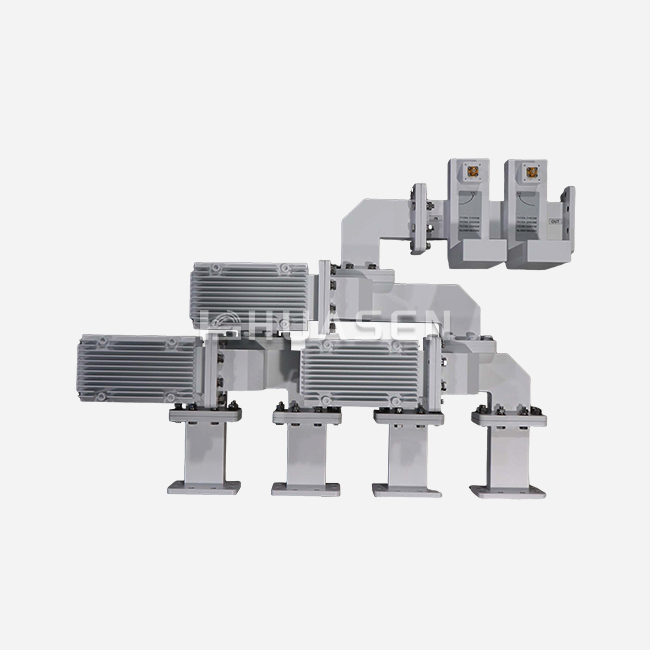
Which waveguide or coaxial power splitter you choose depends on the needs of your application. In places with a lot of power and high frequency, where insertion loss is very important, waveguide power dividers work very well. Examples include millimeter-wave radar systems, satellite ground stations, and 5G massive MIMO arrays. For setups with lower frequencies or limited area, coaxial divides are flexible, small, and cost-effective. Waveguide technology is better if your project needs to handle a lot of power above 20 GHz with little signal loss. Coaxial systems are useful for providing internet service below 18 GHz and are easy to integrate. Engineers can choose the best components by understanding these basic trade-offs.
Understanding the Core Technology Behind RF Power Division
Power dividers separate electromagnetic signals into several routes while keeping the phase connections and matching the resistance. Antenna grids, test equipment, and transmission facilities all depend on these inactive devices to work.
There are big differences in how waveguide and coaxial designs work at their core. Waveguide structures help electromagnetic waves move through enclosed metal pathways, with the modes of transmission being set by the structures' actual measurements. Coaxial designs send messages between wires that are arranged in a circle and are divided by insulating materials.
Performance is affected by three main differences:
- Waveguides use boundary conditions at metal walls to send waves, while coaxial lines use TEM mode transmission between conductors.
- Frequency response: Waveguides start working at cutoff frequencies set by the cross-sectional size, while coaxial devices start working from DC and go up.
- Capacity for power: The waveguide air insulation can handle higher voltages than coaxial solid insulators before it breaks down.
Environmental factors have a big effect on the choice of components. Maritime satellite stations have to deal with salt spray and high temperatures. Laboratory testing methods put a high value on being able to repeat measurements. Base station front ends match efficiency with the limits of the placement.
Waveguide designs usually offer better heat management and lower loss per unit length if your application needs frequencies above 40 GHz and average power levels above 100W.
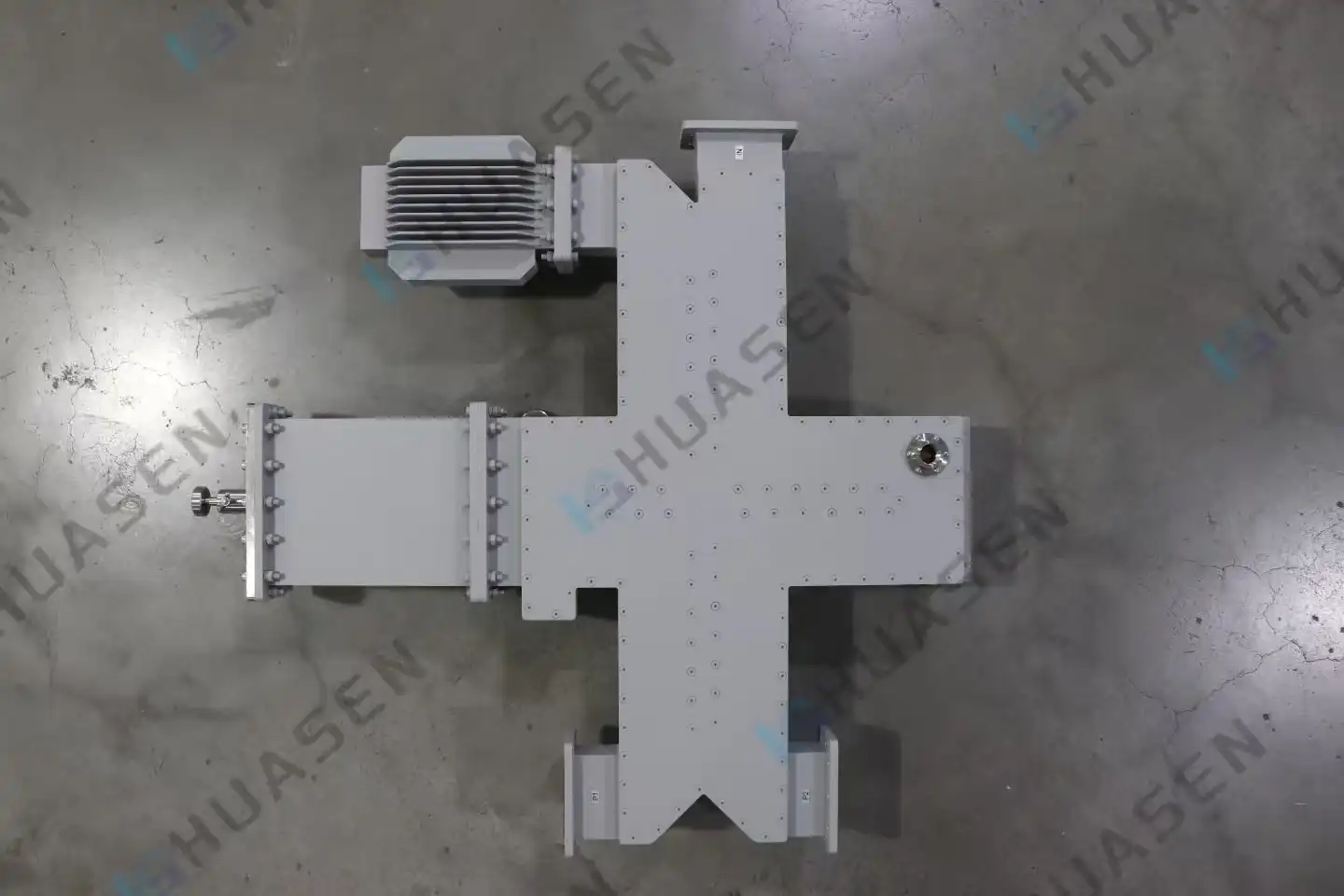
Performance Comparison: Insertion Loss and Power Handling
Insertion loss directly impacts system link budgets and overall efficiency. This parameter quantifies signal power lost during transmission through the divider network.
Measured test data from comparable devices reveals performance distinctions:
Waveguide Performance Data (Ka-band, 26.5-40 GHz):
- Insertion loss: 0.3-0.5 dB typical
- Return loss: >20 dB across bandwidth
- Isolation: >18 dB between output ports
- Average power handling: 200W continuous
- Peak power capability: 2kW pulsed operation
Coaxial Performance Data (Same frequency range):
- Insertion loss: 0.8-1.2 dB typical
- Return loss: >18 dB across bandwidth
- Isolation: >16 dB between output ports
- Average power handling: 50W continuous
- Peak power capability: 500W pulsed operation
The measured insertion loss advantage of waveguide structures stems from air dielectric properties and the absence of internal conductor losses. Coaxial cables experience dielectric heating and skin effect losses along center conductors.
Power handling capacity scales with operating frequency and physical dimensions. Waveguide cross-sections provide larger surface areas for heat dissipation compared to compact coaxial geometries. Military radar systems generating kilowatt peak powers routinely specify waveguide distribution networks for reliability.
Temperature coefficient stability matters for precision applications. Waveguide components maintain consistent electrical performance across -40°C to +85°C ranges without significant phase drift. Coaxial dielectrics exhibit thermal expansion affecting impedance matching at temperature extremes.
If your system requires maintaining signal integrity across 100W average power levels at millimeter-wave frequencies, a waveguide power divider delivers measurable advantages in thermal stability and long-term reliability.
Bandwidth Capabilities and Frequency Coverage
The operating bandwidth of a component decides how flexible it is across frequency assignments and communication modes. Coverage for a single item makes system design easier and product management easier.
When compared to coaxial choices, waveguide technology is meant to have a smaller partial bandwidth. Between the cutoff frequency and the recommended higher frequency limit, most normal waveguide bands can handle 30 to 50 percent of the fractional bandwidth. The WR-15 waveguide works between 50 and 75 GHz, and the WR-28 waveguide works between 26.5 and 40 GHz (40% bandwidth).
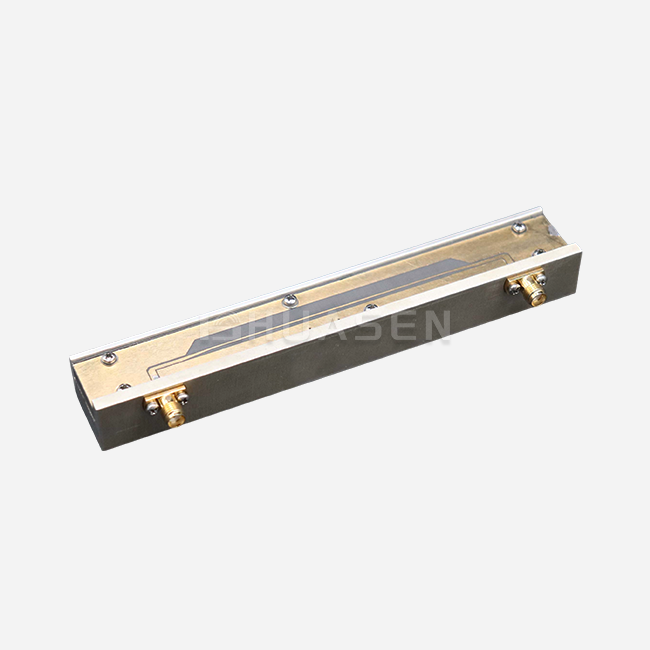
Multi-octave speed is common with coaxial power dividers. Resistive separators can work with frequency ratios of 10:1. With the right impedance transformers, reactive Wilkinson circuits can work in wavebands from 2 to 18 GHz (9:1).
Table for comparing bandwidths:
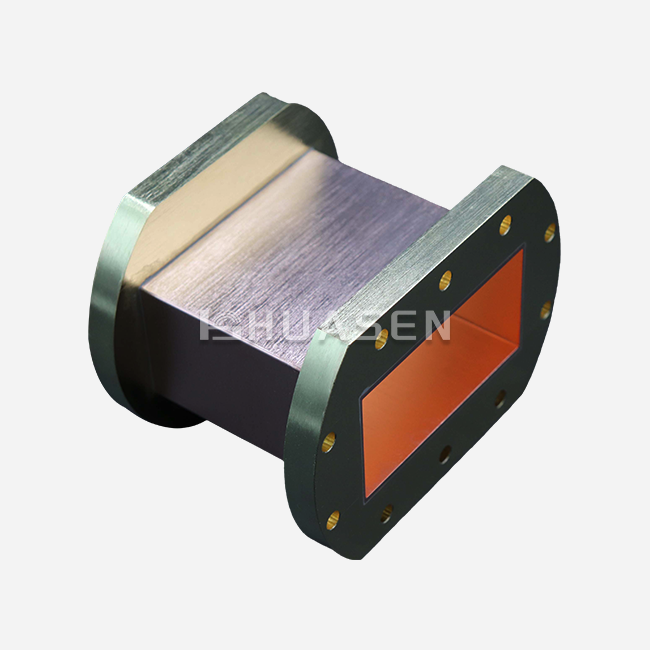
Standard rectangle waveguides don't have as much bandwidth as double-ridge waveguides. Ridge shapes lower the cutoff frequencies while keeping the size of the structure small. The double-ridge magic T dividers from Huasen Microwave improve broadband performance while keeping high power handling.
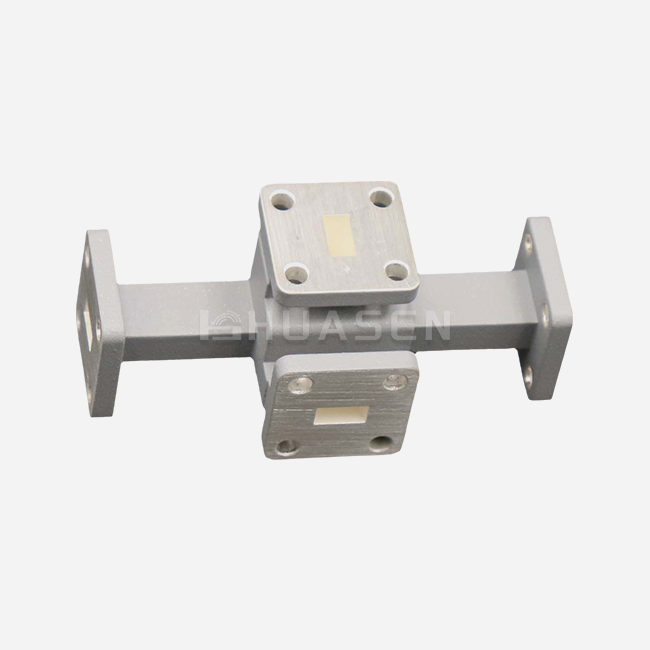
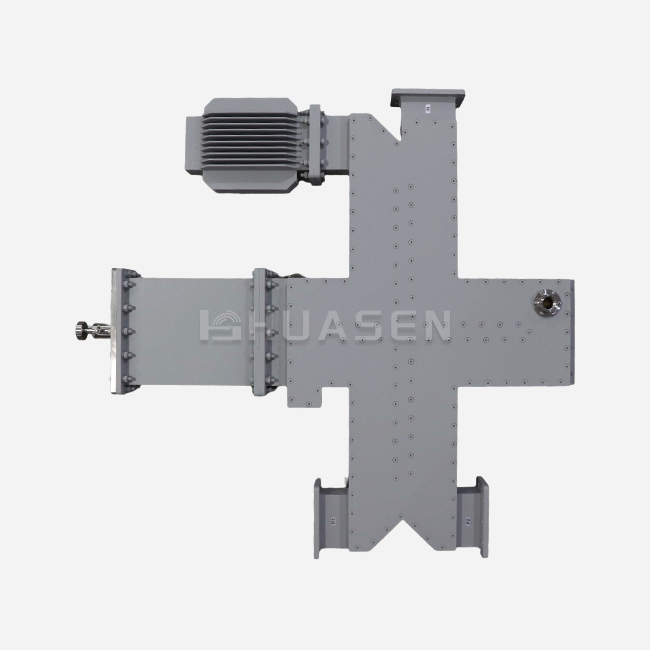
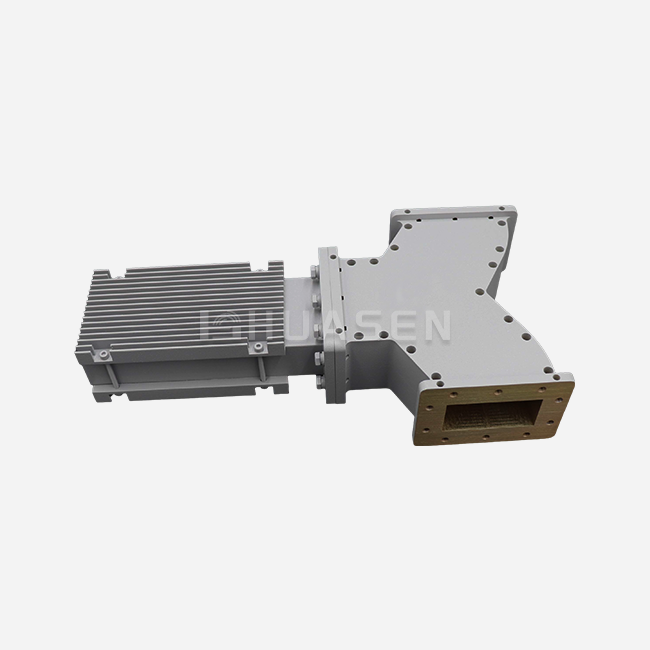
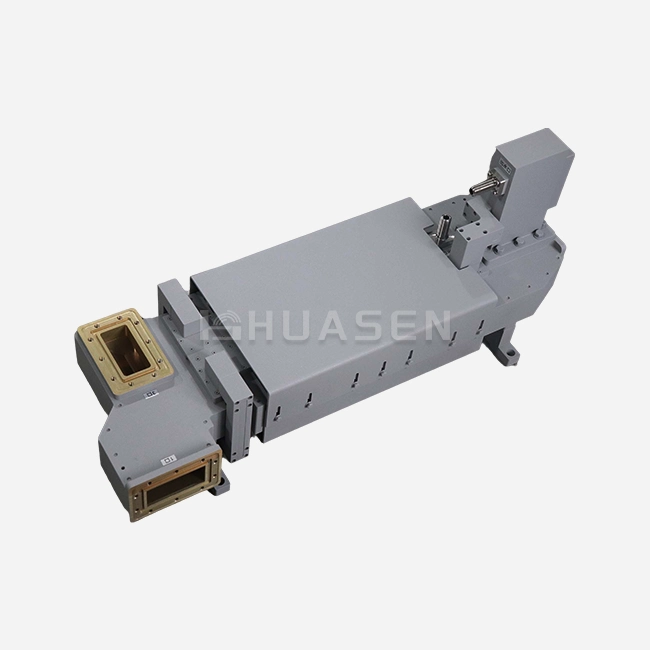
Five structural configurations address different system architectures:
- I-type: Linear signal path for inline installations
- U-type: Compact folded geometry saving rack space
- X-type: Four-way division for phased array feeds
- Y-type: Symmetric three-way splitting
- YU-type: Combined topology for complex distribution networks
If your project demands coverage across multiple 5G bands (n257, n258, n260) simultaneously, coaxial broadband dividers simplify antenna feed networks. For single-band millimeter-wave links requiring maximum efficiency, band-specific waveguide components optimize performance.
Mechanical Integration and Installation Factors
Dimensions and attaching connections have a big effect on how hard it is to integrate a system. Platforms that don't have a lot of room, like UAVs and small satellites, have tight limits on their size and weight.
Wavelength-scaled lengths mean that waveguide components take up more space. Ka-band waveguide flanges have fixing faces that are 25 to 30 mm apart. For coaxial SMA and 2.92mm plugs, the panel gap only needs to be 10 to 15 mm.
When used in space or the air, weight is an important factor. Each aluminum waveguide piece weighs between 50 and 200 grams, based on its length and flange size. With tiny links, similar coaxial systems weigh between 10 and 30 grams.
Standard interface compatibility streamlines procurement and interoperability. Common waveguide flanges include:
- UG-style flanges (UG-595, UG-599) for standard bands
- IEC specifications for international compatibility
- MIL-DTL-3922 military standards
- Custom flange patterns for specialized installations
Coaxial connector families offer a wide variety:
- SMA (DC-18 GHz) for general-purpose applications
- 2.4mm (DC-50 GHz) for millimeter-wave systems
- K-connector (DC-40 GHz) for precision instrumentation
- 1.85mm (DC-67 GHz) for W-band test equipment
Environmental sealing requirements differ between technologies. Waveguide joints use gaskets and precision flanges, achieving IP67 ratings for outdoor installations. Coaxial connectors require additional potting and shrouding for weatherproofing.
Installation labor impacts total system costs, including for the RF power divider. Waveguide networks demand precision alignment and torque-controlled fasteners. Coaxial assemblies allow faster field installation with hand tools.
If your base station deployment involves rooftop installations with weather exposure, waveguide components provide inherent environmental protection without additional enclosures. For laboratory test benches requiring frequent reconfiguration, coaxial dividers enable rapid system changes.
Cost Analysis and Total Ownership Considerations
Component pricing reflects manufacturing complexity, material costs, and performance capabilities. Budget planning must account for initial purchase prices plus long-term operational factors.
Waveguide power divider pricing typically ranges from $300 to $1500 per unit, depending on frequency band, port count, and customization requirements. Precision machining, plating processes, and quality testing contribute to production costs.
Coaxial divider prices span $50-$500 for comparable frequency coverage. Higher volume production and standardized designs reduce per-unit costs.
Total Cost of Ownership Factors:
- Initial component cost: Purchase price differences
- Installation labor: Assembly time and skill requirements
- Interconnect cables: Additional coaxial jumpers versus direct waveguide connection
- Maintenance intervals: Inspection and replacement frequency
- System efficiency: Operating cost differences from insertion loss variations
Insertion loss differences translate directly to operating expenses in high-power systems. A 0.5 dB advantage saves 11% of amplifier power consumption. For base stations running 24/7, energy savings accumulate significantly over 5-year lifecycles.
Reliability impacts maintenance budgets and service availability. Waveguide components contain no internal dielectrics subject to aging or moisture absorption. Field failure rates for waveguide assemblies measure below 0.1% annually in properly installed systems.
Large-volume procurement achieves economies of scale. System integrators purchasing 100+ units negotiate volume pricing and customized specifications. Huasen Microwave maintains a consistent supply chain capacity supporting both prototype quantities and production volumes.
Delivery cycles vary with customization complexity. Standard catalog items ship within 2-4 weeks. Custom frequency bands, power ratings, or interface modifications extend lead times to 6-8 weeks for initial prototypes.
If your project budget prioritizes the lowest initial capital expenditure for sub-18 GHz applications, coaxial dividers offer cost-effective solutions. For long-term operational efficiency in high-power millimeter-wave systems, waveguide investments deliver superior total ownership value.
Key Advantages of Huasen Microwave's Waveguide Power Dividers
- Extensive frequency coverage: Supporting 0.32 GHz to 112 GHz across BJ22 through BJ320 standard waveguide sizes, accommodating diverse application requirements from L-band through W-band systems
- Superior power handling: Average power ratings exceeding 200W continuous with peak power capability above 2kW, enabling reliable operation in high-power radar and communications transmitters
- Multiple structural configurations: Five distinct topologies (I-type, U-type, X-type, Y-type, YU-type) addressing varied system architectures and installation constraints
- Low insertion loss performance: Achieving 0.3-0.5 dB typical insertion loss through precision manufacturing and optimized junction designs, maximizing system efficiency
- High isolation characteristics: Maintaining >18 dB isolation between output ports across the operating bandwidth, preventing signal interaction in array feeds
- Excellent return loss: Exceeding 20 dB return loss through careful impedance matching, minimizing reflections that degrade system performance
- Double-ridge technology: Proprietary double-ridge waveguide magic T designs extending bandwidth beyond conventional rectangular guides while preserving compact dimensions
- Robust environmental protection: Weatherproof construction meeting IP67 standards, suitable for outdoor installations in harsh maritime and terrestrial environments
- Military-grade reliability: Compliance with MIL-STD specifications, ensuring consistent performance across temperature, vibration, and shock conditions
- Precision phase balance: Maintaining ±3° phase balance between output ports, critical for phased array beam steering accuracy
- Customization capabilities: Flexible engineering supporting custom power splitting ratios, connector types, and frequency bands tailored to specific system requirements
- Quality certifications: ISO 9001 quality management and RoHS compliance guaranteeing manufacturing consistency and environmental responsibility
- Comprehensive testing: Full S-parameter characterization and power testing on every production unit, with calibrated measurement data provided
- Technical support excellence: Experienced engineering team providing design assistance, electromagnetic simulation, and integration consulting throughout project lifecycles
- Rapid prototyping services: Sample production capabilities with RF power dividersand 2-3 week lead times, enabling design validation before volume commitments
- Stable supply chain: Three decades of manufacturing experience ensuring reliable component availability and consistent delivery performance
Real-World Application Scenarios
Different industries prioritize distinct performance parameters based on operational requirements and environmental conditions.
5G/6G Base Station Front-Ends:
Massive MIMO antenna arrays require numerous power division stages feeding 64-256 radiating elements. Waveguide distribution networks at 28 GHz and 39 GHz bands provide low-loss signal routing with excellent phase tracking. Coaxial jumpers connect between equipment racks and antenna panels where flexibility matters.
Satellite Ground Stations:
Earth station antennas operating at C-band (4-8 GHz), Ku-band (12-18 GHz), and Ka-band (26.5-40 GHz) utilize waveguide feed networks handling kilowatt transmit powers. Low insertion loss preserves precious link budget margins for GEO satellite communications spanning 36,000 km distances.
Radar Systems:
Weather surveillance radars, air traffic control systems, and military tracking radars generate megawatt peak powers demanding waveguide distribution. Pulse compression and array beamforming require precise phase relationships maintained by waveguide magic T components.
Electronic Warfare:
Jamming systems covering wide frequency spans employ coaxial broadband dividers feeding multiple amplifier chains. Rapid frequency agility across 2-18 GHz ranges demands wideband components without band-switching delays.
Test and Measurement:
Vector network analyzers and signal generators utilize precision coaxial dividers for calibration references and multi-port measurements. Laboratory environments prioritize connector compatibility and measurement repeatability over environmental ruggedness.
Wireless Backhaul Links:
Point-to-point microwave radios at 6-42 GHz bands use waveguide or coaxial dividers, depending on frequency and power levels. E-band (71-86 GHz) systems require waveguide components for acceptable transmission efficiency.
If your satellite terminal operates above 20 GHz with 10W transmit power, waveguide feeds optimize system performance. For indoor distributed antenna systems below 6 GHz, coaxial dividers simplify installation.
Making the Right Choice for Your System
Component selection methodology balances technical requirements against practical constraints. Systematic evaluation prevents costly redesigns during integration phases.
Decision Framework:
Choose Waveguide Dividers When:
- Operating frequencies exceed 18 GHz
- Average power levels surpass 50 W
- Insertion loss critically impacts link budgets.
- Outdoor installations require weatherproof construction.
- Phase stability across temperature variations matters.
- Long-term reliability justifies higher initial costs.
Choose Coaxial Dividers When:
- Multi-octave bandwidth simplifies system design.
- Compact dimensions fit space-constrained installations
- Frequent reconfiguration requires flexible connections.
- Operating frequencies remain below 18 GHz.
- Budget constraints prioritize the lowest component costs
- Laboratory environments provide controlled conditions.
Hybrid approaches combine both technologies optimally. Base station systems often use waveguide distribution at antenna interfaces with coaxial connections inside equipment shelters. This architecture places a low-loss waveguide where efficiency matters most while leveraging coaxial flexibility for equipment interconnections.
Prototype testing validates assumptions before production commitments. Sample evaluation reveals actual performance in target environments. Huasen Microwave provides sample units with calibrated test data supporting design verification.
Customization addresses unique requirements standard catalog items cannot satisfy, such as a waveguide power divider. Modified power splitting ratios create asymmetric distributions for tapered array illuminations. Custom flange patterns match existing infrastructure. Extended temperature ratings serve extreme environments.
Long-term partnership with experienced manufacturers accelerates project success. Three decades of Huasen Microwave's expertise guide customers through specification development, prototype iterations, and production scaling.
Conclusion
Waveguides and coaxial power dividers serve complementary roles across RF system architectures. Waveguide technology delivers superior performance for high-frequency, high-power applications where insertion loss and reliability justify premium investments. Coaxial solutions provide bandwidth flexibility and installation convenience for lower-frequency systems with moderate power levels. Successful component selection considers frequency requirements, power handling needs, environmental conditions, and total ownership costs. Partnering with experienced manufacturers ensures access to proven designs, customization capabilities, and ongoing technical support throughout project lifecycles.
Contact Huasen Microwave for Expert Waveguide Power Divider Solutions
Huasen Microwave stands as a trusted waveguide power divider and RF power divider manufacturer delivering proven RF distribution components since 1993. Our engineering team collaborates with system integrators, equipment manufacturers, and research institutions worldwide, providing customized solutions addressing challenging requirements. Whether your project demands millimeter-wave precision, high-power robustness, or rapid prototype development, our comprehensive product portfolio and technical capabilities support your success. Contact our specialists at sales@huasenmicrowave.com to discuss your specific application requirements and receive detailed technical recommendations.
References
1. Pozar, D.M. (2011). Microwave Engineering, 4th Edition. John Wiley & Sons, Hoboken, New Jersey.
2. Collin, R.E. (2001). Foundations for Microwave Engineering, 2nd Edition. IEEE Press, New York.
3. Marcuvitz, N. (1986). Waveguide Handbook. Peter Peregrinus Ltd., London.
4. Howe, H. (1974). Stripline Circuit Design. Artech House, Dedham, Massachusetts.
5. Montgomery, C.G., Dicke, R.H., and Purcell, E.M. (1948). Principles of Microwave Circuits. McGraw-Hill, New York.
6. Saad, T.S. (1971). Microwave Engineers' Handbook, Volume 1. Artech House, Dedham, Massachusetts.
Send Inquiry