Waveguide Attenuator Applications in High Power Labs






2026-06-18 17:10:31
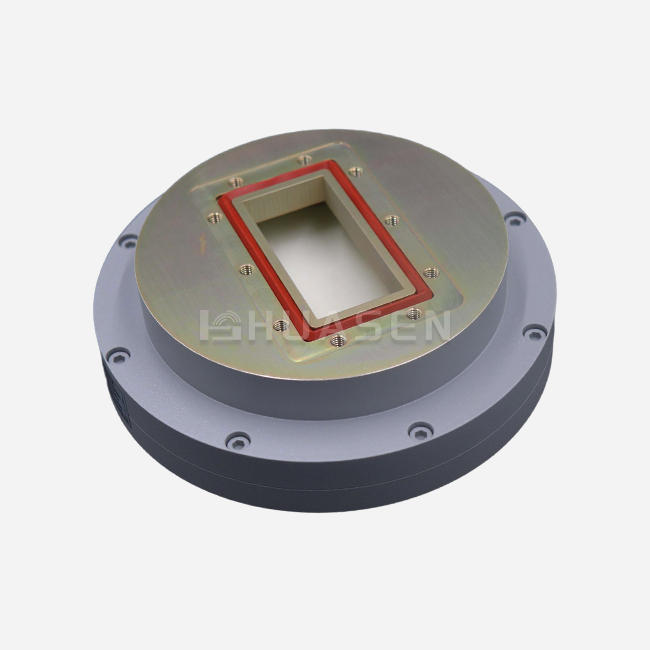
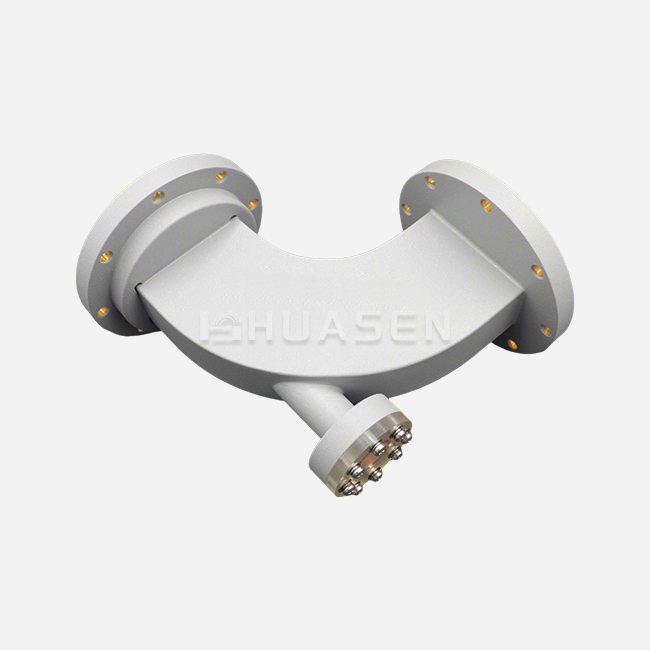
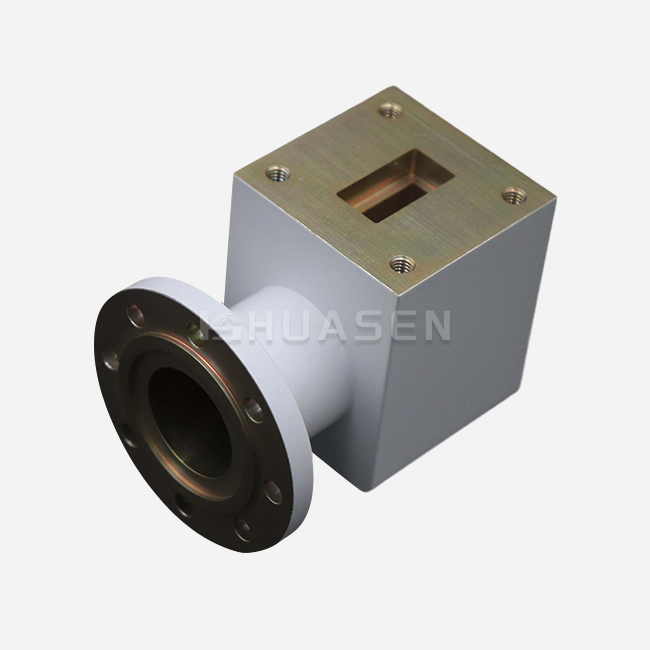
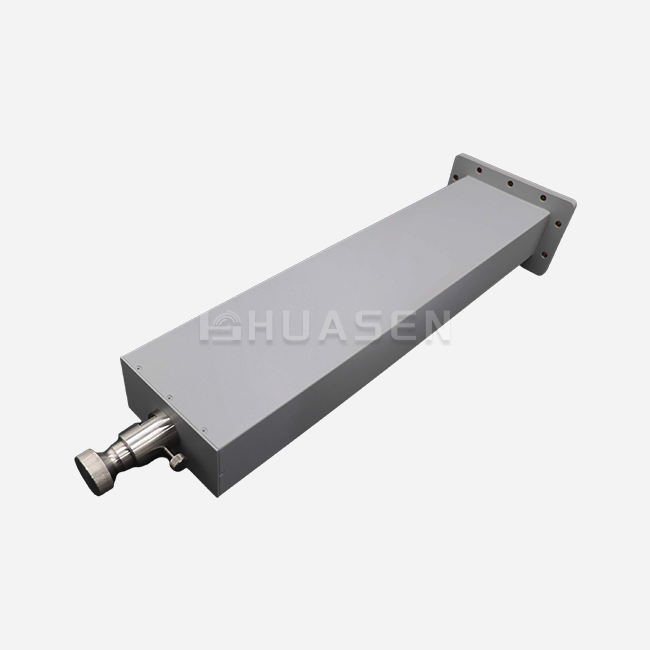
Waveguide Attenuators are very important in high-power labs because they keep microwave and radio frequency signal strengths in check and keep expensive measuring tools from getting damaged. In a waveguide transmission line, these precise parts soak up electromagnetic energy. This lets engineers try radar systems, satellite communication links, and 5G base station parts in a controlled environment. Waveguide Attenuators can handle kilowatts of peak power because they are made of strong metal and better at removing heat than cable options that have trouble with thermal breakdown at high power levels. Choosing the right attenuation solution has a direct effect on the accuracy of measurements and the life of the equipment, whether you're calibrating a vector network analyzer or modeling signal fading in a military radar test bench.
Understanding Waveguide Attenuators in High Power Labs
Operating Principles and Component Types
By putting controlled loss into the electromagnetic path, Waveguide Attenuators control signal strength. Fixed types have resistance films or absorbing materials permanently built into the waveguide housing. These give a set attenuation value, like 10 dB or 20 dB. On the other hand, variable attenuators use methods that can be changed. For example, rotary vane designs use a resistive element that rotates, while flap-type designs slowly enter a dielectric vane into the electric field. The amount of signal attenuation is based on the depth of placement.
When it comes to high power, both types work better than cable attenuators. Since there is no middle conductor, heat can move directly to the walls of the outer waveguide. This keeps the temperature from rising too high during long testing sessions. This design benefit is very useful when testing high-power amps or doing radar calibration runs that last a long time.
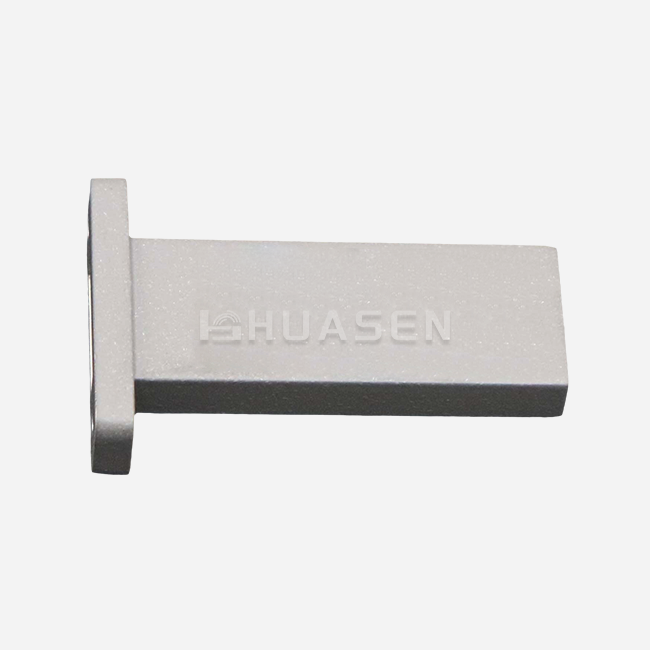
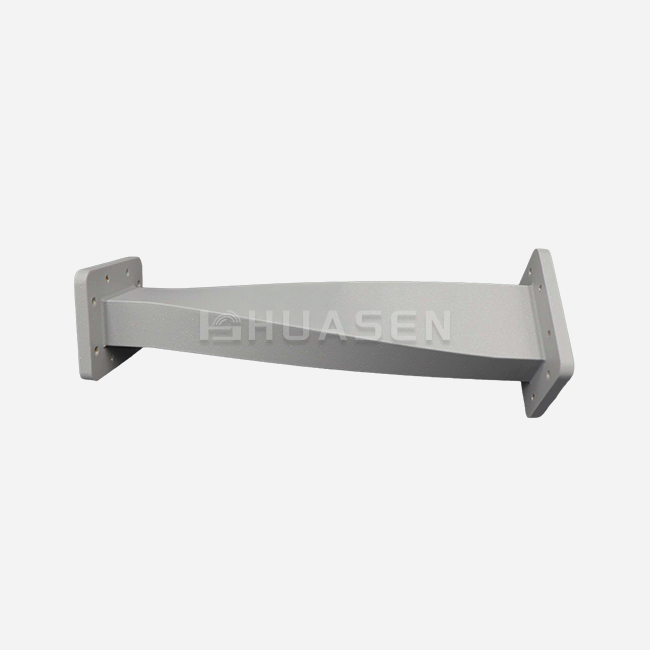
Among the most widely used configurations in laboratory environments, the Waveguide Fixed Attenuator provides a predetermined attenuation level that remains stable across repeated measurements. Because it contains no moving parts, this type offers excellent long-term reliability, low maintenance requirements, and highly repeatable performance. High-power test facilities often use Waveguide Fixed Attenuator units as reference components in calibration chains, amplifier characterization setups, and receiver protection systems where consistent signal reduction is critical.
Critical Performance Parameters
When engineers choose attenuators for the lab, they have to look at a number of factors that affect each other. The frequency range is determined by the size of the waveguide. The WR-90 covers the X-band (8.2-12.4 GHz), while the WR-28 covers the Ka-band (26.5-40 GHz). Average power (thermal dissipation) and peak power (voltage failure cutoff) are two different types of power-handling abilities. For pulse radar uses, peak ratings need to be carefully thought out so that there is no arcing inside the waveguide structure.
Insertion loss at zero usually stays below 0.5 dB, which keeps the system working well. The Voltage Standing Wave Ratio should be less than 1.15:1 throughout the entire range of attenuation. This will reduce echoes that could mess up readings or hurt signal sources upstream. High-precision rotary vane types are accurate to within ±0.1 dB or 2% of the reading, which meets strict standards for calibration.
Material Selection and Thermal Management
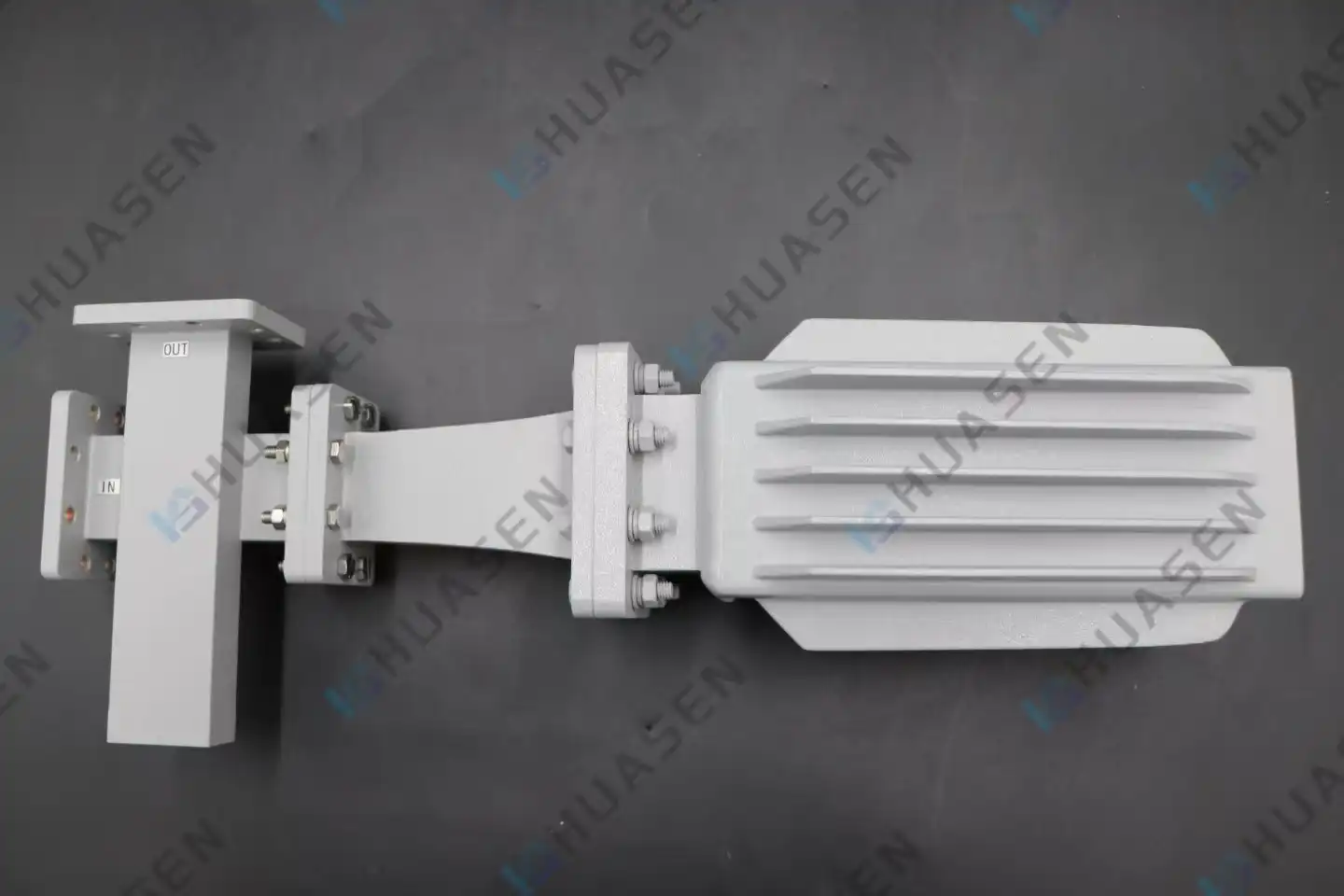
Premium Waveguide Attenuators have housings made of aluminum, brass, or gold that have been plated with silver or gold to improve electrical conductivity and protect them from rust in wet or salty environments. When resistive elements are constantly losing a few watts of power, they need to keep their properties fixed even when the temperature changes a lot. For longer periods of high-power use, some designs include cooling fans or forced-air ducts. Meeting the requirements of MIL-DTL-3933 guarantees dependability in situations like vibration, shock, and changing temperatures that are typical in defense and aircraft uses.
Key Applications of Waveguide Attenuators in High Power Labs
Protecting Sensitive Receivers During Amplifier Testing
Spectrum and signal analyzers are always at risk when they characterize high-power amplifiers. Direct link would kill the analyzer's input stage right away when testing a transmitter that puts out 100 watts or more. Putting Waveguide Attenuators in the right place lowers signal levels to safe levels, which are usually between -30 dBm and 0 dBm, while keeping the uniformity of the measurement. Technicians can change the models that are variable to get the best dynamic range, which lets them record both peak power bursts and small spectral artifacts without having to change the test setups.
Calibration Standards for Vector Network Analyzers
To set up reference planes and error correction factors, VNA calibration methods need attenuation values that are very well described. Fixed Waveguide Attenuators are used as transfer standards, and their success at the measurement level can be traced back to national labs. Because they have low VSWR and stable phase, rotary vane attenuators are great for checking the accuracy of amplitude across frequency sweeps. Unlike coaxial calibration kits, which lose their accuracy as the connectors wear out, waveguide standards stay accurate over thousands of measurement cycles as long as they are treated correctly.
In many calibration laboratories, a precision Waveguide Fixed Attenuator serves as a traceable reference standard for verifying measurement accuracy. Its stable attenuation value, low phase variation, and excellent VSWR characteristics help engineers establish reliable calibration baselines across wide frequency ranges. Compared with adjustable alternatives, a Waveguide Fixed Attenuator minimizes uncertainty caused by mechanical movement, making it especially valuable for repeatable VNA verification and production-line quality control.
Simulating Path Loss in Satellite Communication Testing
During link budget validation, SatCom engineers use variable attenuators to make it look like the atmosphere is absorbing signals and rain is fading them. Test teams can check modem performance at different carrier-to-noise ratios without using real satellite gear by changing attenuation in real time. This method shortens the time it takes to create something and cuts costs by a large amount. When defense companies test secure communication systems, they use similar methods to find the minimum working limits by gradually weakening signals.
A company that makes telecommunications equipment recently said that adding customizable Waveguide Attenuators to their automatic test setup cut the time it took to make prototypes by 30%. Engineers could write fade profiles that matched real-world transmission data using the motorized units. This caught edge-case failures that had been missed by testing by hand.
How to Choose the Right Waveguide Attenuator for Your Lab Needs
Waveguide Versus Coaxial Configurations
How much power and frequency range you need to choose between waveguide and cable attenuators is important. Coaxial types are flexible and small below 18 GHz, but they can't handle more than 100 watts of power on average. Waveguide systems are the best choice above Ka-band and for any application that needs peak power of kilowatts or more. The bigger size and tighter alignment requirements are worth it because they have better thermal performance and smaller insertion loss.
Think about the most common test situations in your lab. It is easier to test low-power components on a bench when you use coaxial systems with SMA or 2.92mm connections. Waveguide Attenuators with standard UG-style flanges are needed on production test floors to make sure that radar receivers or base station power amplifiers work well.
Fixed Versus Variable Selection Criteria
Fixed attenuators are great when you need the same reduction value to work every time without any maintenance. Because they are easier to build, they usually have better VSWR and a longer mean time between failures. You can buy them in 3 dB steps so that you can make your own attenuation chains by connecting them in series, though each extra junction adds a small change in the resistance.
Variable attenuators work great in study settings where changes need to be made often. Attenuation is shown on a calibrated dial on direct-reading models, which speeds up regular readings. For tasks that need exact control of signal amplitudes, micrometer-driven units offer higher precision, often in 0.01 dB steps. Motorized versions work perfectly with automated test equipment, letting you use controlled attenuation sweeps to find out more about intermodulation or gain compression products.
Procurement Considerations for B2B Clients
Sourcing from well-known Waveguide Attenuator makers ensures that customers can get technical information, testing certificates, and quick help. Before you place a big order, ask for test data that shows insertion loss and VSWR across your working frequency. Standard stock items usually ship in two weeks, but it could take six to eight weeks for special flange setups or longer frequency coverage.
When you buy more than ten units, you can usually get a 15-20% discount through bulk buying deals. If your production volume changes with the seasons, talk to your supplier about flexible payment terms and exchange inventory arrangements. Check to see if the sellers are still ISO 9001 certified and can give you proof that they follow RoHS rules for export situations.
Conclusion
Waveguide Attenuators are still very important in high-power labs where protecting equipment and controlling signals precisely meet. Their high power handling, low insertion loss, and excellent VSWR properties make it possible for accurate readings in a wide range of demanding situations, from validating 5G base stations to calibrating military radar. The dependability of measurements and the life of tools are directly affected by choosing between set and variable configurations, knowing what needs to be done for thermal management, and following the right repair procedures. As wireless technologies get better at higher frequencies and power levels, it's more important than ever to work with experienced suppliers who can give customization, technical help, and calibration that can be tracked.
FAQ
1. What frequency ranges do waveguide attenuators cover in high-power applications?
Waveguide Attenuators work with frequencies ranging from L-band (1-2 GHz) to W-band (75–110 GHz). Each waveguide size is best for a certain frequency range. WR-90 is often used in labs to test X-band radar, WR-62 is used for Ku-band satellite systems, and WR-28 is used for Ka-band 5G studies. Millimeter-wave units boost range to include new uses like radar in cars and testing for 6G networks.
2. How do waveguide models differ from coaxial attenuators?
Waveguide designs don't have the center wire that coaxial designs do. This makes it possible for better heat reduction and peak power handling at the kilowatt level. At microwave frequencies above 18 GHz, they keep their lower insertion loss and better VSWR stability. Coaxial attenuators are small and easy to connect, but they can't handle more than 100 watts of normal power because of heat.
3. What lead times apply for custom waveguide attenuator orders?
It usually takes 10 to 14 business days to ship standard stock items with common openings and attenuation values. Custom designs, like non-standard frequency covering, special flange types, or motorized drives with specific control interfaces, need to be reviewed by engineers and take longer to make (6–8 weeks). Ordering in bulk may take longer, but you can often save money by buying in bulk.
Partner with Huasen Microwave for Precision Waveguide Solutions
For more than 30 years, Huasen Microwave has been working with RF and microwaves. They can help you with your high-power testing needs. Our Waveguide Attenuator line includes both fixed and variable types that are designed to work in harsh lab conditions. They can handle frequencies from the X-band to the W-band and can be customized in terms of their flange configurations and power levels. You can be sure of uniform quality and traceability because we are a vertically integrated producer. We control every step of the production process, from choosing the materials to making sure they are calibrated properly. Our engineering team can help you with fast prototyping, mass production for automatic test systems, or custom attenuation solutions that meet MIL-STD requirements. You can email us at sales@huasenmicrowave.com to talk about your application needs, get full specifications, or look into ways that we can work together as your trusted Waveguide Attenuator provider.
References
1. Pozar, David M. Microwave Engineering (4th Edition). Hoboken: Wiley, 2011.
2. Collin, Robert E. Foundations for Microwave Engineering (2nd Edition). New York: IEEE Press, 2001.
3. Altman, J.L. Microwave Circuits (MIT Radiation Laboratory Series, Volume 11). New York: McGraw-Hill, 1964.
4. IEEE Standard 291-1991. IEEE Standard for Testing Waveguide Attenuators. Institute of Electrical and Electronics Engineers, 1991.
5. Sucher, Max and Fox, Jerome (Editors). Handbook of Microwave Measurements (3rd Edition). Brooklyn: Polytechnic Press, 1963.
6. Harvey, A.F. Microwave Engineering. London: Academic Press, 1963.
Send Inquiry