Low Noise Amplifier Design Considerations for RF Engineers






2026-06-16 22:06:28
There's more to choosing the right Low Noise Amplifier for your RF system than just picking one off the shelf. You need to know how noise figure, gain, bandwidth, and weather stability work together to protect signals in mission-critical situations. These design factors have a direct effect on system sensitivity, data throughput, and operating stability, no matter if you're making 5G base stations, satellite ground terminals, or radar front-ends. After many years of working in the microwave industry, Huasen Microwave has learned that smart engineering choices made during the amplifier selection phase save time and money, and keep expensive redesigns from happening later on.
Understanding Low Noise Amplifier Fundamentals
What Defines a Low Noise Amplifier?
In most RF receiver chains, the first active step is a Low Noise Amplifier. Its job is to boost weak receiving signals with little thermal noise. This performance is measured by the noise figure, which is the ratio of the input signal-to-noise ratio to the output signal-to-noise ratio. Noise levels in modern RF LNAs are as low as 1.3dB, so messages stay clear even when they are close to the thermal noise floor. Gain runs from 15 dB to 50 dB, but it depends on the frequency band and the needs of the application.
Core Performance Parameters
Knowing the important specs helps match the choice of parts with the needs of the system. The amount of noise has a direct effect on how sensitive the listener is; for every decibel of noise added, more send power is needed to keep the link budget. The gain must be high enough to make up for losses in later steps without going too far and causing intermodulation distortion. The operating bandwidth is determined by the frequency response. Our product line covers frequencies from 0.01 GHz to 100 GHz, so it can be used for a wide range of uses, from HF radar to millimeter-wave backhaul links.
Application Domains
In different fields, different amplifier features are more important than others. To pick up weak transfer signals, satellite ground stations need very low noise levels and good uniformity. Builders of base stations need wideband LNAs covering more than one 5G frequency distribution to make gear less complicated. Defense companies need designs that are tough and meet MIL-STD environmental standards. Maritime communication systems look for housings that don't rust and have N-type or waveguide connections that work in rough conditions at sea.
Critical Design Considerations for LNAs
Balancing Noise Figure and Gain
Getting the lowest noise number and the highest gain often doesn't work well together. When you push a transistor to get the best noise performance, it might not give you the highest power gain. Engineers have to look at the needs of the whole system. For example, a satellite detector should prioritize noise figure, while a test equipment front-end might be okay with a little more noise to get a wider bandwidth. Feedback networks can make the bandwidth bigger, but they usually make more noise.
Frequency Response and Stability Across Wide Bandwidths
When compared to narrowband Low Noise Amplifier designs, wideband designs have their own problems to solve. To keep the gain flat across many octaves, you need to carefully match the resistance and set up correction networks. At millimeter-wave frequencies, parasitic capacitance and inductance from PCB lines become important. Our standard and AC-powered low noise amplifiers can be customized for specific frequency bands. This way, engineers can get the best performance for their specific working range instead of having to settle for general-purpose specs.
Power Consumption and Thermal Management
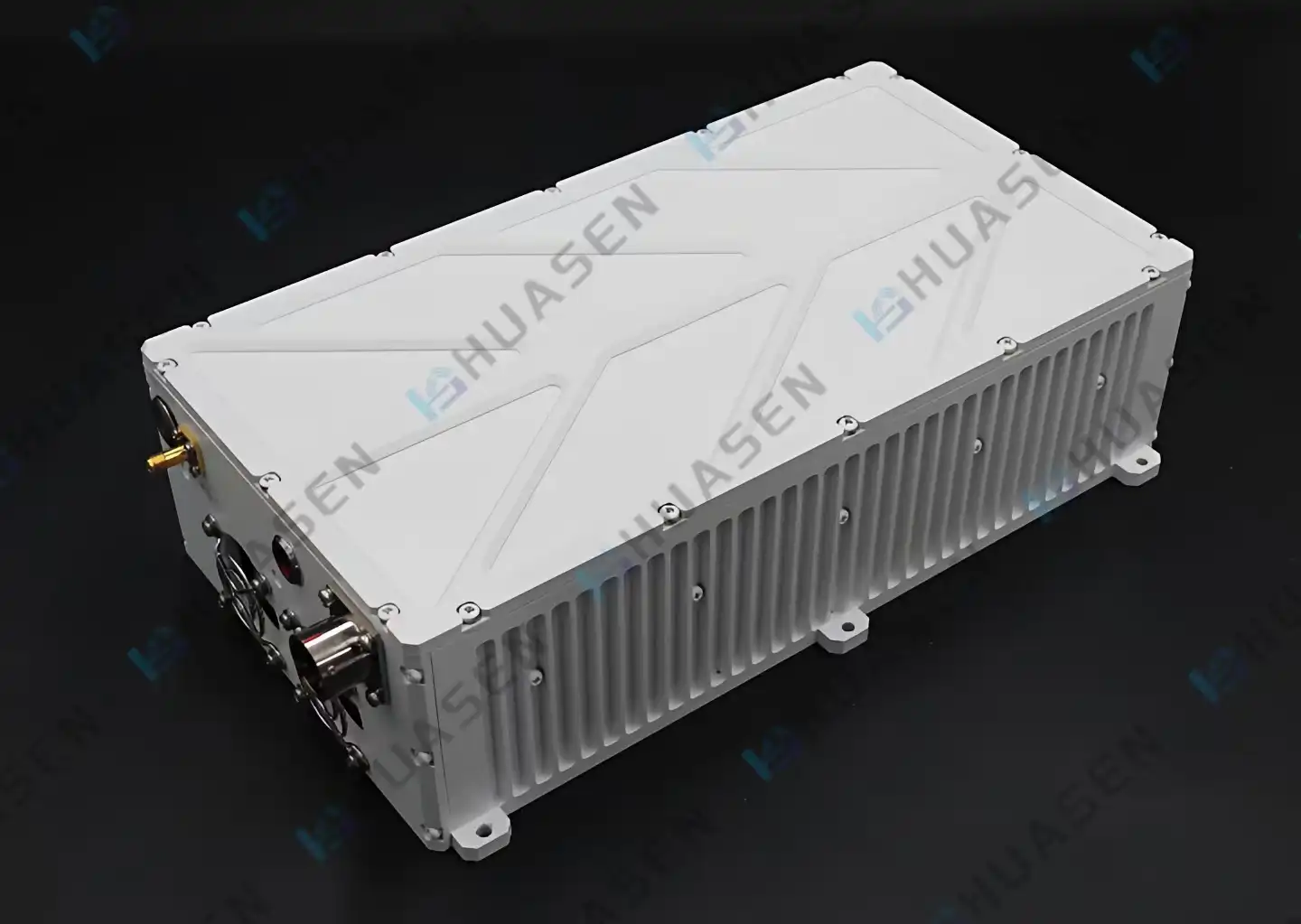
Heat dissipation is very important for small units or setups outside. In remote sites, operating power has a direct effect on thermal load and battery life. Our AC low noise amplifiers have power control built in. This makes installation easier in base stations and spread antenna systems, where DC power distribution can be hard to understand. The highest ambient working temperature is affected by the thermal resistance from the junction to the case. This is an important factor for equipment used in desert regions or sealed spaces.
Component Selection and PCB Layout Best Practices
Uncertainty in matching networks is reduced by good passive components. Chip resistors with low error and inductors with high Q keep performance the same across production lots. Ground plane continuity keeps input and output ports from connecting in ways that aren't wanted. At microwave frequencies, shielding is done by putting fences around sensitive lines. In aircraft use, mechanical stress relief keeps performance from dropping when working with SMA-type, K-type, or waveguide connections.
These design factors work together to make amplification chains that you can trust. When you cut corners on the quality of a part to save money, it usually leads to more failures in the field and guarantees that cost more than the initial savings. Paying close attention to the planar shape stops oscillations and makes the circuit less sensitive to changes in load impedance.
Comparative Insights on Different Amplifier Types for RF Applications
When to Choose an LNA Over Other Amplifier Types
High-gain amplifiers try to boost signals as much as possible, but they usually lose performance when it comes to noise. Low-power amplifiers are best for devices that run on batteries because they use the least amount of power. However, they might not have the dynamic range that base station listeners need. With their regulated gain flatness, preamplifiers play specific roles in instruments. When the input signal levels get close to or fall below -80dBm, a Low Noise Amplifier is the best choice because the operating range or detecting capability is directly related to the system's sensitivity.
Design Nuances for Satellite Communications
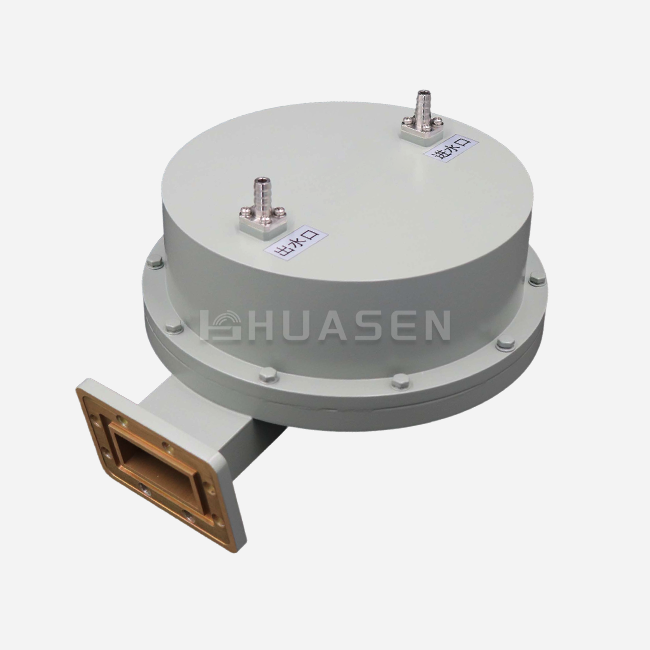
Path loss is very high for satellite links, so noise is the main design limit. Ground terminal LNAs usually work in the C-band, Ku-band, or Ka-band, and for study purposes, they are sometimes cooled with liquid nitrogen. At these frequencies, our amplifiers have waveguide connections that have less insertion loss than coaxial changes. Putting LNAs on the antenna cuts down on cable loss between the dish and the receiver, which raises the total noise temperature of the system.
Aligning Specifications with Procurement Requirements
Technical datasheets have a lot of factors listed, but buyers should only look at the ones that are important for their purpose. To handle many carriers, a 5G huge MIMO system needs to have a high third-order capture point and tight phase tracking between channels. Instantaneous bandwidth and quick gain changes are important for an electronic warfare sensor. By knowing these differences, you can avoid paying too much for performance margins that aren't needed or finding capability gaps after merging.
Best Practices for Procuring LNAs: What B2B Buyers Should Know
Evaluating Suppliers and Technical Datasheets
Manufacturers with a good reputation give detailed performance data that includes S-parameters for both temperature and frequency. It's important to be clear about the measurement conditions for gain flatness, input/output VSWR, and reverse isolation. For outdoor or mobile platforms, look for proof that it has been tested in different weather conditions to make sure it works well in a range of temperatures, doesn't get too wet, and can handle vibrations. Certifications like ISO 9001, RoHS compliance, and MIL-STD qualification show that the process is mature and that quality control is in place.
Customization Options for System-Specific Needs
Standard store items can be used for many things, but custom methods are often better for complicated systems. Frequency band tuning can cut noise by at least 0.5dB compared to Low Noise Amplifier designs that are used for everything. Different types of custom connectors can work with different mechanical connections. Integrated bias tees make it easier to send power through RF ports. At Huasen Microwave, our engineering team collaborates with clients from prototype through production, adjusting parameters like gain, connector placement, and mounting configurations to match exact system requirements.
Pricing Strategies and Supply Chain Considerations
Costs usually go down when buyers commit to buying more, but buyers have to weigh the unit price against the costs of keeping goods and the risk of items becoming obsolete. Getting in touch with approved distributors guarantees the authenticity of the product and gives you access to expert help. Custom designs can take anywhere from weeks to months to make, based on how complicated they are. To avoid critical path delays, it is best to plan buying timelines around project schedules. Requesting sample units to test ensures success in your specific RF environment before committing to large numbers for production.
Future Trends and Innovations in Low Noise Amplifier Design
Emerging Semiconductor Technologies
Compared to standard GaAs technology, gallium nitride (GaN) and silicon-germanium (SiGe) methods allow for higher frequency operation and better linearity. GaN's wide bandgap lets it work at higher voltages, which is good for amps that need a lot of dynamic range. SiGe BiCMOS lets digital control circuits be built into a single die. This makes it possible to adjust the bias in a way that improves performance even when the input power level changes.
Impact of 5G, IoT, and Satellite Mega-Constellations
The need for amplifiers that cover new frequency ranges, such as the n77, n78, and n79 bands, is driven by next-generation wireless infrastructure. Low-earth-orbit satellite systems need cheap ground connections, which is driving the development of receiver front ends with a lot of combined parts. To get the most out of their batteries, IoT sensor networks that use narrowband carriers need to use very little power. These market forces speed up new ideas in the design and production of Low Noise Amplifiers.
Sustainability and Energy Efficiency
Environmental laws and demands to lower running costs drive designs that use less power. Bias networks with adaptable control change the current based on the signal, which cuts down on waste heat when the system is not in use. When semiconductors are more efficient, they need smaller heat sinks and less cooling equipment. To meet their environmental goals, manufacturers are offering lead-free solder and recyclable packages more and more.
Leaders in the industry keep putting money into studies that improve amplifier performance. Better epitaxial growth methods make transistors that are less noisy and have more gain. Advanced electromagnetic modeling tools allow designs to work on the first try, which cuts down on the number of sample versions. These new ideas are used to make product lines, including RF LNA,that meet the needs of global RF markets that are becoming more and more picky.
Conclusion
Noise performance, gain, bandwidth, and environmental stability must be balanced against project limits like budget and schedule in order to choose an effective Low-Noise Amplifier. When engineers know how design factors affect system-level needs, they can choose parts that improve receiver sensitivity without making solutions too complicated. As radio frequency (RF) systems move into areas with higher frequencies and more challenging conditions, it becomes more useful to work with experienced makers who can offer both standard goods and custom designs. Thoroughly checking the skills, technical requirements, and support services of suppliers makes sure that purchasing choices lead to long-lasting dependability and performance.
FAQ
Q1: What factors most significantly influence the noise figure in practical installations?
How well the noise figure works relies on how well the source impedance matches, the working temperature, and the bias conditions. Noise figure decline is caused by imperfect input matching. This effect is lessened by keeping VSWR below 1.5:1. Higher temperatures make thermal noise worse; keeping the joint temperature within the ranges shown in the datasheet keeps performance stable. When the bias voltage and current are set correctly, transistors work at their best noise points.
Q2: How should I choose an LNA model for satellite communication applications?
To handle strong interference from neighboring channels, satellite systems need very low noise levels (usually less than 1.5dB) and good linearity. The frequency band you use must exactly match your uplink or downstream reservation. Insertion loss is lessened at C-band and above with waveguide connections. Check that the amplifier's P1dB is higher than the predicted signal levels by a sufficient amount. The environmental requirements should take into account things like extreme temperatures and water contact when placing outside.
Q3: Can frequency bands be customized for specific applications?
Customization choices let you get the best performance for small frequency bands, which makes the noise figure and gain flatness better than with wideband designs. Huasen Microwave can customize solutions by changing the center frequency, bandwidth, and types of connectors to fit the needs of the system. Custom designs usually need a sample to be tested and a minimum order quantity, but they work better in situations where standard Low-Noise Amplifier goods don't meet important requirements.
Partner with Huasen Microwave for Your RF Amplifier Needs
Huasen Microwave has more than 30 years of experience designing and making high-frequency parts that can help you with even the most difficult RF projects. We have a wide range of normal low-noise amplifiers and AC low-noise amplifiers that work with frequencies from 0.01 GHz to 100 GHz. These amplifiers have noise levels as low as 1.3dB and gain levels from 15 dB to 50 dB. To work with a wide range of system designs, we offer N-type, SMA-type, K-type, and waveguide connections. In addition to stock goods, our engineering team can customize frequency response, gain profiles, and mechanical packaging to meet your particular needs. We are a trusted manufacturer of Low Noise Amplifiers that work with research, aerospace, defense, and telecommunications institutions around the world. We offer both excellent expert help and quick response times. Email our sales team at sales@huasenmicrowave.com to talk about your application needs, get full datasheets, or set up sample evaluation units that show how well they work in your particular setting.
References
1. Pozar, David M. Microwave Engineering, 4th Edition. Wiley, 2011.
2. González, Guillermo. Microwave Transistor Amplifiers: Analysis and Design, 2nd Edition. Prentice Hall, 1996.
3. Ludwig, Reinhold and Gene Bogdanov. RF Circuit Design: Theory and Applications, 2nd Edition. Pearson, 2008.
4. Vendelin, George D., Anthony M. Pavio, and Ulrich L. Rohde. Microwave Circuit Design Using Linear and Nonlinear Techniques, 2nd Edition. Wiley-Interscience, 2005.
5. Cripps, Steve C. RF Power Amplifiers for Wireless Communications, 2nd Edition. Artech House, 2006.
6. Maas, Stephen A. Noise in Linear and Nonlinear Circuits. Artech House, 2005.
Send Inquiry