How to Select Dual Polarized Horn Antenna for Dual Channel Use






2026-06-09 21:52:25
To choose the correct dual-polarized horn antenna for dual-channel uses, you need to know how simultaneous orthogonal polarization makes your communication system work better. This kind of antenna handles both vertical and horizontal signal components separately, which doubles the capacity of your channel without the need for extra gear. When your 5G base station or satellite ground station needs to reliably separate polarization above 30dB while keeping VSWR below 1.5, it's important to choose an antenna with the right OMT architecture to avoid signal loss and costly system redesigns.
Understanding Dual Polarized Horn Antennas
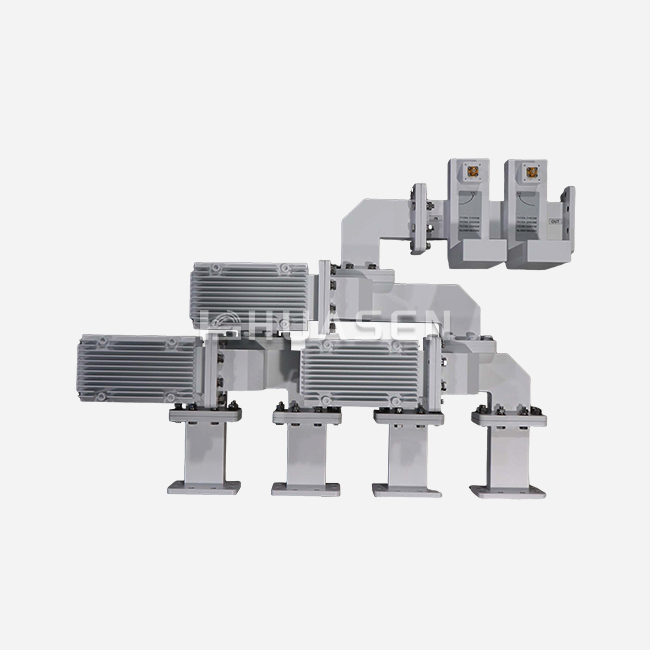
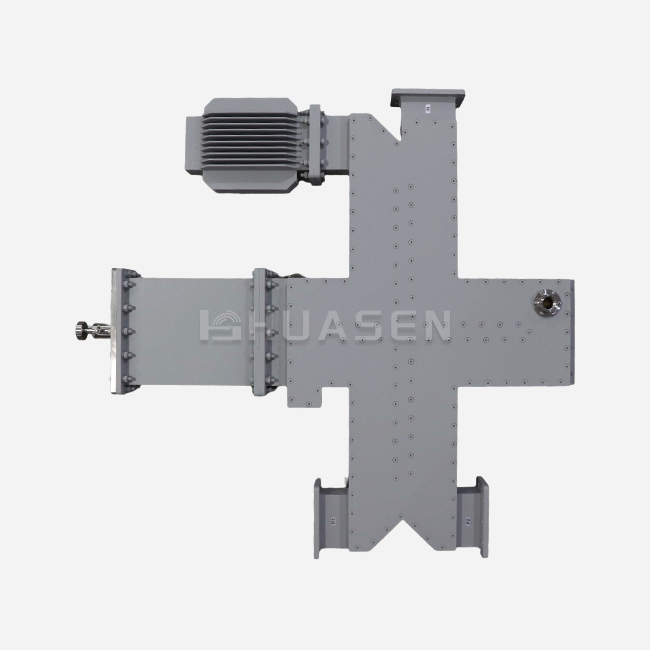
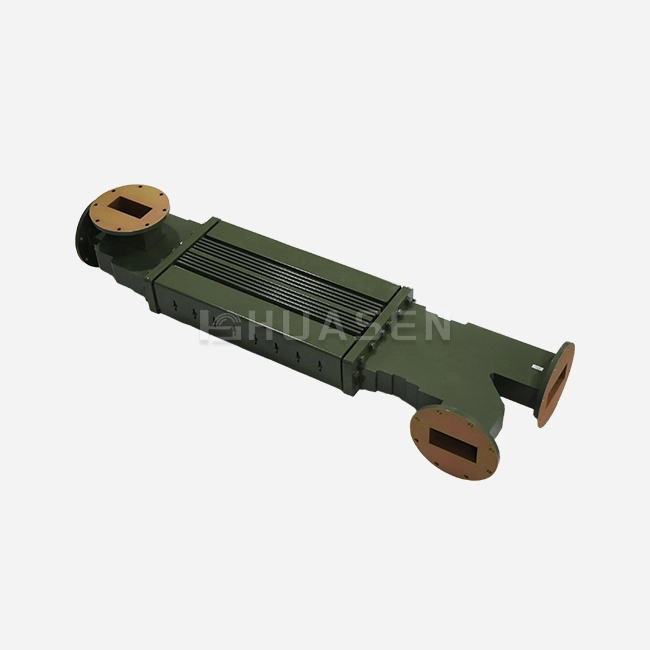
Dual polarized horn antennas are a special type of aperture antenna that is designed to handle two different types of electromagnetic waves through a single transmitting structure. Their internal orthogonal mode transducer technology makes this possible by physically separating the vertical and horizontal parts into different RF lines.
What Makes These Antennas Different?
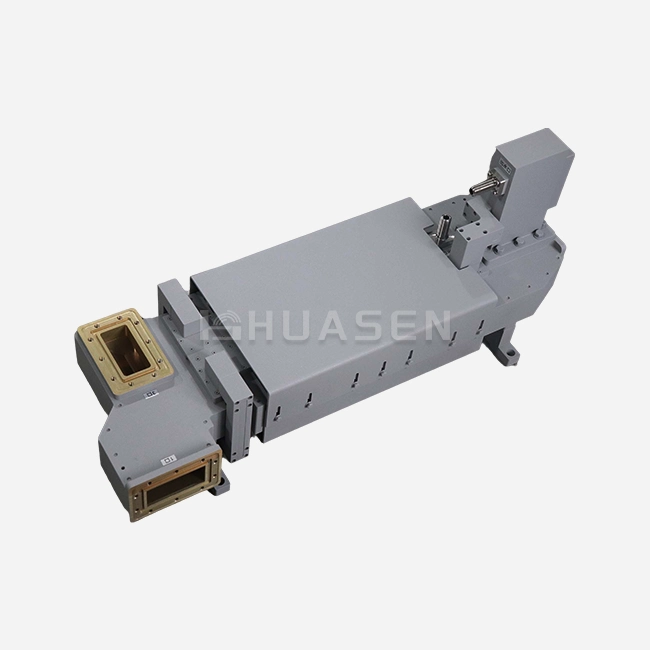
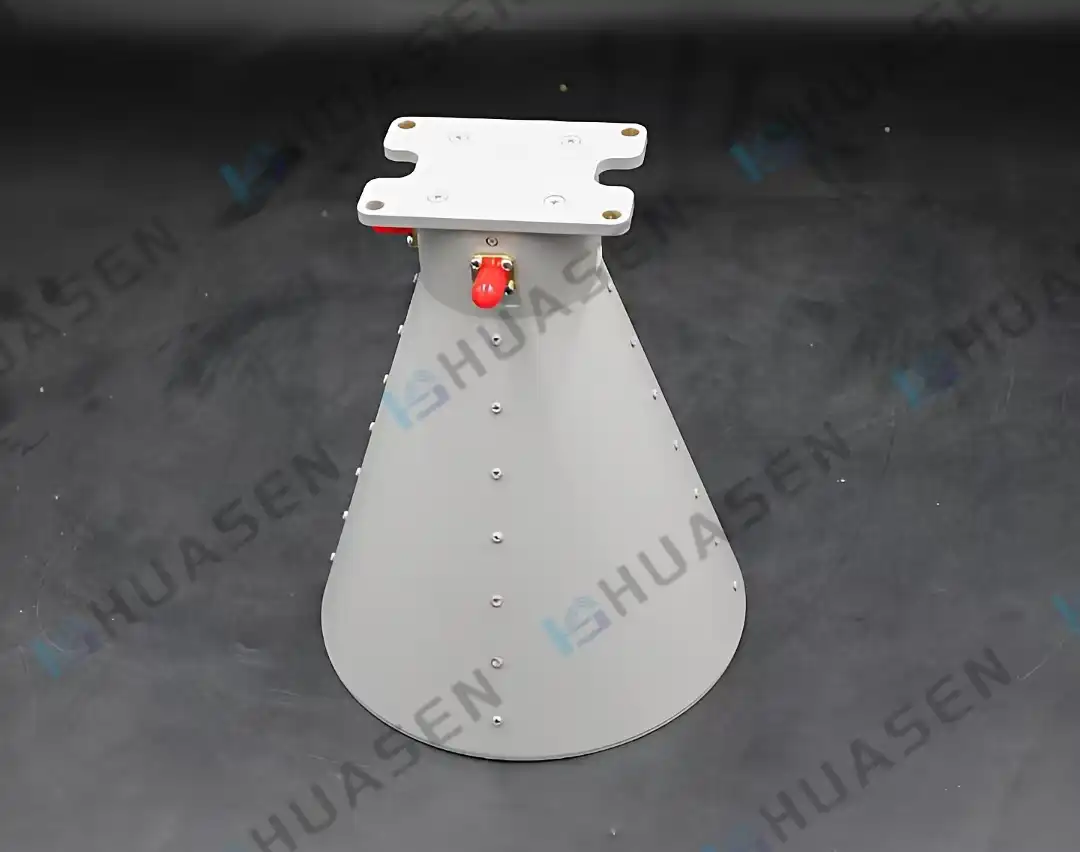
Traditional horn antennas only send out one polarization, so to pick up cross-polarized signals, they need to be mechanically rotated or used with more than one unit. Dual-polarized systems get around this problem with their feed arrangement. The Huasen Microwave Dual Polarized Horn Antenna uses an OMT with either a circular or a square conical horn shape, which lets it send and receive linearly polarized waves separately. In the real world, this design method solves problems that radar engineers face when they can't have the signal interrupted during polarization swapping and lab workers who are measuring antenna patterns and need stable reference sources.
Two OMT Architectures Explained
We will talk about two OMT architectures. Two different OMT designs are available from manufacturers, and each one is best for a different set of operating needs. Standard OMT designs have simple waveguide transitions, and their main benefit is that they are easy to make. Most of the time, these units can cover up to 5 percent of the center frequency. This makes them a good choice for military radars that need to work with narrowband signals or point-to-point microwave links that have to stick to set frequencies.
Another option is symmetrical feed OMT technology, which is more advanced. This design has a bandwidth that covers 40% of the center frequency, but it is more difficult to make because of the precise standards needed for machining and the complicated internal connection structures. For wideband communication testing, polarization separation of more than 30dB across this wide range is necessary. This is because frequency-agile systems, like current 5G networks, need cross-polar performance that stays the same from 3.3 GHz to 4.2 GHz without having to switch antennas.
Performance Characteristics That Matter
The technical details of these antennas have a direct effect on the signal quality of your system. How much energy leaks between the vertical and horizontal channels is measured by port-to-port separation. Values above 30 dB guarantee clean MIMO data streams in dual-channel setups. Cross-polarization discrimination checks how well an antenna can block out unwanted polarization components. This is very important when trying to track satellites through depolarization effects in the atmosphere.
VSWR performance below 1.5:1 means that power is being transferred efficiently with few echoes. This keeps the final amplifier stage of your emitter safe and increases the amount of power that is sent out. Gain ranges from 15 dBi to dBi, based on the size of the aperture and the frequency. Patterns stay stable across the operational band, which ensures that base station placements have predictable coverage.
Core Performance Factors to Consider When Selecting
If you match the antenna specs to the needs of your application, you can avoid costly mistakes that are found during integration testing. We've seen buying teams only care about frequency range and not think about things like environmental rates or how much power the device can handle. As a result, the project is delayed when samples fail qualification tests.
Frequency Range and Bandwidth Requirements
The antenna's working band is set by the spectrum your transmission system is given. For 5G operations below 6GHz, coverage is needed across fragmented bands such as 3.3–3.8 GHz and 4.4–5.0 GHz. Wideband symmetrical feed designs are preferred because they remove the need to keep multiple antenna models on hand. If the link budget allows for a little less efficiency at the band edges, satellite ground stations that work at X-band (7–12 GHz) or Ku-band (12–18 GHz) may be able to handle smaller traditional OMT bandwidths.
Millimeter-wave uses above 24 GHz have their own set of problems. Absorption in the atmosphere goes up a lot, which makes antenna gain and efficiency very important. The short bands at these frequencies also require tighter mechanical tolerances. For example, the internal feed structure of a 28 GHz antenna needs to be accurate to within 0.05 mm in order to keep the required separation performance.
Gain and Beamwidth Trade-offs
Higher gain focuses the energy that is released into smaller beams, which increases the link distance but decreases the coverage area. For point-to-point backhaul links between stable towers, where exact alignment is possible, a 20 dBi dual-polarized horn antenna with a 15-degree beamwidth works well. Base station front-end apps usually choose 12–15 dBi antennas with 30–40 degree coverage because they offer a good balance between range and the sector's angular area.
Dual-channel efficiency is affected by the uniformity of the radiation pattern. Asymmetric patterns lead to changes in coverage that rely on polarization. These changes create dead zones where one channel has a strong signal loss, and the orthogonal channel stays strong. Pattern data for both polarizations across the operational band is provided by good makers. This lets system designers correctly model coverage before deployment.
Polarization Purity and Isolation
The ability of your dual-channel device to work without inter-channel interference is directly related to polarization separation. For full-duplex wireless transmission, one polarization is sent at the same time as the orthogonal polarization is received. If there isn't enough separation, emitter leakage into the receiver dulls or overloads the front-end amplifier.
When figuring out what kind of gadget is being tested, testing facilities and study labs use polarization purity. An antenna measurement range with a dual polarized source antenna can record both co-polar and cross-polar patterns at the same time, which cuts test time in half compared to methods that use mechanical spinning. This benefit is lost, though, if the test is messed up by the reference antenna's own cross-polarization performance.
Environmental and Mechanical Specifications
When systems are outside, they have to deal with changes in temperature, water getting in, and mechanical stress from wind loading. Antenna housings need to have the right IP grades. For base stations on land, IP65 is the bare minimum, and IP67 is needed for use at sea, where salt spray speeds up rusting. The choice of materials affects how long something lasts. For example, using the right anodizing or powder coating on metal prevents oxidation while keeping its lightweight qualities that are important for tower loading estimates.
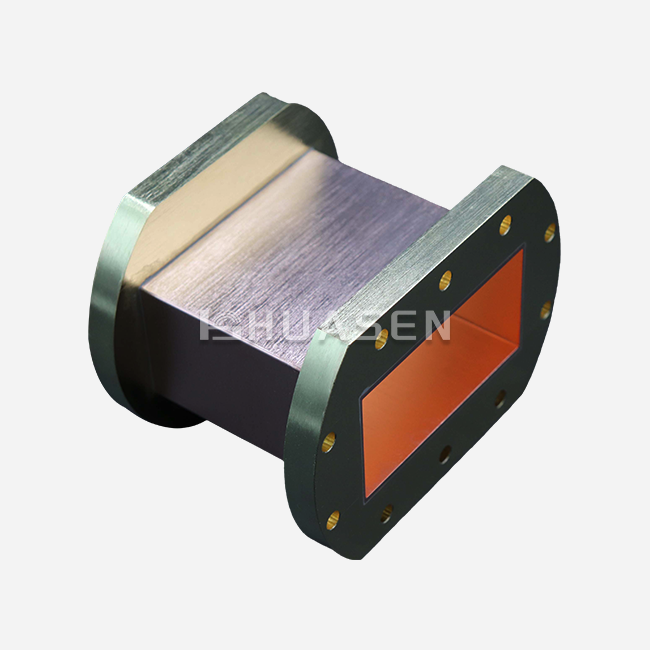
Pay close attention to the connector specs. Standard SMA connectors can handle low to middling power levels, but they lose some of that power at higher rates. For radar emitters that make kilowatt-level pulses, N-type or 7/16 DIN connections are important because they lower insertion loss and improve power handling. Waveguide connections get rid of all coupling losses, but they make the mechanical parts more complicated and take longer to install.
Procurement Considerations for B2B Clients
When choosing an antenna provider, you need to look at more than just the datasheet specs. When we worked with system integrators that put initial unit cost first, they ran into problems with the supply chain when they tried to scale up to production levels, or they found that the manufacturer didn't have enough technical resources to support their customers' requests for customization.
Manufacturer Evaluation Criteria
Certifications and quality methods help well-known producers show how committed they are. ISO 9001 certification means that the manufacturing methods and techniques for ongoing growth have been written down. For military and aircraft uses, MIL-STD-461 compliance is needed for electromagnetic compatibility. This makes sure that your dual polarized horn antenna won't mess up systems nearby or lose its performance in places with a lot of disturbance.
The ability to provide technical help is what sets competent suppliers apart from component sellers. Can the maker give antenna factor calibration data for every batch number? This is very important for making sure that measurements are always the same in test labs. Does their engineering team offer simulation support during the planning part of your system to help you find the best place and orientation for your antennas? Huasen Microwave Technology has been in business since 1993 and has 30 years of experience with RF and microwave technologies. They have worked on projects involving defense radar systems, flight tracking, and telecommunications infrastructure.
Customization and OEM Solutions
Catalog goods can be used for many things, but sometimes custom solutions are needed because of the way a system is set up. Customizing the frequency band lets you make the antenna work with unique or regional radio assignments that standard models don't cover, and adding a dual-polarized horn addresses specific polarization requirements. Some installation problems can be solved by making mechanical changes, like making special mounting brackets for existing tower infrastructure or small form factors for installations on airplanes that don't have a lot of room.
System integrators can get value from OEM partnerships with companies that can private-label goods under their own name. This method gives your customers a unified line of products while taking advantage of the manufacturer's unique production skills. Talking about customization should start early in the product planning process, since making the tools for custom-machined parts can add 8 to 12 weeks to the delivery time of regular goods.
Bulk Ordering and Supply Chain Management
Buying in bulk can help you get better prices and make sure you have a steady supply for projects that last for years. Framework agreements with yearly volume pledges protect prices against changes in raw materials and make sure that production capacity is allocated. Build-to-forecast agreements let the maker buy long-lead items like specialized waveguide components before getting firm purchase orders. This shortens the time it takes to get the goods when production quantities are released.
Recently, global problems have made supply chain stability more important. Ask the maker how they get their parts. Do they keep important raw materials in stock, or do they do "just-in-time," which means they risk source delays? When you use dual-sourcing for high-volume projects, you lower your risk, but you have to pay twice as much for validation testing to qualify a second provider.
Practical Guidelines for Dual Channel Application Setup
To successfully use dual polarized horn antennas, you need to pay attention to details about how to place them and how to integrate them into the system that aren't fully covered in the datasheet specs. Field experience shows that theoretical performance drops quickly when unwanted coupling or impedance mismatches happen during physical mounting or wire handling.
Installation Best Practices
Whether you meet the expected link budget depends on how well the antennas are aligned. On high-gain antennas with narrow beamwidths, mistakes in azimuth and elevation greater than or equal to 2 to 3 degrees can lower the detected signal strength by 3dB or more. Using optical alignment tools or precision inclinometers during installation stops performance problems from being found during testing, when it costs a lot to fix them.
Pattern warping is kept to a minimum by keeping radiating parts physically separate from each other. Putting dual-polarized antennas close to big metal objects or other antennas causes reflections that change the pattern of the radiation and make the polarization less pure. When tower space limits cause close spacing, mounting at different heights and using cross-polarization layouts lowers the amount of coupling that happens between the elements.
Cable management affects how well a system works by adding to the loss and making it possible for outside interference to be picked up. Noise can be coupled with RF wires that are run parallel to power lines, and tight bend radii that are smaller than the minimum requirements cause impedance discontinuities. With the right strain relief, mechanical stress from antenna movement caused by wind doesn't build up at connecting contacts, where repeated bending breaks connections.
Real-World Application Examples
A regional cell phone company put up 200 5G base station front-ends and chose wideband dual-polarized horn antennas for their backup network. Because it covered 40% of the frequency range, technicians only had to keep one type of antenna on hand, which made it easier to manage their supplies. Full-duplex operation was possible with polarization separation above 30dB, which doubled the link's capacity without the need for extra spectrum licensing. Over the next 18 months, the deployment had 99.7 percent uptime, proving that using high-quality parts in vital systems is a good idea.
Antennas for industrial IoT sensor networks that track oil sites at sea had to be able to handle salt spray and temperature changes from -40°C to +70°C. In 24-month field tests, dual-polarized systems with IP67-rated enclosures and stainless steel hardware didn't lose any of their efficiency. Compared to single-polarized systems, the polarization diversity feature cuts the chance of a loss from 3.2% to 0.4%. This is because signal fading only affected both polarizations at the same time during unusual weather events.
In their anechoic rooms, aerospace testing labs that were measuring satellite transponder antennas used dual polarized horn antennas as reference sources, including dual-polarized horn. Cutting the time it took to measure from 45 minutes to 20 minutes per device meant 30 percent more throughput. Also, polarization isolation above 35dB made measurements more accurate to ±0.3dB, down from ±0.8dB when using single-polarized reference antennas and mechanical rotation before.
Conclusion
When choosing dual-polarized horn antennas for dual-channel uses, you have to balance technical performance parameters with practical buying factors. The OMT design of the antenna—whether it's a standard or symmetrical feed—determines its bandwidth and isolation performance. This has a direct impact on the channel capacity and signal quality of your system. By making sure that the frequency coverage, gain features, and environmental scores are all right for your deployment situation, you can avoid costly mistakes that are found during integration. Working with well-known companies that offer full technical help and quality systems that have been shown to work reduces project risks and allows for flexibility to meet specific needs. If procurement managers and engineers follow the steps outlined here for a systematic review, they can be sure that the choices they make will lead to reliable dual-channel communication performance throughout the lifecycle of the product.
FAQ
1. What advantage does a dual-polarized design provide over single-polarized antennas?
Dual-polarized design antennas handle two different polarizations at the same time through a single physical opening, which doubles the number of channels that can be used. This gets rid of the need for mechanical spinning when testing or talking to devices that have different polarizations. It also makes installation easier on crowded towers and allows polarization diversity methods that make signals more reliable in environments with multipath fading.
2. Can these antennas operate outside 5G frequency bands?
Of course. Depending on their form, dual polarized horn antennas can work with a variety of frequency bands. Frequencies between 1-2 GHz in the L-band and above 40 GHz in the millimeter-wave range are used for a wide range of things. It's important to choose a model whose OMT design and aperture measurements are best for your frequency allocation, whether it's for X-band radar systems or E-band point-to-point wireless links.
3. How does polarization diversity improve communication reliability?
Polarization diversity takes advantage of the fact that fading on orthogonal polarizations is statistically independent. When multipath echoes cancel out a signal on one polarization, the signal strength on the opposite polarization usually stays the same. Receivers that combine both channels using selection or maximal-ratio combining methods have a lower chance of going offline than single-polarized systems that work in the same transmission conditions.
Partner with a Trusted Dual Polarized Horn Antenna Manufacturer
Huasen Microwave Technology has been making high-frequency microwave and millimeter-wave parts for 30 years and can help you with your dual channel transmission projects. Our range of Dual Polarized Horn Antennas comes in both traditional and symmetrical feed OMT forms. They offer polarization separation of more than 30dB and VSWR below 1.5 across bandwidths ranging from narrowband to 40 percent coverage. System programmers, equipment makers, and research institutions can get help from us because we can customize our services to meet their specific frequency needs and mechanical limitations. Our engineering team helps with design, gives calibration data for every serial number, and offers quick expert support for the whole duration of your product. Email our sales team at sales@huasenmicrowave.com to talk about your unique application needs and find out how our approved parts can improve the performance of your dual channel system.
References
1. Balanis, Constantine A. "Antenna Theory: Analysis and Design," 4th Edition, Wiley, 2016.
2. IEEE Standard 145-2013, "IEEE Standard for Definitions of Terms for Antennas," Institute of Electrical and Electronics Engineers, 2013.
3. Milligan, Thomas A. "Modern Antenna Design," 2nd Edition, Wiley-IEEE Press, 2005.
4. Olver, A.D., Clarricoats, P.J.B., Kishk, A.A., and Shafai, L. "Microwave Horns and Feeds," IEEE Press, 1994.
5. Stutzman, Warren L. and Thiele, Gary A. "Antenna Theory and Design," 3rd Edition, Wiley, 2012.
6. "MIL-STD-461G, Requirements for the Control of Electromagnetic Interference Characteristics of Subsystems and Equipment," Department of Defense Interface Standard, 2015.
Send Inquiry