Factors Affecting the Beam Directivity of Parabolic Antenna






2026-03-15 22:14:19
To get the best signal transmission performance in current communication systems, you need to know how the beam directivity of parabolic antennas works. The perfectly curved reflector surface of a parabolic antenna focuses electromagnetic energy into a narrow, focused beam, making it more direct. This ability to point in a certain direction has a direct effect on Parabolic Antenna communication range, signal quality, and interference reduction in many areas, such as 5G networks, satellite communications, and radar systems. A lot of technical factors affect this beam's directivity performance, from the shape of the reflector and where the feed is placed to the working frequency and the accuracy of the surface. It is very important to make the right choices and use the right equipment to get the communication results you want.
Understanding Beam Directivity in Parabolic Antennas
Fundamental Principles of Parabolic Reflector Technology
All electromagnetic waves travelling perpendicular to the antenna's axis bounce off the curved surface and come together at a single focal point. This is how parabolic mirrors work. Because of this geometric feature, these antennas have better beam directivity than other antenna designs. The parabolic shape changes the spherical wavefronts from the feed antenna into plane waves, making a very focused beam with little energy loss. These systems' directivity is directly related to their ability to focus electromagnetic energy in a certain direction while reducing radiation in unwanted directions. This trait is especially useful in point-to-point communication lines, where signal interference needs to be kept to a minimum and transmission efficiency needs to be raised. This directivity is measured by things like half-power beamwidth and front-to-back ratio, which show how tightly the antenna focuses the energy it sends out.
Industrial Applications Demanding High Directivity
Parabolic antenna systems are a big part of modern telecommunications infrastructure because they make long-distance contact reliable. Cellular network providers use these antennas to make backhaul connections between cell towers. Precise beam directivity keeps interference between links as low as possible. Even though they are very far away, satellite communication systems use parabolic dishes to keep stable links with orbiting satellites. Beam directivity is also a key factor in how well radar systems work in other important situations. High-directional parabolic antennas are used in weather stations, marine navigation gear, and air traffic control systems to find and track targets accurately while blocking signals from other directions. For these mission-critical uses, parabolic shapes are a must because they provide better directivity.
Comparative Advantages Over Alternative Antenna Types
When directional antenna technologies are compared, parabolic designs always show better performance traits. Even though Yagi antennas are good at directing signals for their size, they can't match the beam concentration that can be achieved with bigger parabolic mirrors. Omnidirectional antennas cover all directions, but they don't focus the energy distribution needed for long-distance point-to-point connections. Panel antennas, on the other hand, have moderate directivity and small sizes, which makes them useful for some tasks. On the other hand, they usually can't get as much gain as parabolic shapes can. The mathematical link between the size of an antenna's aperture and its directivity favours parabolic shapes. This is especially true at higher frequencies, where precise beam control is more crucial for the system to work well.

Key Factors Affecting Beam Directivity
Reflector Surface Accuracy and Geometry
The most important thing that determines beam directivity effectiveness is how precise the parabolic reflector surface is. Manufacturing tolerances have a direct effect on how well the antenna focuses electromagnetic energy. Deviations in the surface from the ideal parabolic shape lead to beam distortion and less directivity. Surface accuracy within fractions parabolic reflector antenna of a wavelength is usually required by industry standards to keep performance at its best. Roughness of the surface also affects directivity, especially at higher frequencies, where smaller wavelengths make the antenna more sensitive to small surface flaws. Computer-controlled machining and precision forming are some of the advanced manufacturing methods used to make sure that reflector surfaces meet strict accuracy standards. The choice of material is very important. Aluminium alloys are very good at conducting electricity and keeping their shape in a wide range of weather conditions.
Feed Antenna Design and Positioning
Through its radiation pattern and position in relation to the focal point, the feed antenna system has a big effect on the total beam directivity. Because they are good at matching resistance and controlling radiation, horn antennas are often used as feed elements. To get the best directivity and the least amount of spillover loss, the feed's illumination pattern needs to fit the geometry of the parabolic reflector. Accurately positioning the feed affects both directivity and the overall performance of the antenna. Moving away from the focus point in any direction can change the beam and make the sidelobe levels higher. To keep the polarisation channels separate and the directivity in both directions, dual-polarization feed systems need to be placed with even more accuracy.
Aperture Size and Frequency Relationships
The possible maximum directivity that can be reached at any given frequency is directly related to the size of the antenna aperture. The basic link between aperture diameter and beamwidth says that bigger apertures focus electromagnetic energy into narrower beams. Because of this, choosing the right frequency is very important when making systems that need to have certain levels of directivity. The operating frequency affects how well the antenna meets the theoretical directivity limits. Higher frequencies let smaller antennas reach certain levels of directivity, but they also make it more noticeable when there are flaws on the surface or manufacturing limits. When system designers choose the best frequency bands for different uses that need different beam directivity properties, they have to weigh all of these things.
Comparing Parabolic Antennas with Other Antenna Types for Directivity
Performance Characteristics Across Different Technologies
When it comes to high levels of directivity, parabolic antenna systems always do better than other designs, especially when narrow beam patterns are needed. Because they are based on math, their performance traits can be predicted and work well with different aperture sizes. Electronic beam steering can give flat panel arrays similar directivity, but a parabolic reflector antennausually needs more complicated feed networks and use more power. Horn antennas have great directivity for their small size, but they can't match the performance levels of large parabolic reflectors. Their main benefit is that they work over a wide range of frequencies and are easy to build, which makes them good for uses where modest directivity is enough. Lens antennas are another option, but they are too big and heavy to be useful in situations where very high directivity is needed.
Application-Specific Selection Criteria
Different communication scenarios demand varying levels of beam directivity, influencing antenna technology selection. Point-to-point microwave links typically require the highest directivity levels to minimize interference and maximize link reliability. Parabolic designs excel in these applications due to their superior beam concentration capabilities and excellent front-to-back ratios. Broadcast applications may favor antenna types with broader coverage patterns, where excessive directivity could limit the service area. Mobile communication base stations often utilize sector antennas that provide controlled directivity over specific coverage zones. Understanding these application requirements enables engineers to select appropriate antenna technologies that balance directivity performance with other system constraints such as size, weight, and cost considerations.
Environmental and Structural Considerations
The deployment environment significantly influences antenna selection beyond pure directivity performance. Wind loading becomes a critical factor for large parabolic antennas, particularly in exposed installations where structural integrity must withstand severe weather conditions. Smaller panel antennas may offer adequate directivity for certain applications while presenting reduced wind loads and installation complexity. Ice loading represents another environmental challenge that affects antenna choice in cold climates. Parabolic reflectors can accumulate significant ice loads that alter their radiation patterns and increase structural stress. Some applications may benefit from alternative antenna designs that minimize ice accumulation while maintaining acceptable directivity performance levels.
Procurement Considerations for High-Performance Parabolic Antennas
Technical Specification Interpretation
Procurement professionals must understand key performance parameters when evaluating parabolic antenna options for specific applications. Gain specifications indicate the antenna's ability to concentrate electromagnetic energy, with higher values corresponding to better directivity performance. However, gain alone does not tell the complete story, as radiation pattern characteristics such as sidelobe levels and front-to-back ratios also impact system performance significantly. Frequency range specifications determine operational bandwidth, with broader ranges offering greater application flexibility but potentially compromising peak performance. VSWR specifications indicate impedance matching quality, affecting power transfer efficiency and overall system performance. Understanding these technical parameters enables informed decision-making when comparing products from different manufacturers.
Supplier Evaluation and Quality Assurance
Selecting reliable suppliers involves evaluating manufacturing capabilities, quality control processes, and technical support offerings. Established manufacturers with proven track records in RF and microwave technology typically provide more consistent product quality and reliable performance specifications. Quality certifications such as ISO 9001 demonstrate commitment to manufacturing excellence and process control. Technical support capabilities become crucial when deploying complex antenna systems requiring precise installation and alignment. Suppliers offering comprehensive documentation, installation guides, 2.4 meter parabolic antenna, and field support services provide added value beyond the basic hardware. Warranty coverage and replacement part availability also factor into long-term total cost of ownership considerations that impact procurement decisions.
Customization and Volume Procurement Options
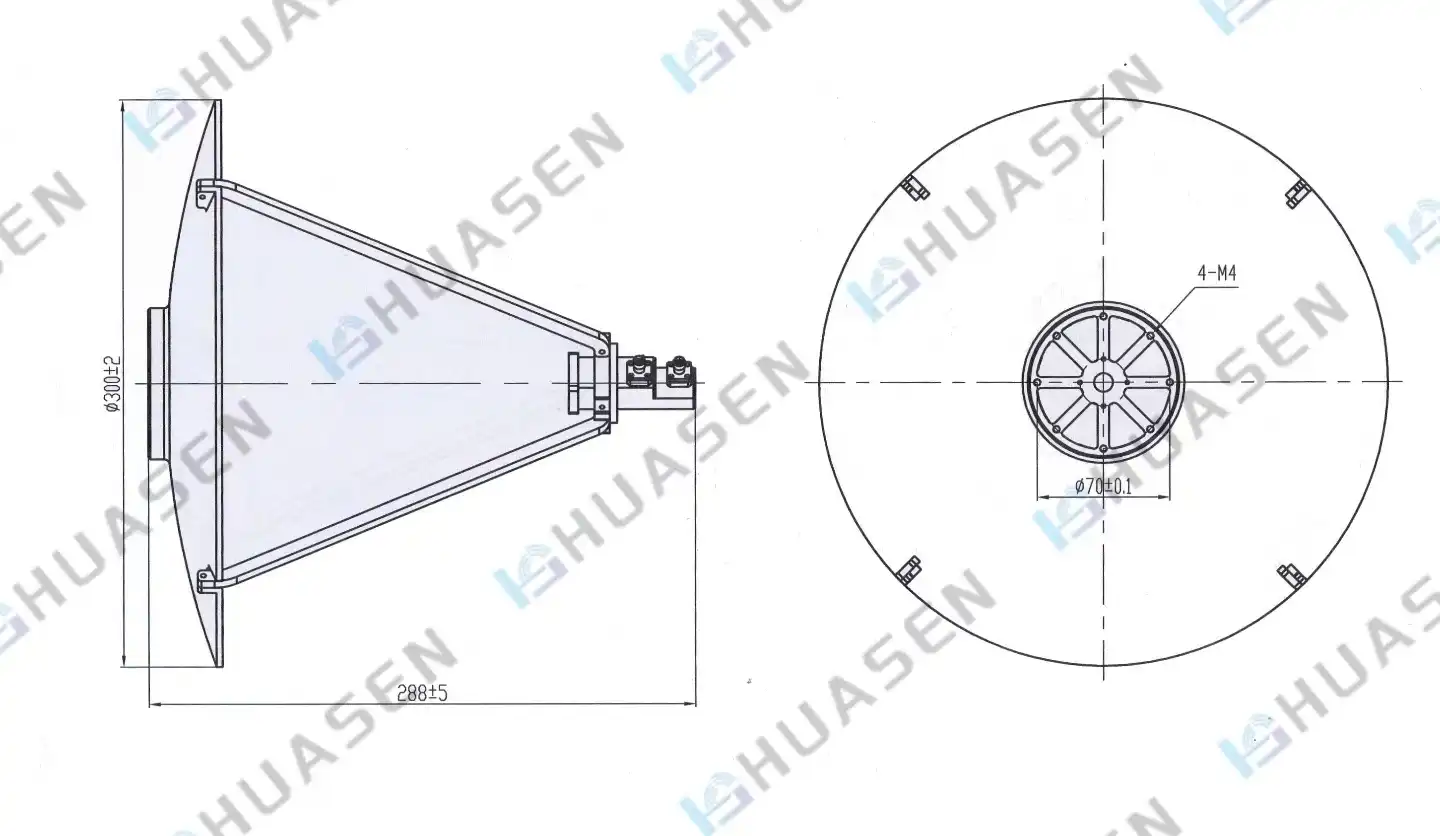
For many uses, antenna solutions need to be specially made to fit certain frequency bands, gain needs, or mechanical limitations. Huasen Microwave specialises in creating unique parabolic antenna solutions, such as Dual Linear Polarisation Parabolic Antennas (DPRA) with N-type or SMA connections that can support up to 15% working bandwidths. Their Dual Circular Polarisation Parabolic Antennas (DCPRA) offer left-hand and right-hand dual circular polarisation with axial ratios of 1.5 dB for narrowband applications or 3 dB for wideband applications. Buying in bulk can save you a lot of money and make sure that the product specifications are the same across large deployments. Strategies for buying in bulk can lower the cost per unit and ensure that products will be available for longer project timelines. Some suppliers offer installation packages that include professional mounting and alignment services. This could lower the overall cost of the job and make sure that the systems installed work at their best.
Optimizing Antenna Performance Post-Purchase
Installation Best Practices for Maximum Directivity
The beam directivity performance of any parabolic antenna system is directly affected by how well it is installed. Small changes in angle can greatly affect the radiation pattern features, so precise mechanical alignment is very important. Professional installation teams use special positioning tools to make sure antennas work as expected in real-world situations. Stability of the base affects long-term performance, especially for bigger antennas that are exposed to wind loads and temperature changes. Grounding and weatherproofing things correctly protects them from damage from the weather that could slow down electricity over time. Care must be taken when routing cables and sealing connectors to keep water out, which could affect the dependability and performance of the system.
Maintenance Protocols for Sustained Performance
Maintaining regular repair schedules helps keep antenna directivity performance high for as long as the system is in use. Visual checks find damage to the object, like dents or corrosion, that might change the way radiation patterns work. Cleaning the surface of the reflector gets rid of dirt and other things that can slow it down, especially at higher frequencies, where surface dirt has a bigger effect. Checking the mechanical soundness of the reflector makes sure that the mounting hardware is still in place and properly tensioned. Impedance mismatches can happen when connections are loose, which hurts the general performance of the system. Using the right test tools to check the antenna's performance on a regular basis makes sure it keeps meeting the requirements and finds any problems before they cause the system to fail.
Leveraging Warranty and Support Services
Comprehensive warranty coverage protects against flaws in the manufacturing process and early breakdowns that could affect how reliable the system is. Understanding the terms and conditions of a warranty 2.4 meter parabolic antennahelps you get the most out of this safety while also making sure you follow the maintenance steps that are needed. Some makers offer extended warranty options that give extra protection for important applications. Technical support services are useful for fixing performance problems and making the best use of system configurations. Support teams with a lot of experience can help with installation, speed optimisation, and fixing problems. Having access to replacement parts and upgrade options helps keep the system up to date and makes it work longer after the original deployment period is over.
Conclusion
The basic performance trait that decides how well a parabolic antenna works in a wide range of communication scenarios is its beam directivity. This directivity is mostly affected by how accurate the reflector surface is, where the feed is placed, the size of the aperture, and the relationship between the working frequency and the aperture size. By understanding these technical aspects, you can make smart choices about which antennas to use and where to put them, which will improve the performance of your communication system. Proper buying strategies, installation methods, and maintenance schedules make sure that these antennas work at full directivity for as long as they are operating. This makes them essential parts of today's communication infrastructure.
FAQ
1. What determines the maximum directivity achievable with a parabolic antenna?
Aperture size represents the primary factor limiting maximum directivity, with larger reflectors capable of producing narrower beams and higher gain. Operating frequency also influences directivity, as higher frequencies enable better beam concentration for given aperture sizes.
2. How does feed positioning affect beam directivity performance?
Feed antenna placement directly impacts beam quality and directivity levels. Positioning errors cause beam deviation, increased sidelobe levels, and reduced overall directivity. Precise focal point alignment ensures optimal energy concentration and pattern characteristics.
3. Can environmental conditions degrade directivity over time?
Weather exposure can affect directivity through surface contamination, corrosion, and mechanical deformation. Regular cleaning and maintenance help preserve performance levels, while proper materials selection provides resistance to environmental degradation effects.
4. What measurement techniques verify directivity performance?
Anechoic chamber testing provides the most accurate directivity measurements by eliminating environmental reflections. Field measurements using spectrum analyzers and signal generators can verify operational performance, though with reduced precision compared to laboratory conditions.
Partner with Huasen Microwave for Superior Parabolic Antenna Solutions
Leading parabolic antenna manufacturer Huasen Microwave delivers precision-engineered solutions that maximize beam directivity performance across demanding communication applications. Our extensive portfolio includes advanced Dual Linear Polarization and Dual Circular Polarization systems featuring superior directivity characteristics andParabolic Antenna robust construction. With over three decades of microwave technology expertise, we provide comprehensive technical support from initial specification through long-term operational success. Contact our engineering team at sales@huasenmicrowave.com to discuss your specific directivity requirements and discover how our innovative antenna solutions can enhance your communication system performance. Visit huasenmicrowave.com to explore our complete product range and capabilities.
References
1. Balanis, Constantine A. "Antenna Theory: Analysis and Design." Fourth Edition. John Wiley & Sons, 2016.
2. Milligan, Thomas A. "Modern Antenna Design." Second Edition. IEEE Press, 2005.
3. Stutzman, Warren L. and Gary A. Thiele. "Antenna Theory and Design." Third Edition. John Wiley & Sons, 2012.
4. Silver, Samuel. "Microwave Antenna Theory and Design." MIT Radiation Laboratory Series, Volume 12. McGraw-Hill, 1949.
5. Kraus, John D. and Ronald J. Marhefka. "Antennas: For All Applications." Third Edition. McGraw-Hill, 2002.
6. Collin, Robert E. and Frank J. Zucker. "Antenna Theory: Part 1 and Part 2." McGraw-Hill, 1969.
Send Inquiry