Dual Polarized Horn Antenna Construction and Isolation Design






2026-05-07 20:40:28
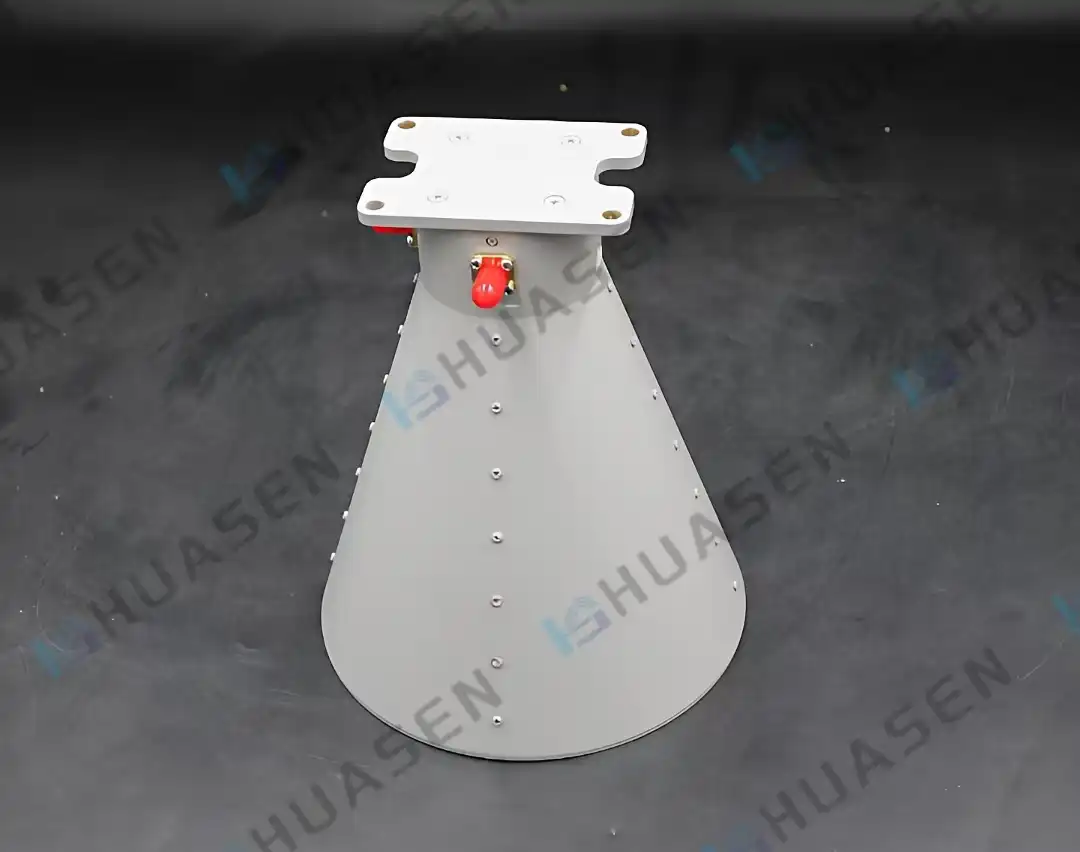
A dual-polarised horn antenna is a high-tech RF device that can handle two orthogonal polarisations (usually vertical and horizontal) at the same time through a single opening. These antennas are different from others because they combine an Orthogonal Mode Transducer (OMT) with a conical horn structure. This lets them send and receive linearly polarised waves without mechanical spinning or switching delays. This design gives great polarisation separation, often above 30 dB, while keeping VSWR values below 1.5 across all working bandwidths. For system designers working on 5G backhaul lines, satellite ground stations, or MIMO testing settings, it's important to understand the basics of building and isolation design in order to make sure communication is reliable and free of interference.
Understanding Dual-Polarised Horn Antenna Construction
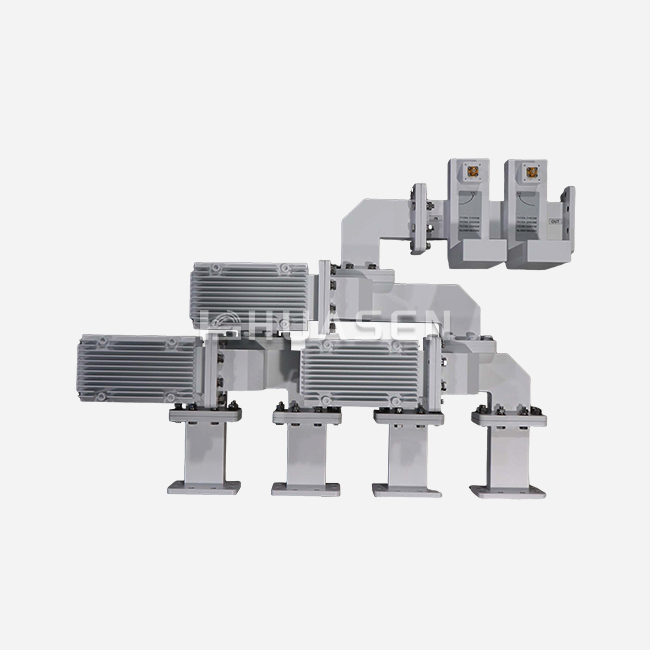
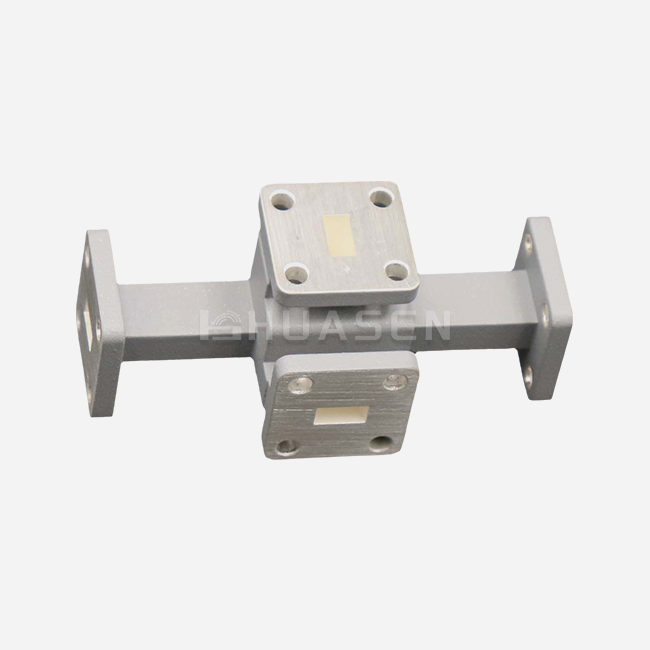
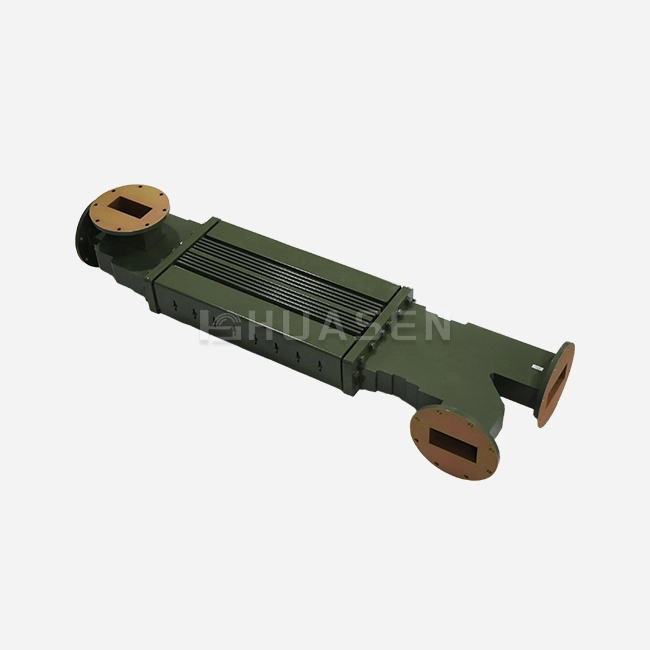
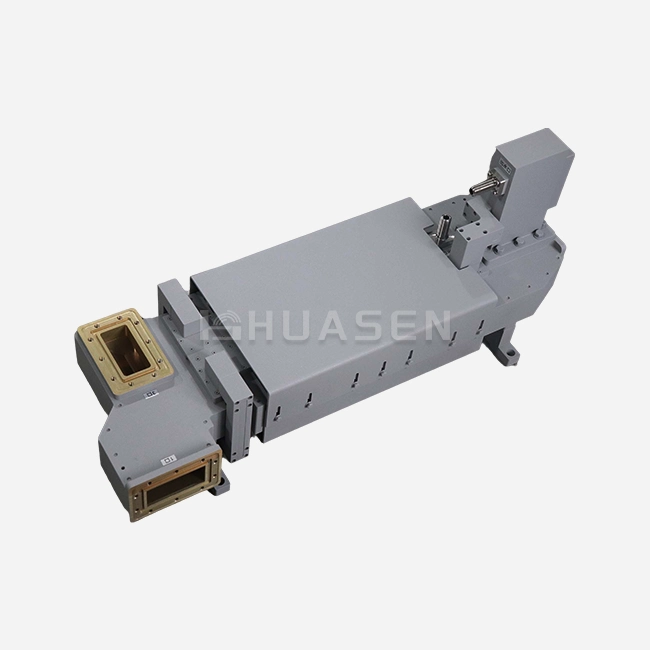
Precision engineering is used to make these antennas so that they work well with electromagnetic waves and last a long time. The Orthogonal Mode Transducer (OMT) is the central part. It is a passive device inside a waveguide that can split or join two signals with different polarisations. This part controls whether the antenna works in narrowband or wideband mode, which has a direct effect on how flexible the system is and how much it costs to set up.
The Role of Orthogonal Mode Transducers
In their DPHA line, Huasen Microwave uses two different Orthogonal Mode Transducer (OMT) designs. The standard OMT has a simple shape and coupling structures, which makes it a cheap choice for narrowband uses where the bandwidth needs to be less than 5% of the centre frequency. This approach works well for base station front-end uses that work at set frequencies and in environments that are easy to predict.
The symmetrical feed OMT is a more advanced method that uses balanced extraction ports and improved coupling sections to keep phase coherence over a 40% fractional bandwidth. Wideband systems like 6G study tools, multi-band satellite terminals, and broadband electronic countermeasures work better because of this complexity. The symmetrical setup cuts down on unwanted mode conversion, which is a main cause of polarisation leaking that hurts isolation measures.
Horn Structure and Material Selection
The cylindrical horn part controls the radiation patterns and gain after the Orthogonal Mode Transducer (OMT). When it comes to point-to-point links, circular apertures give you rotationally symmetric patterns that work great, while square apertures give you the best beamwidth control for sector coverage in wireless bridge apps. To keep higher-order mode excitation to a minimum and phase uniformity across the aperture, the flare angle (the rate at which the waveguide grows to the aperture) needs to be carefully determined.
The choices of materials represent the needs of the business. Commercial designs are mostly made of aluminium alloys because they are strong for their weight and easy to work with. This makes them perfect for tower-mounted systems that have weight limits. Brass or copper-plated stainless steel is often used in aerospace and marine uses because it can handle salt spray corrosion and temperature changes from -40°C to +85°C. Surface treatments like anodising or chromate conversion coatings protect the environment even more without affecting the ability to transmit radio waves.
Connector Integration and Feed Networks
Adding a port brings its own set of problems. Depending on the frequency band, each mode needs its own coaxial-to-waveguide transition or waveguide gap. K-type, or 2.92 mm, plugs can handle millimetre-wave frequencies up to 40 GHz, while SMA connections work with frequencies below 18 GHz. At higher frequencies, when cable losses become too high, waveguide standards like WR-90 or WR-28 are needed.
The success of separation is affected by where these ports are physically located. They are placed at 90-degree angles around the Orthogonal Mode Transducer (OMT) body by the manufacturers to make the space between orthogonal modes as large as possible. Internal matching networks in the transition sections keep the VSWR below 1.5 across the working band. This stops reflections that would otherwise make standing waves and lower the efficiency of power transfer.
Isolation Design: Enhancing Performance and Minimising Interference
How well the antenna divides the two orthogonal channels is measured by polarisation separation. If the value is higher than 30 dB, it means that less than 0.1% of the power sent on one polarisation gets into the orthogonal port. This is a very important level for MIMO systems and radar uses that need to keep channel independence.
Common Sources of Polarisation Leakage
Asymmetries in the geometry of the Orthogonal Mode Transducer (OMT) are the main cause for the dual-polarised horn antenna. As little as 50 micrometres in manufacturing flaws can cause preferential coupling routes that make one polarisation stronger than another. This mismatch shows up as higher cross-polarisation levels, which lowers the signal-to-noise ratio in systems that receive signals and causes co-channel crosstalk in systems that send signals.
Inhomogeneities in the material are another problem. Localised impedance mismatches happen when the conductivity or dielectric constant changes inside dielectric-loaded horns. Some of the primary polarisation changes into the orthogonal state because of these breaks in the electromagnetic field. These effects are made worse by environmental factors. For example, moisture getting in through joints that aren't properly sealed changes the dielectric properties, and thermal expansion causes mechanical forces that change key dimensions.
Optimisation Strategies for Superior Isolation
Huasen Microwave deals with these problems by improving their designs in many ways. Engineers can generate field patterns inside the Orthogonal Mode Transducer (OMT) cavity using computational electromagnetic modelling to find areas where mode conversion takes place. Before actual development starts, isolation measures are improved by making small changes over time to the coupling iris measurements, probe lengths, and septum profiles.
Performance is improved even more by internal protective devices. Thin-wall partitions or ridged parts inside the waveguide actively stop the spread of unwanted modes. When these features are added, they create reactive loading that weakens only the cross-polarised parts and doesn't change the main modes. Broadband operation is hard to keep up because filtering structures that work well at the centre frequency often create resonances at the band edges, which means that careful frequency-domain tuning is needed.
Testing and Validation Protocols
Isolation proof is based on measures of S-parameters. A calibrated vector network tester sends a signal to one port and measures the reaction at a different port that is not connected to it across the operational band. The S21 or S12 parameter magnitude shows isolation, and numbers below -30 dB show conformity. Cross-polarisation discrimination data in anechoic rooms provide extra proof, showing how well the isolation works in real radiation settings where near-field effects and aperture distribution are important.
These tests have to be done at all temperatures and after screening for external stress. Due to different rates of thermal shrinkage between materials, a device that has 35 dB of isolation at room temperature might only have 28 dB of isolation at -40°C. When you test for vibrations according to MIL-STD-810 and thermal cycles between high temperatures, you can find hidden mechanical weaknesses before they are used in the field.
Procurement Considerations for Dual-Polarised Horn Antennas
To get these specialised parts, you have to compare technical specs to operational needs and check the supplier's skills to make sure they will be reliable in the long run.
Sourcing Channels and Supplier Evaluation
Working directly with makers like Huasen Microwave gives you access to customisation options that are important for certain uses. Companies that are making their own radar systems or satellite stations often need frequency bands that aren't standard, custom mounting interfaces, or environmental grades that aren't the norm. Direct relationships with manufacturers let you work together to improve designs and give you access to engineering tools during integration.
Distribution partners make it easy to get standard goods by keeping common frequency bands and socket types in stock so that they can be sent out quickly. This channel works well for system designers who are putting together multiple installs with the same specs. Because of volume prices and established processes, this channel lowers the costs of buying things. But the level of technical help can be different, so it's best to choose a dealer based on their RF knowledge rather than just their business terms.
Online business-to-business (B2B) marketplaces have sprung up as extra channels. They are especially useful for comparing specs of dual-polarised horns between different makers during the early stages of planning. Even though catalogue data is useful for research, people with complex technical needs often need to talk to each other directly to clear up unclear specs or talk about performance trade-offs that aren't caught in catalogue data.
Technical Specification Priorities
Bandwidth needs determine which antenna to use. Narrowband systems that work within a 5% fractional bandwidth can use standard Orthogonal Mode Transducer (OMT) designs, which lower the cost per unit by 30 to 40 per cent compared to wideband options. Even though they cost more, symmetrical feed designs are needed for applications that need wider coverage, like multi-band satellite stations or wideband electronic warfare systems.
Isolation specs should be looked at more closely than just the top numbers. If a company says that their product has 30 dB of isolation, they should say whether this number is for the whole operating band or just at the centre frequency. Band-edge separation often drops by 5 to 8 dB, which could affect the system margin. These subtleties can be seen by asking for full separation versus frequency plots while evaluating suppliers.
For sending units, the ability to handle power is important. Power rates for continuous waves depend on the size of the waveguide and how it is cooled. In burst radar systems, peak power limits become very important. Conservative derating, which means running at 60–70% of maximum power, increases service life and keeps performance stable as temperatures change.
Commercial Terms and Support Structures
The warranty should cover both the performance of the radio waves and the purity of the mechanics. Standard one-year warranties cover problems with the way the product was made, but longer warranties are helpful for setups that are far away and would cost a lot to repair. Some makers ensure performance by providing regular recalibration services that keep isolation and VSWR specifications the same over multi-year deployments.
Lead times for customisation vary a lot. Catalogue things usually ship between 2 and 4 weeks, but custom designs can take anywhere from 8 to 16 weeks, based on how complicated they are. Project delays can be avoided by being clear about delivery dates during procurement planning. This is especially true for integrating into bigger system builds with planned goals.
The level of professional help after the sale is what sets good suppliers apart from great ones. Troubleshooting and optimisation go faster when you have access to application experts who understand system-level integration problems, not just antenna specs. Huasen Microwave helps with design, offers sample test programmes, and provides support for calibration data. This lowers the risk of integration for complicated operations.

Installation Best Practices and Maintenance Tips
Mounting and Alignment Procedures
Mechanical attachment that is secure is the base. Vibration-dampening hardware is needed for tower-mounted setups to keep the connector connections from wearing out over time. The antenna needs to be oriented properly in relation to the link polarisation. If the send and receive antenna polarisations are not lined up correctly by 45 degrees, there is a 3 dB polarisation mismatch loss, which makes isolation much less effective.
The torque specs for connectors must be followed exactly. If you torque connections too little, they make intermittent contacts that cause passive intermodulation products. If you torque them too much, you damage the threads on the connectors or crush the dielectric materials. For regular, reliable connections, torque wrenches that have been calibrated and torque values that were written down during installation are used.
Environmental Protection Measures
Weatherproofing makes outdoor operations last longer. For connector connections, you need self-amalgamating tape wrapped in layers that overlap, and then you need UV-resistant vinyl tape to hold the whole thing together. This two-layer method keeps water out while allowing for heat growth without cracking. Every 12 to 18 months, a regular check finds damage before it gets into the water.
Covers for radar domes keep dirt and rain from getting into the opening. But the choice of radome material affects how well it works with radio waves. Materials that are too lossy or not thick enough cause impedance errors that lower VSWR and cause pattern confusion. When radomes are required, making sure the antenna works with the radome in place provides compliance at the system level.
Diagnostic Monitoring and Troubleshooting
Using portable network analysers to take regular VSWR readings with a dual-polarised horn finds signs of decline. A steady rise in VSWR from 1.3 to 1.6 over a number of months is a sign that problems are starting to show up, such as rust in the connectors, water getting in, or damage from mechanical stress. Taking care of these problems ahead of time stops sudden link breakdowns.
More crosstalk between polarisation channels is a sign of isolation decline. Some signs of a problem with the system are slower data transfer in MIMO lines or more noise in radar results. If you think the problem is in the antenna assembly or somewhere else in the RF chain, you can find it by measuring the return loss at both ports and the separation.
Conclusion
Building a dual-polarised horn antenna and designing a separation system are two important technical tasks that have a direct effect on how well a system works in tough RF situations. Precision Orthogonal Mode Transducer (OMT) structures and improved horn shapes can work together to allow for dual-channel operation at the same time in small packages. Professional-level solutions have isolation performance above 30 dB, while weak designs don't. To get there, you have to pay close attention to mechanical tolerances, material selection, and electromagnetic optimisation. When making a procurement choice, technical specifications must be weighed against the supplier's abilities, the ability to make changes, and the ability to provide long-term help. By installing these complex parts correctly and keeping up with their upkeep, you can keep getting the efficiency benefits they offer for a long time.
FAQ
1. What determines the bandwidth capability of a dual-polarised horn antenna?
Bandwidth is mostly controlled by the Orthogonal Mode Transducer (OMT) design. Most traditional OMT designs with simple coupling structures can reach a fractional bandwidth of 5%, which is good for narrowband uses. In symmetrical feed OMT designs, the extraction ports are balanced, and the coupling geometries are designed to increase the bandwidth to 40%, which makes them suitable for wideband systems. Horn flare shape and connector matching networks add to the additional bandwidth limits that need to be in line with what a dual-polarised horn antenna can do.
2. How does being exposed to the world change the way separation works over time?
The biggest threat to the environment is moisture getting in. Water getting in through broken plugs changes the dielectric properties inside the Orthogonal Mode Transducer (OMT) cylinder, which lowers isolation by 5 to 10 dB. Thermal cycling makes different materials expand at different rates, which can cause mechanical stresses that change important measurements. Corrosion at the surfaces of connectors raises contact resistance, which causes passive intermodulation that looks like less separation. Proper weatherproofing and regular inspections slow down these ways of breaking down.
3. Can dual-polarised horn antennas operate in circular polarisation modes?
Linear polarisations are created by typical dual-polarised horns. To get circular polarisation, you need to add additional polarisers or hybrid couplers that change the phase of orthogonal linear components by 90 degrees. Some specialised designs put these parts inside, but this usually makes them more complicated and lowers their speed. Applications that need circular polarisation should make this clear during the buying process to make sure the design is implemented correctly.
Partner with Huasen Microwave for Superior Dual-Polarised Horn Antenna Solutions
With over 30 years of RF engineering experience, Huasen Microwave is a well-known maker of dual-polarised horn antennasolutions for the telecommunications, military, and defence industries. Our DPHA series offers VSWR below 1.5 and polarisation isolation above 30 dB in both narrowband and wideband versions, meeting the strict needs of 5G backhaul systems, satellite ground stations, and advanced radar platforms. We offer full customisation, so you can choose the exact radio bands, connector types, mounting connections, and environmental standards that you need. During the merging process, our expert team can help you with design, sample evaluation programs, and calibration data. To learn more about how our dual-polarised horn antenna knowledge can improve the performance of your system, get in touch with our engineering team at sales@huasenmicrowave.com.
References
1. Balanis, Constantine A. "Antenna Theory: Analysis and Design." Fourth Edition. Wiley, 2016.
2. Milligan, Thomas A. "Modern Antenna Design." Second Edition. IEEE Press, 2005.
3. Clarricoats, P.J.B., and Olver, A.D. "Corrugated Horns for Microwave Antennas." IEEE Electromagnetic Waves Series, 1984.
4. Rudge, Alan W., et al. "The Handbook of Antenna Design, Volume 1." IET Electromagnetic Waves Series, 1986.
5. Love, Arnold W. "Electromagnetic Horn Antennas." IEEE Press, 1976.
6. Orfanidis, Sophocles J. "Electromagnetic Waves and Antennas." Rutgers University Technical Publication, 2016.
Send Inquiry