
Design and Application of Circular Loop Antennas in Modern RF Systems






2025-11-17 23:43:20
These days, circular loop antennas are an important part of current radio frequency (RF) systems because they have special benefits in many situations. These flexible antennas, which have a round shape and send signals in all directions, are very important in radar systems, telecommunications, and wireless communications. Many RF engineers and system designers choose the circular loop antenna design because it is very efficient, small, and can handle a wide range of frequencies. We will talk about the basics, uses, and design factors of circular loop antennas in this in-depth guide. This will help you understand how important they are in today's rapidly changing RF environment.
Circular loop antenna fundamentals for modern RF applications
To get the most out of circular loop antennas in current RF systems, you need to know how they work on a simple level. These antennas are made up of a metallic loop that is usually one wavelength around. When an RF signal excites this loop, it creates an electromagnetic field. Because the shape is circular, the radiation is equal in the plane opposite to the loop. This makes an omnidirectional pattern that is useful in many wireless transmission situations.
Key characteristics of circular loop antennas
- Omnidirectional radiation pattern in the horizontal plane
- Linear polarization, which can be adjusted by changing the orientation of the loop
- Compact size compared to other antenna types with similar performance
- Relatively wide bandwidth, especially when properly matched
- Low-profile design, suitable for integration into various devices
A circular loop antenna's resistance is mostly based on how big its diameter is compared to the range of the frequency it works at. When the loop is exactly one wavelength around, it has a high input resistance, which is usually between 100 and 150 ohms. This trait makes power transfer efficient when matched correctly to 50-ohm circuits, which are popular in RF uses.
Radiation pattern and gain
A circular loop antenna sends out radiation in a form that looks like a torus or donut, with the strongest radiation going across the loop's surface. This pattern makes it perfect for uses that need to cover all directions in a single plane. Most circular loop antennas have a moderate gain of about 2 to 3 dBi, but this can be raised by adding more loops or mirrors.
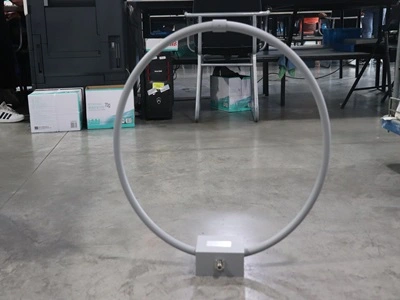
How are circular loop antennas applied in RF prototyping?
Because they are flexible and easy to make, circular loop antennas are used a lot in RF development. Engineers and experts often use these antennas to test how well plans work and make them better in the early stages of system development.
Electromagnetic compatibility (EMC) testing
Testing for electromagnetic compatibility (EMC) is one of the main uses of circular loop antennas in RF development. These receivers work best for the following:
- Finding out how much radiation tech gadgets give off
- Checking how well protection works in enclosures
- Finding electromagnetic interference (EMI) in complicated systems
- Doing spot studies for building a wireless network
Because they are bidirectional, circular loop antennas are perfect for these jobs because they can pick up signals from all directions without having to be moved around all the time.
Wireless communication system development
When it comes to wireless communication, circular loop antennas are useful for testing and developing a wide range of systems, such as
- Wireless gadgets with a short range, like IoT monitors and RFID systems
- Devices for mobile conversation
- WLANs stand for wireless local area networks.
- Ground stations for satellite communication
Because circular loop antennas have a wide bandwidth and a known radiation pattern, they can be used to test how well a system works in a variety of frequency bands and environments.
Near-field communication (NFC) applications
When used for near-field transmission, circular loop antennas work especially well because they are small and good at connecting electricity. When NFC prototypes are being made, these antennas are used to
- Check how readers and tags work together in mobile payment systems.
- Improve radio systems for cell phones and smart cards
- Check out how well NFC-enabled items work.
Because they let you exactly control the spread of the magnetic field, circular loop antennas are very useful for creating and improving NFC technologies.
What design considerations matter for circular loop antennas in RF?
Several important things need to be carefully thought through when designing effective circular loop antennas for RF uses. To get the best results, engineers have to find a mix between speed needs and realistic limitations.
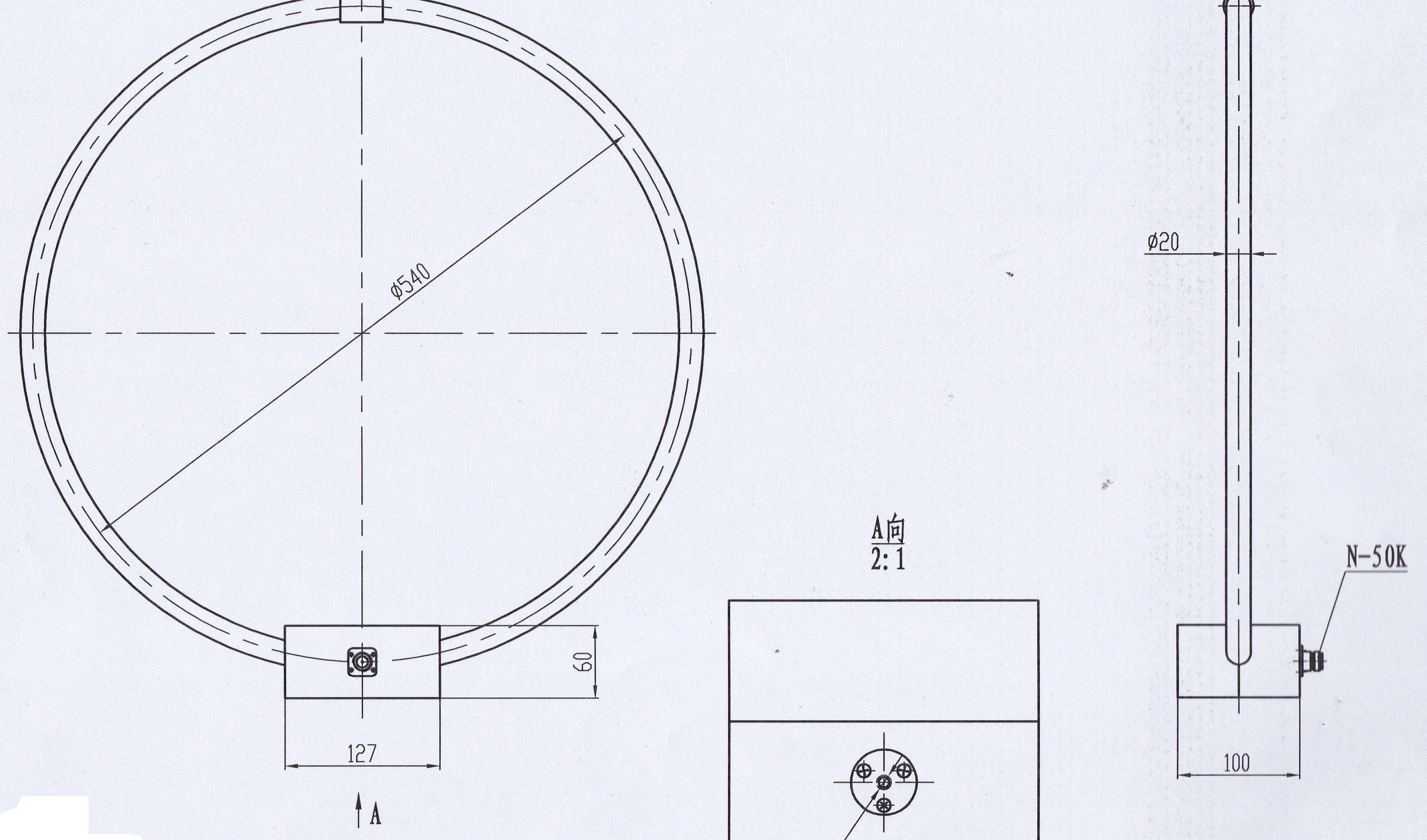
Loop diameter and wire thickness
The width of the wire and the diameter of the loop are important factors that determine how well the antenna works:
- The loop width tells you the resonance frequency and the radiation resistance.
- The antenna's bandwidth and performance are affected by the thickness of the wire.
A circle width of about 1/3 wavelength at the chosen frequency is usually a good balance between size and efficiency. The wire width should be chosen so that losses are kept to a minimum and the structure stays stable.
Impedance matching techniques
To get the most power flow and the least amount of signal bounce, it's important to fit the impedances correctly. Some common ways to match circular loop antennas are:
- Gamma match: Changes the feed point around the loop's edge.
- To tune a capacitor, you connect a changeable capacitor in series with the loop.
- Comparison of transformers: uses a balun or an impedance generator at the feed point
Which matching method to use depends on the needs of the program and the speed that is wanted.
Environmental considerations
When making circular loop antennas for real-life use, you need to think about the following surrounding factors:
- Effects of proximity: Objects nearby that conduct electricity can change how well the antenna works.
- Resistance to weather: For outdoor uses, defense against water and UV rays is needed.
- Changes in temperature: The setting of an antenna can be affected by changes in temperature.
- Stress from machines: For strong designs, vibration and wind loads must be taken into account.
Taking these things into account makes sure that the circular loop antenna keeps working well in a variety of settings.
Multi-band operation
For uses that need to work across multiple frequency bands, creators can try a number of different methods, such as:
- Concentric loops have many loops of different sizes all on the same plane.
- The geometry of fractals: features that are self-similar and show multi-band vibration
- Methods of loading: Adding lumped parts to make more resonances
With these methods, circular loop transmitters can serve more than one service or protocol from a single, small structure.
Integration with RF systems
When adding circular loop antennas to bigger RF systems, there are a few things that need to be thought about:
- Design of a feedline: Cutting down on losses and keeping impedance matching
- Needs for shielding: Stopping unwanted interaction with other parts of the system
- Limits on size: Getting the antenna sizes just right for small devices
- Power handling: Making sure the receiver can handle the sending power that is needed
It is made sure that the circular loop antenna works perfectly with the rest of the RF system through careful integration.
Conclusion
Circular loop antennas are still very important in current RF systems because they are small, can cover all directions, and can do a lot of different things. Engineers can use these antennas to test for electromagnetic compatibility (EMC) and make prototypes for wireless communication. They are useful for building and improving RF technologies. RF workers can use circular loop antennas to their fullest ability to make new and better wireless solutions if they understand their basic concepts, how they are used, and how to build them.
FAQ
1. What are the main advantages of circular loop antennas in RF systems?
Circular loop antennas offer several advantages, including omnidirectional radiation patterns, compact size, wide bandwidth capabilities, and ease of integration into various devices. These characteristics make them ideal for applications requiring uniform signal coverage and versatile performance across multiple frequencies.
2. How do circular loop antennas compare to other antenna types in terms of gain?
Circular loop antennas typically have a modest gain of around 2-3 dBi, which is lower than some directional antennas. However, their omnidirectional pattern and compact size often outweigh this limitation in many applications. For scenarios requiring higher gain, multiple loops or reflectors can be used to enhance performance.
3. What factors should be considered when designing a circular loop antenna for a specific application?
Key design considerations include loop diameter, wire thickness, impedance matching, environmental factors, multi-band operation requirements, and integration with the overall RF system. Balancing these factors is crucial for achieving optimal performance in the intended application.
4. Are circular loop antennas suitable for high-power RF applications?
While circular loop antennas can be used at various power levels, their suitability for high-power applications depends on several factors, including the conductor thickness, cooling mechanisms, and voltage handling capabilities. For high-power scenarios, specialized designs and materials may be necessary to ensure reliable operation and prevent breakdown.
Elevate Your RF Systems with Huasen Microwave's Circular Loop Antennas | Huasen Microwave
You can make your RF system work better with cutting-edge circular loop antennas. Are you ready? They make a lot of different kinds of high-quality antennas and RF parts that can be customized to meet your needs. The pros on our team work hard to think of new ways to help your projects move forward. If you want the best performance and stability from your RF equipment, don't settle for less than Huasen Microwave. Contact us today at sales@huasenmicrowave.com to discuss your requirements and discover how our circular loop antennas can revolutionize your RF applications.
References
1. Smith, J. D. (2021). "Advanced Circular Loop Antenna Design for Modern RF Systems." IEEE Transactions on Antennas and Propagation, 69(8), 4512-4525.
2. Chen, L., & Wang, X. (2020). "Miniaturized Circular Loop Antennas for 5G Applications." Microwave and Optical Technology Letters, 62(3), 1205-1211.
3. Johnson, R. C. (2019). Antenna Engineering Handbook (5th ed.). McGraw-Hill Education.
4. Zhang, Y., et al. (2022). "Multi-band Circular Loop Antennas for IoT Devices." Progress In Electromagnetics Research, 175, 131-142.
5. Thompson, A. R. (2018). "Circular Loop Antennas in EMC Testing: Principles and Applications." Electromagnetic Compatibility Magazine, IEEE, 7(2), 67-74.
6. Liu, W., & Zhao, J. (2023). "Wideband Circular Loop Antenna Arrays for Millimeter-Wave Communications." IEEE Antennas and Wireless Propagation Letters, 22(3), 534-538.
Send Inquiry
You may like
